Microsoft Teams is now at the heart of business communications, and service providers are building entire portfolios around it. But without robust analytics, these Teams-based offers can fall short, unable to prove value, optimise CX, or deliver measurable outcomes. That’s where a dedicated CX engine like Akixi transforms Teams from a basic enablement play into a revenue-driving, insight-led proposition.
Microsoft Teams has become the default communications platform for countless organisations, replacing legacy systems and reshaping how businesses collaborate and connect with customers.
This shift has opened up prominent new revenue opportunities for service providers, whether managed service providers (MSPs), systems integrators (SIs), or telcos, who are building Teams-based offerings to meet growing demand for cloud-first collaboration and telephony.
As organisations replace legacy phone systems with Microsoft’s platform, service providers have become key enablers of that transformation. But while the opportunity is real, so are the stakes. With Teams now central to day-to-day business operations, customers are expecting visibility and value. They want tangible outcomes, illustrations of where Teams is enhancing customer experience or optimising performance That’s why enabling Teams voice alone is no longer enough.
Unfortunately, Teams’ native PSTN analytics tend to fall short. Service providers can’t prove the value of what they’ve delivered or drive meaningful improvement without deep visibility into call flows, agent responsiveness, or queue performance.
For service providers, this produces a genuine commercial risk. If they can’t help their customers pinpoint and solve these issues, how can they demonstrate the value of their services or build a case for more? The result for providers is lost renewals, missed upsell opportunities, and a perception that their offering is interchangeable. Providers who bridge the analytics gap early can transform this blind spot into a competitive edge, and those who don’t risk falling behind.
This visibility gap extends beyond a technical shortcoming into a legitimate commercial liability. To close it, service providers need a powerful analytics engine that elevates Teams data into actionable CX insight. That’s where specialist platforms like Akixi make the difference.
- Bridging the CX Gap: How Akixi Supercharges Microsoft Teams for Service Providers
- The CX Differentiator: How Akixi Empowers Service Providers to Win Bigger Deals
The CX Gap Is Costing You More Than You Think
Many customers moving from legacy PBX systems to Teams assume performance visibility will improve as part of the upgrade. Instead, they’re regularly left disappointed.
Microsoft Teams’ native analytics offer little more than basic call logs. They are limited in scope, delayed in delivery, and light on actionable insight. Without visibility, performance gaps go unaddressed. Missed calls, long wait times, inefficient routing, and inconsistent agent performance all become invisible liabilities that undermine the business.
Solving Real Problems, Not Just Selling Features
The most successful MSPs and other service providers solve complex business problems rather than just selling software. That’s why the right analytics engine is essential to building propositions that resonate with real-world business challenges. For a retail customer, that might mean identifying peak hours and tweaking staffing to reduce lost sales. For a healthcare client, it could be about managing patient call volumes and minimising missed appointments.
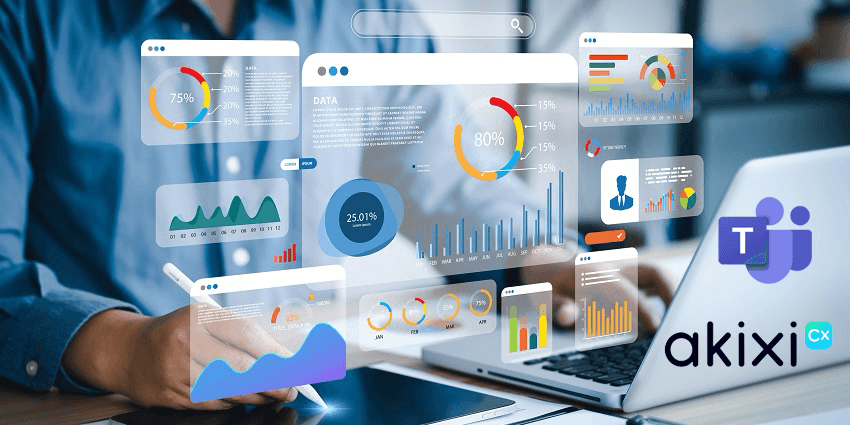
Akixi’s CX analytics platform surfaces the kind of data that lets service providers have value-led conversations with their customers. Instead of talking about minutes and extensions, they’re talking about revenue leakage, service efficiency, and customer satisfaction.
Because Akixi is consumed directly through an app in the Microsoft Teams client, it removes the need for separate systems, interfaces, or complex infrastructure. This simplicity not only accelerates adoption but positions Akixi partners as strategic solution providers rather than just commodity voice suppliers.