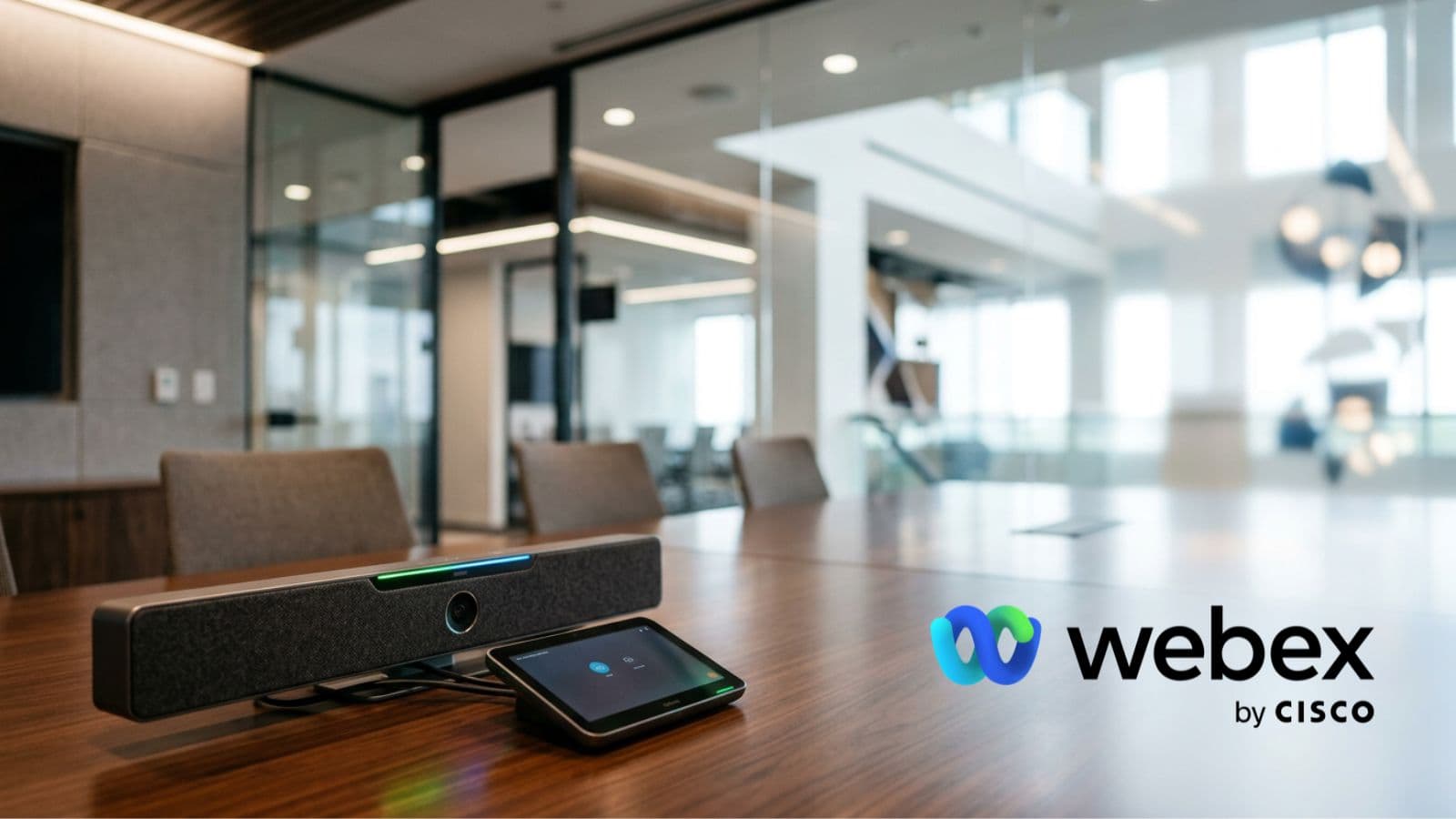
Cisco's Collaboration business has spent most of the past year on the sidelines of its own earnings calls. Back in February, Cisco's Q2 FY26 call talked up $2.1 billion in AI orders from hyperscalers, and Collaboration barely got a mention. The stock still fell 10% on AI guidance that failed to excite investors. Then Q4 FY26, reported on 12 August, broke that pattern. Cisco told investors Collaboration had just delivered its best quarterly performance in seven years. Growth hit 12% year on year, with double-digit order growth and video devices up 40%.
Cisco's total revenue for the quarter hit a record $17.3 billion, up 18% year on year, with product revenue up 24%. Collaboration's 12% growth trails Networking's 28% and Security's 14%. It's also the first time in over a year that Cisco has described Collaboration in positive terms on a call. For most of FY26, the segment was mainly discussed in terms of what it lacked.
Webex, Devices and Contact Center All Grew
Cisco credited the quarter to growth across Webex, devices and contact center together, not one product line carrying the rest. That spread matters: broad growth across three product lines is different from a single enterprise deal skewing the result, and a one-off hardware refresh wouldn't spread that evenly either.
Chuck Robbins, Cisco's Chair and CEO, said on the call:
We delivered a very strong close to fiscal 2026, marking another record year for Cisco. Our record performance is a testament to the accelerated pace of innovation and the excellent execution by our teams.
Mark Patterson, Cisco's CFO, added:
In Q4, we delivered record revenue, non-GAAP operating income and EPS, all exceeding the high end of our guidance ranges and demonstrating strong financial discipline and operating leverage.
Where This Sits Against Cisco's AI Numbers
Networking product orders were up 40% year on year, the eighth straight quarter of double-digit growth. AI infrastructure orders climbed to $4 billion for the quarter, up from $2.1 billion in Q2. That took the full-year total to $9.3 billion. Cisco is guiding to $7.5 billion in AI infrastructure revenue for FY27, and full-year FY26 revenue reached $63.3 billion, up 12%, with FY27 guidance of $72.2 billion to $73.4 billion.
How Webex's Growth Compares to Zoom and RingCentral
Cisco's 12% growth outpaces both of Webex's closest UCaaS rivals in their most recently reported quarters. Zoom's Q1 FY27 revenue, for the quarter ended 30 April, grew 5.5% year on year. CEO Eric Yuan called it one of the company's best growth rates in recent years. RingCentral's Q2 2026 revenue, for the quarter ended 30 June, grew 5.9% year on year. That's despite the company holding the number one market share position in UCaaS Cloud PBX seats, according to Synergy Research Group.
Webex is growing at roughly double their rate. The comparison isn't exact, since Collaboration also includes hardware and contact center, not just meetings and calling. Microsoft doesn't break out Teams revenue on its own, folding it into the wider Microsoft 365 and Productivity and Business Processes segment, so there's no directly comparable growth figure to set against Webex there, despite Teams remaining its largest competitor by seat count. Still, Collaboration's turnaround isn't just Cisco beating its own recent history. It's outgrowing a UCaaS market that's settled into mid-single-digit growth across the board.
What isn't clear yet is whether that lead holds. Cisco didn't say how much of the 12% came from Webex AI Agent adoption and contact center deals, versus device sales, and that split matters: AI-driven software revenue is recurring, while a hardware refresh cycle isn't. No analyst pushed for the breakdown on the call. That's the question for Cisco's comms team, and the one to check when Q1 FY27 results land in November, alongside Zoom's and RingCentral's next quarters.
Related Reading