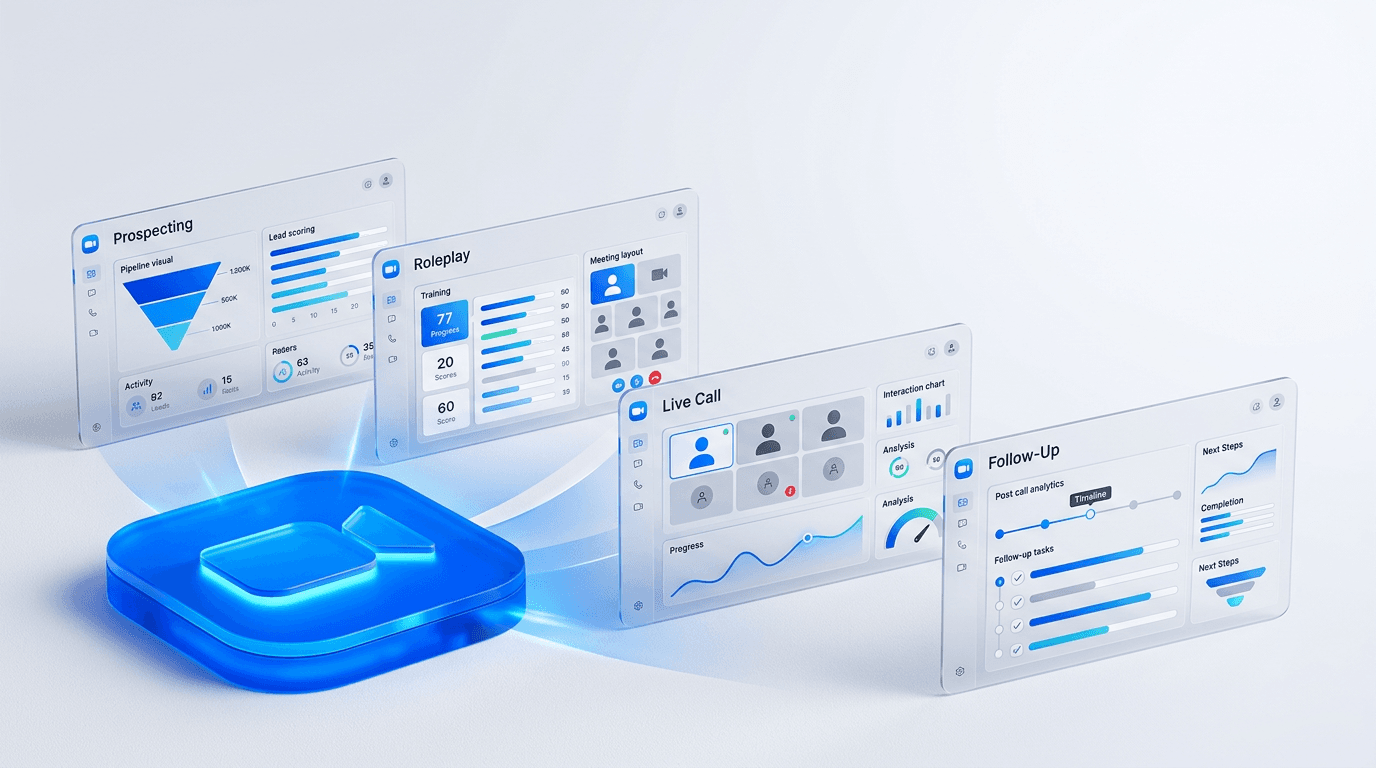
A seller can now rehearse an objection with an AI partner before a call, get nudged mid-conversation with the right battlecard, and ask afterwards what tipped the deal. Zoom is selling that as one connected product.
Sales Assist, Ask ZRA and Sales Roleplay have moved to general availability, packaged into two new plans, Zoom Revenue Accelerator Essentials and Premium. Set against Zoom's acquisition of Common Room earlier this year, the update completes something bigger than three features: an AI tool mapped to every stage of a deal, from identifying who to call through to coaching the conversation and reviewing it afterwards.
What's New in Zoom Revenue Accelerator
Each of the three tools now generally available maps to a different moment in the sales cycle. Sales Roleplay prepares sellers before a customer conversation, running them through realistic scenarios built on past deals. Sales Assist works during the call itself, surfacing competitive intelligence, objection handling prompts and battlecards in real time so reps can stay focused on the customer rather than on note-taking. Ask ZRA works after the call, letting sellers and managers query conversation and revenue data in natural language to pull up account history, flag deal risk and surface coaching opportunities.
All three build on Zoom Revenue Accelerator's existing conversation intelligence, coaching and forecasting layer, so none of this is a new product category. Zoom has also quietly added an MCP Server, including a plug-in with OpenAI Codex, extending that data into other AI platforms and workflows. It's a small addition next to three headline features, but it signals Zoom wants this intelligence to travel beyond Zoom Workplace rather than stay locked inside it.
How the Pieces Fit Together Across the Deal Lifecycle
Slot this update next to Zoom's acquisition of Common Room earlier this year, and the shape of the strategy becomes clearer. Common Room covers the one stage Revenue Accelerator never touched: researching accounts and prioritising who to contact before a seller has booked a call. Add Sales Roleplay, Sales Assist and Ask ZRA, and Zoom now has AI covering prospecting, preparation, the live conversation and the follow-up, all without a customer needing to leave Zoom Workplace.
That's a different pitch to "we added some AI features." It's Zoom arguing a sales team no longer needs to stitch together a prospecting tool, a coaching tool and a conversation intelligence platform, because Zoom now builds all three natively. Gong and Chorus have spent years establishing exactly that kind of conversation capture and coaching, and offered real-time guidance before Zoom did. What Zoom is betting on instead is convenience: this AI sits inside the meeting platform sales teams already open every day, with no separate bot or integration required to get the data in. Whether that convenience beats specialist depth is a question every team running a Gong or Chorus contract alongside Zoom will now have to answer for itself.
What Zoom Revenue Accelerator Costs
Buyers evaluating any of this will want the pricing detail. Zoom Revenue Accelerator Essentials arrives in August at $66 per user per month, billed annually, built for teams starting their AI adoption, with usage of the AI features governed by a consumption model. Zoom Revenue Accelerator Premium starts at $99.99 per user per month, also billed annually, and removes the cap on Sales Assist usage while adding recurring monthly AI credits for Ask ZRA and Sales Roleplay, plus tighter administrative controls. Since the right tier depends on how heavily a team actually uses these tools day to day rather than on headcount alone, it's worth asking Zoom for usage estimates based on call volume before committing to either plan.