
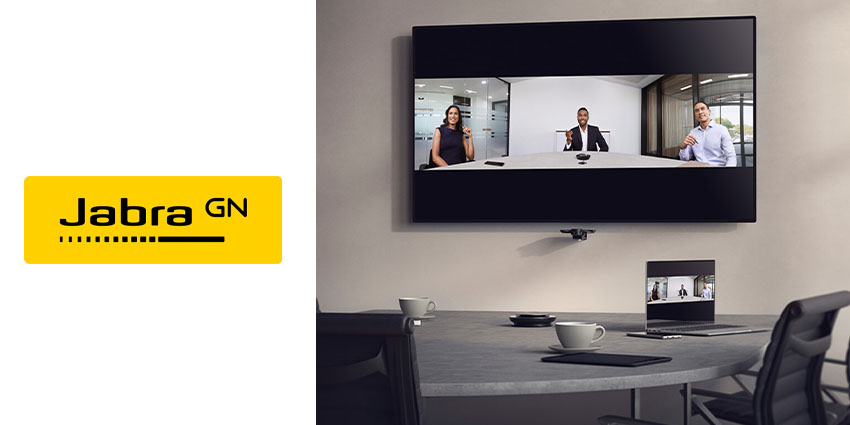
You know when a technology is really embedding itself in our daily lives – when it begins to spawn a new language all of its own.
Take video conferencing, for example.
In the beginning, ‘Jumping on a call’ competed with ‘you’re on mute’ for the title of most-used phrase by those adapting to pandemic-enforced new ways of working from home.
Fast-forward two years and the ubiquitous nature of video conferencing means we are not only utterly at ease with it, we are already demanding more and more from it.
The latest differentiator?
‘Pixel parity’.
Or put more simply, all participants of a video conference being as present and as pin-sharp as each other.
No-one out of focus; no-one out of shot; everyone capable of making the same impact.
And just like with everything else technological, if organisations fail to keep up with the latest advancements, they risk missing a trick.
“There couldn’t have been a bigger change over the last few years, and one of the biggest of all is the way we work,” says Aurangzeb Khan, Senior Vice President of Intelligent Vision Systems at global unified audio and video vendor Jabra, whose innovation in the field is world-leading.
“Now there are three work modes: home, the office and sometimes a place in between.
“Work is what you do, not a place you go to.
“But you need great collaboration products to allow you to work with your colleagues and customers at these places and at different times of the day or evening.
“There are many studies which suggest that audio alone is good but is not everything you need.
“The reality is that we are used to being together and interacting with each other in a way which gives us a human connection. That is why we need video. And that is why video is at its best when delivering pixel parity.”
The concept is made more significant as a result of a partial return to the office for some.
Safety is high on the agenda and so separation is important.
Although the vast majority of in-office meetings have a video conferencing dynamic to them, those participants that are physically located in the room together want to sit far apart.
And that phenomenon has spawned more new language to go with pixel parity – ‘meeting equity.’
“The two factors of people participating in a video conference from a remote location, combined with others in the same room that are sitting wide apart from each other, creates challenges for single camera technology,” says Khan.
“Single cameras provide up to, say, 120 degrees field of view, but their ultra-wide angle lens distorts people and it’s still not enough to include everybody.
“Meeting equity is when a camera provides everyone in the conference with equitable pixel real estate - or pixel parity – AND ensures that no-one looks smaller or less in-focus.


