AR, VR, MR, XR – there are so many different kinds of “reality” to explore today, it’s difficult to keep track. As the age of digital transformation continues to flourish, new realities represent new frontiers for modern companies. The right investment could be the key to unlocking better productivity and collaboration, safer training sessions, and better customer experience.
Of course, before any business can begin to truly unlock the benefits of different realities, they first need to understand what each “segment” stands for.
Today, we’re going to be taking a closer look at two aspects of the Extended Reality sphere: virtual reality and mixed reality.
Define VR: What is Virtual Reality?
Let’s start with the tech you’ve probably heard of before.
Virtual Reality is one of the most exciting new digital solutions to emerge in the last few years. Initially hyped as the new generation of gaming and entertainment technology, VR has come a long way in its capabilities. Today, we can build VR experiences that transform the collaboration landscape, or even help professionals to learn crucial skills faster.
VR, or Virtual Reality, is the part of the XR spectrum that involves submerging people completely in immersive media. The marketplace is expected to reach a value of $184.66 billion in 2026. This growth is driven by new entertainment demands, as well as a rising need for more immersive digital experiences in the workplace.
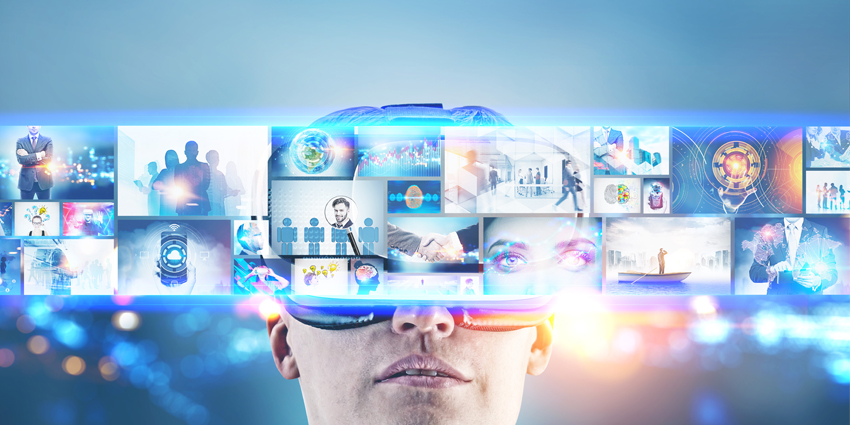
With virtual reality, companies build entire computer simulations for people to explore. You can step into a VR environment and feel as though you’ve fallen into a new country or planet. VR technology relies on the use of headsets and spatial audio to immerse someone in an experience. Most tools also come with sensors and controller technology, so you can interact with the environments you see.
In the business landscape, VR represents a powerful tool for training by allowing companies to educate employees in real-life scenarios, without the risk. For instance, emergency responders could be taught how to run into a burning building, without having to do so in real-life.
VR also allows teams to work more closely together. Employees can sit in a virtual room they “share” with other remote employees and create virtual prototypes of products. This reduces the need for travel and eliminates wasted materials as staff work on new designs.