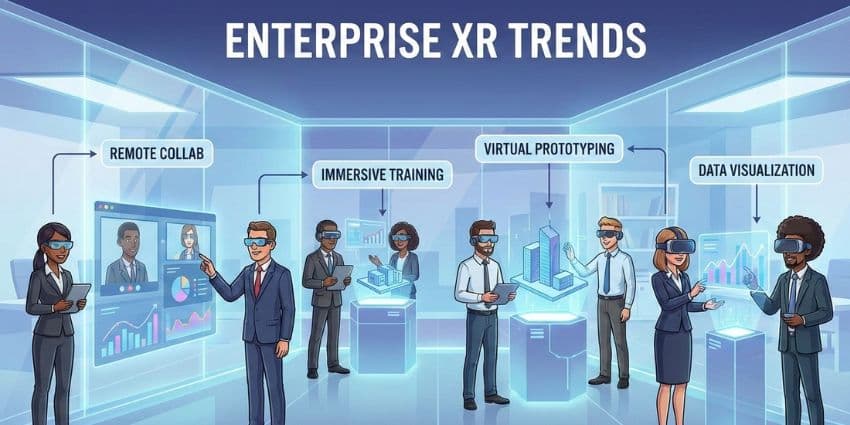
Enterprise XR trends in 2026 are defined by operational discipline rather than experimentation. Extended reality is no longer positioned as a “metaverse” vision project. Instead, organisations evaluate XR against enterprise benchmarks: measurable ROI, secure deployment, governance maturity, and integration with existing IT ecosystems.
According to Nicole Kobie, editor at Wired, the metaverse conversation has already shifted away from consumer VR fantasies and toward real industrial value:
"Forget Mark Zuckerberg’s vision of VR meetings; the industrial metaverse bridges digital and physical worlds in a way that’s actually useful."
For CIOs, UC leaders, and digital workplace strategists, the central question has changed. The issue is not whether immersive technology is compelling. It is whether enterprise XR measurably improves workforce performance across training, collaboration, and frontline operations.
This analysis explains where XR is delivering value in 2026, how deployment models are evolving, and what decision-makers should prioritise to scale successfully.
Get the full enterprise XR breakdown
Navigation
- Is enterprise XR infrastructure-ready in 2026?
- How does enterprise VR training deliver ROI?
- Why is AR remote assistance expanding in 2026?
- Is spatial collaboration replacing virtual meetings?
- What governance framework is required for enterprise XR?
- How have hardware improvements reduced adoption barriers?
- The broader tech trends shaping XR roadmaps
- What should UC and IT leaders prioritise in 2026?
- What leaders need to know
Is Enterprise XR Infrastructure-Ready in 2026?
Yes — but only when deployed as managed infrastructure rather than an isolated innovation initiative. Matthew Finnegan, Senior Reporter at Computerworld, sums it up:
"Despite evidence of the effectiveness of AR, VR and mixed reality (referred to collectively as XR) tools, companies still face a variety of technical, cultural and organizational challenges."
One of the most significant enterprise XR trends in 2026 is structural maturity. Early proof-of-concept pilots are increasingly transitioning into IT-led rollouts governed by procurement, security, and endpoint management standards.
Vendors such as Pico continue expanding enterprise pricing models and device management ecosystems, positioning hardware like the Pico 4 Ultra and Neo3 Pro Eye for scalable training programmes. HTC VIVE maintains traction in simulation-heavy environments, particularly engineering and design validation workflows using devices such as the VIVE Pro 2.
However, hardware maturity alone does not define infrastructure readiness. In 2026, IT teams assess XR using the same criteria applied to collaboration suites and mobile endpoints:
- Integration with Microsoft Teams and Zoom
- Compatibility with mobile device management (MDM) systems
- Identity and access management (IAM) integration
- Endpoint security and encryption compliance
- Demonstrable workflow impact (not “engagement”)
In short: XR qualifies for scale only when it behaves like enterprise infrastructure—secure, interoperable, and supportable.
How Does Enterprise VR Training Deliver ROI?
Enterprise VR training remains the most mature and measurable XR use case in 2026. Organisations in manufacturing, energy, healthcare, and logistics deploy simulation-based learning to replicate hazardous or complex procedures before employees enter live environments.
This approach standardises training across distributed teams while reducing operational risk. As a result, enterprise buyers typically evaluate VR training against four practical indicators:
- Reduced time-to-competency
- Lower travel and instructor costs
- Fewer safety incidents
- Faster certification or validation cycles
Platforms built around HTC VIVE, Pico, and Meta’s Quest ecosystem increasingly support multi-user simulations, performance analytics dashboards, and instructor oversight tools.
What’s changing in 2026 is the content pipeline. Instead of treating immersive training as a one-off build, more teams are moving toward adaptive training: content that’s updated more frequently, tailored to role requirements, and easier to iterate on without restarting from scratch. That shift is where long-term VR ROI becomes sustainable.
However, ROI extends beyond productivity metrics. Strong programmes account for accessibility, ergonomics, and wellbeing. Session duration limits, device comfort, and inclusive design directly influence adoption rates. When organisations ignore the “people” dimension, pilots often plateau.
Enterprise VR training delivers ROI when performance metrics, user experience, and governance controls are designed together.
Why Is AR Remote Assistance Expanding in 2026?
AR remote assistance is accelerating because it directly addresses skilled labour shortages and distributed workforce challenges.
In 2026, “see-what-I-see” collaboration models allow frontline technicians to receive contextual overlays and live expert guidance without leaving physical tasks. Smart glasses and lightweight AR devices enable real-time visual support while preserving hands-free operation.
Importantly, the growth of workplace AR is being boosted by a broader shift toward “in-view” computing—where useful guidance appears in the worker’s line of sight instead of on a separate screen. That makes AR feel less like a new tool and more like a natural extension of the job.
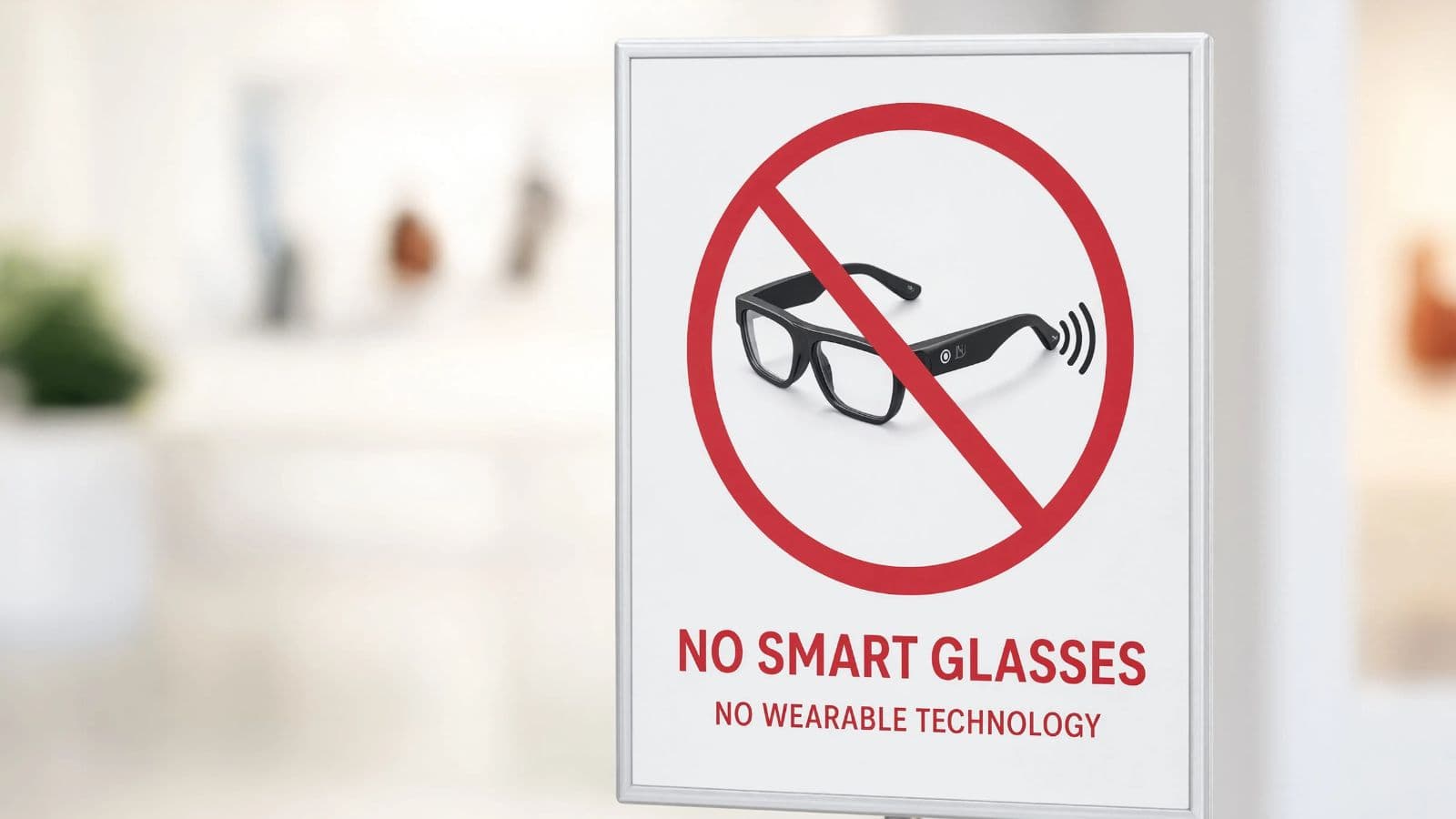
While consumer smart glasses generate media attention, enterprise adoption prioritises durability, battery life, field-of-view clarity, and integration with unified communications platforms.
For IT and UC leaders, readiness still depends on three operational questions:
- Can network infrastructure support stable, low-latency video streaming?
- Are AR devices centrally managed and secured through MDM systems?
- Does the solution integrate natively with Teams, Zoom, or existing collaboration platforms?
When properly deployed, AR remote assistance improves first-time fix rates, reduces equipment downtime, and shortens escalation cycles. These outcomes translate into measurable KPIs aligned with operational efficiency and service performance.
AR adoption grows not because it is novel, but because it removes friction from frontline work.
Is Spatial Collaboration Replacing Virtual Meetings?
No. In 2026, spatial collaboration complements rather than replaces traditional meetings.
The strongest deployments focus on complex 3D workflows rather than general-purpose conferencing. Engineering, construction, and product development teams use XR to interact with digital twins, CAD models, and spatial simulations in shared environments.
Devices such as the HTC VIVE Pro 2 enable high-fidelity visualisation prior to physical production, reducing the need for iterative prototyping. In the best cases, the “meeting” becomes a workflow: teams manipulate the asset, agree on decisions, and capture actions immediately.
Organisations adopting spatial collaboration often report improvements in: