

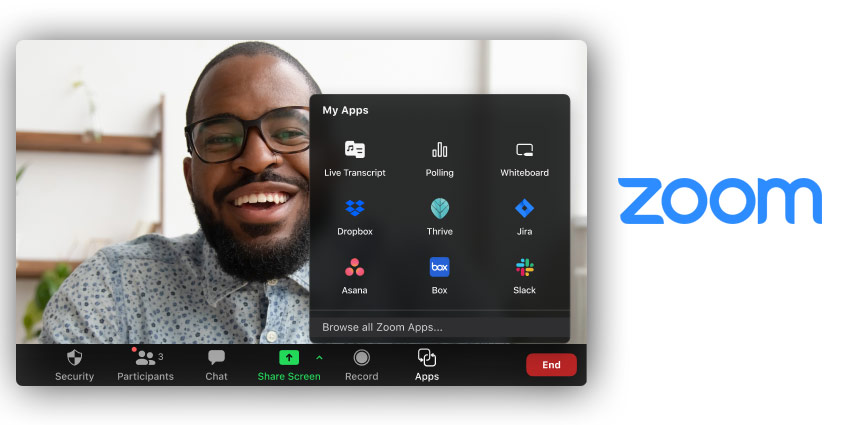
Zoom, one of the market leaders in UCaaS and video conferencing solutions, recently announced a slew of updates as part of the Zoomtopia annual event. The arrival of Zoom Apps, previously known as Zapps, is creating a lot of buzz in the marketplace right now. Experts are even suggesting that Zoom Apps could become a crucial launch pad for startup innovations.
Zoom Apps go beyond the standard app integrations that Zoom already offers for its customers on the Zoom marketplace, by bringing additional context and new opportunities into the workforce. Zoom promises that they will be delivering new Zoom Apps that ensure “best-of-breed” functionality for all Zoom customers.
I caught up with Ross Mayfield, the Zoom Apps Lead, to learn more about what makes the new platform so special.
What Do You Mean by the “Best-of-Breed” Strategy?
When announcing Zoom Apps, the company noted that it would be taking a “best of breed” approach to choosing the right companies to include on the platform. I asked Mayfield what they meant by this term.
“Zoom Apps is all about enabling third-party Apps to become part of the Zoom experience. How a group can be productive before, during, and after a meeting is crucial, and we want Zoom Apps to help with this. Since Zoom is a best-of-breed solution for UCaaS, the tools that consumers use alongside it need to be best-of-breed too”
Ross noted that Zoom is quickly becoming one of the top contenders for UCaaS in voice, video, and chat. The company believes that the best way to build on this existing identity is to welcome additional best-of-breed innovators into the platform. According to Mayfield, new paradigms are being represented by a new era of best-of-breed Apps.
“What’s really important for us is to work with leaders in their categories, or emerging innovators in new environments. We want these to be the kind of Apps that you want to show off and work with when you’re in a meeting or interacting on Zoom”.
What Makes Zoom Apps so Special?
Ross told me that Zoom Apps represents the first time that the company is making third-party applications a crucial part of the Zoom experience. Essentially, these tools are apps that users can unlock within the Zoom platform to create more engaging experiences and boost productivity. There’s no more need for switching between various apps on a desktop. You can navigate to all the tools you need within the Zoom interface.
Zoom Apps gives users instant access to the technology they need within the Zoom interface. You can add apps to the bottom of your tray, choose the apps you want to use, and choose how you want to use them. For instance, as well as using an app in “single player” mode, you can also use it alongside other tools, share the app with people in the meeting, or even send an app to another user.
In the meeting environment, Zoom Apps run before, during and after a meeting in the workflow. “I might create an agenda in an app before a meeting, then share it during the conversation”. According to Ross, Zoom Apps started as a way to sort of 'staple a browser' into the Zoom experience. However, it has since evolved beyond this.
“We’re asking developers to think about the context of a meeting, and how users are going to need to use these apps to make their meetings more effective. It’s about bringing context to conversations and removing the most common friction points for users.”
How do Zoom Apps Affect Security?
With security and privacy both gaining a lot of attention in the new work anywhere landscape, I was keen to get Ross’s insights on how Zoom Apps might impact the security conversation. He told me that the accreditation process for these apps, and the control that customers have on how they use them helps to strengthen the security approach.


