Imagine investing huge sums in a large-format display for a classroom or boardroom today – only to find it cannot support the collaboration tools, security protocols, or AI-driven applications your organisation relies on in five years’ time.
That is the risk many education institutions and enterprises are trying to avoid as they navigate a market saturated with AI announcements and rapid hardware innovation.
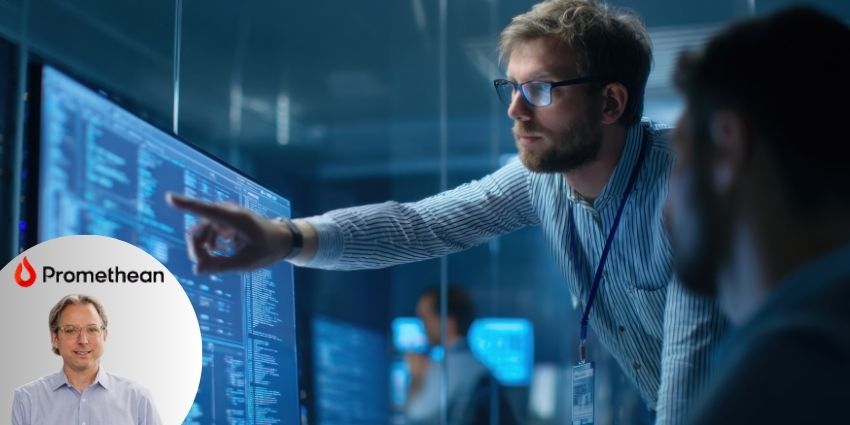
Speaking to UC Today on the sidelines of the recent ISE 2026 in Barcelona, Lance Solomon, Chief Product Officer at Promethean, urged buyers to look beyond headline-grabbing AI features and refocus on fundamentals.
“The trends are probably ones that everyone knows about,” Solomon explained. “It’s adaptability, it’s security, it’s longevity.”
In categories such as interactive panels and digital signage, he noted, organisations are making significant capital investments.
These devices are expected to function for five, seven, even ten years. The challenge is ensuring they remain secure, compatible, and relevant throughout that lifecycle.
Large-Format Displays As Long-Term Infrastructure
Unlike laptops or smartphones, interactive displays are not refreshed every few years. Once installed at the front of a classroom, lecture theatre, or meeting room, they become core infrastructure.
That longevity is both an advantage and a pressure point.
Customers are increasingly asking whether today’s hardware will keep pace with tomorrow’s software. Applications used in education and enterprise environments are evolving rapidly. Artificial intelligence features are being embedded into collaboration platforms, productivity suites, and content creation tools at speed.
Solomon emphasised that organisations want assurance their devices will continue to run those applications effectively.
“So customers want to make sure that if this thing's going to function [for] five, seven or ten years, is it going to keep up, both from the security of the device, but as well as how long will the applications continue to run, whether it's classrooms or workplaces or lecture halls.”
That question extends beyond processing power.
It includes operating system flexibility and ecosystem compatibility.
Modern environments rarely standardise on a single platform. Some organisations are firmly embedded in Windows environments, others favour ChromeOS, while Android continues to play a significant role in display technology.
Promethean’s approach, according to Solomon, has been to meet customers where they are – supporting multiple operating systems and allowing organisations to choose how devices are managed and deployed.
The objective is not simply to sell hardware, but to provide a platform that integrates smoothly into existing IT strategies.
Security And Longevity: Two Sides Of The Same Coin
If adaptability is one pillar of purchasing decisions, security is the other.
As displays become smarter and more connected, they also become potential entry points into wider networks.
For schools handling student data or enterprises managing confidential discussions, that risk cannot be ignored.
“I think the biggest [challenge] is security, quite frankly,” Solomon said.
Security, however, is not a one-off feature – it must endure for the entire lifespan of the device.
A panel designed to last a decade must also support evolving security standards, patches, and protocols over that same period.
This creates a tight link between longevity and protection. Hardware that cannot accommodate future updates risks becoming vulnerable long before it physically wears out.