
When the world came to a standstill in 2020, we were all thrown into turmoil. The way we worked, lived, and connected with others changed almost overnight. No-one knew what the future would look like, and we were struggling just to survive in the present.
However, amongst all this chaos, technology innovators like Microsoft also saw opportunity. They say disaster is a catalyst for creation, and that’s exactly the case for Microsoft. Not only did the company start rolling out new Teams experiences for a remote working environment, but they also started to find ways of bringing people together too.
In a world where social distancing was the new buzz term, Microsoft looked for a way to connect people emotionally, if not physically.
Imagining Together Mode
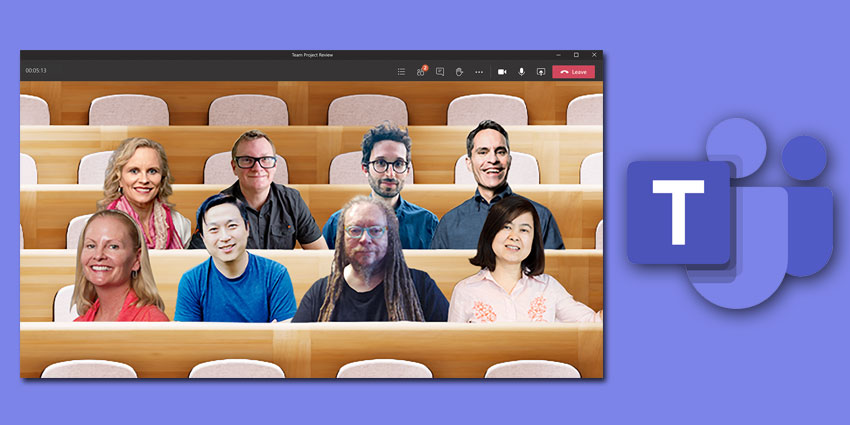
In a recent article on the Microsoft WorkLab publication, Microsoft explores how Jaron Lanier, Microsoft Research Scientist, came up with the idea of Together Mode. Noticing how people struggled to perform at their best without other people to bounce off, Jaron explored the idea of creating virtual audiences where people could see others reacting in a more natural space.
Notably, Lanier points out that even in the early stages of Together mode, the team found that people were instantly more at ease when using the service. People were smiling, laughing, and playing more often. They felt able to speak in a space that was shared, not isolated.
Jaron believes that the benefits of Together mode stem from the simple truth that people weren’t meant to stare at tiny boxes on screens all day. Virtual meetings are more mentally challenging, and stressful than the conversations we have in people. What’s more, test subjects working remotely report more difficulties connecting emotionally with peers.
Further studies reveal that video meetings also generate more anxiety than other forms of communication, as there’s so much extra information to focus on. The challenge of reading the room and responding to facial expressions is a burden on the brain. Excess video, like the kind we’re all facing in the modern workplace, is pushing us to burn out faster.
Making a Real Connection
[caption id="attachment_30095" align="alignright" width="200"] Jeff Teper[/caption]
According to the Corporate VP of Microsoft for Microsoft 365 Collaboration, Jeff Teper, these collaboration tools aren’t just for transactional conversations. Video, chat, and audio is all about engagement, feelings of belonging, and addressing psychological needs. As Together mode continued to develop, Lanier and Teper knew that collaboration software needed to connect people and help them get work done through social connections.
To address the psychological elements in play with remote communication, the Together team turned to a Professor from Stanford University, Jeremy Bailenson, the founding director of the virtual human interaction lab. He looked at years of studies that indicated how video calls can be problematic for maintaining full human-to-human connections. In a video call, eye contact doesn’t always track what’s going on, for instance. In the same way, posture, head lifts, and body language can all come across the wrong way too.
Although these psychological issues might have remained unnoticed with the occasional video conference here and there, that’s not the case anymore. Video conferencing is everywhere now, and companies need to be prepared for that shift. With all this taken to heard, Microsoft jumped into action with Together mode.



