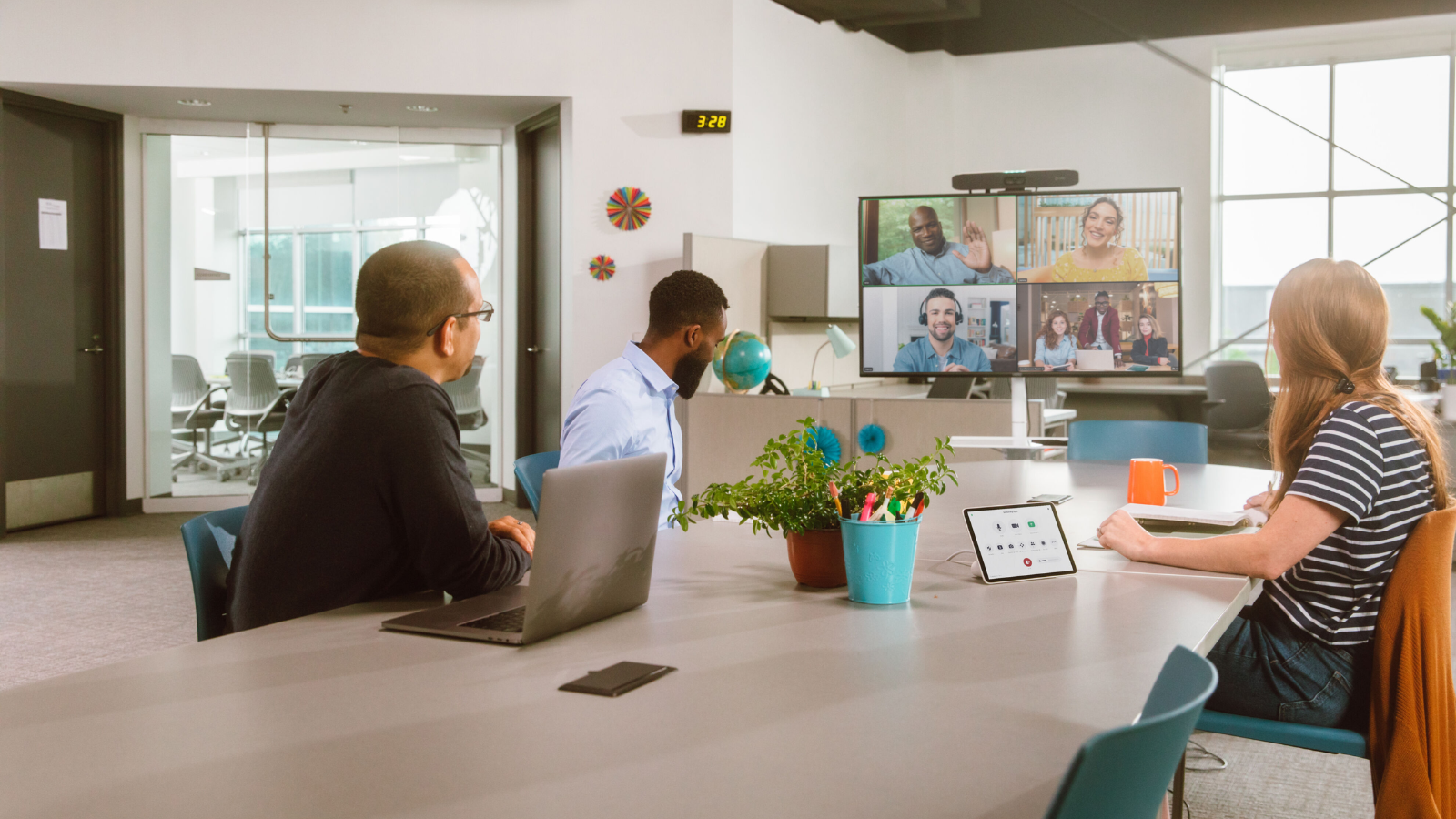
Knowing how to effectively compare small meeting room tech and select the right resources for your evolving teams is becoming increasingly crucial. Small meeting rooms represent a valuable resource for businesses in all industries. Huddle rooms, miniature conference rooms, and even focus spaces enhance team productivity, enable collaboration, and can even improve customer experiences.
However, even as companies plan to increase their IT budgets in 2024, many are still looking for ways to reduce costs and accomplish more with less. Designing meeting rooms that are intuitive, valuable, and affordable requires a careful approach to comparing available solutions.
As more innovators enter the market, you need to decide how you’ll analyze new hardware and software for your small meeting rooms to ensure the best return on your investment.
How to Compare Small Meeting Room Tech
To effectively compare small meeting room tech, you need more than just a clear view of the available solutions. You need to understand how teams use your meeting spaces, what features and capabilities will enhance their performance, and which challenges you’ll need to overcome when optimizing office design.
Here’s your step-by-step guide to comparing small meeting room technology, informed by our years of experience working with meeting room vendors.
Step 1: Identify the Use Cases for Your Small Meeting Rooms
To compare small meeting room tech, you first need a clear insight into how your employees will use these spaces and their requirements. Small meeting rooms usually support up to 5 employees at once, but they can adapt to various use cases.
Some companies use their small meeting rooms as huddle spaces for creative brainstorming sessions and breakout sessions between remote and in-office employees. In these spaces, you may need to consider not just video cameras and audio equipment but collaborative content-sharing software, document cameras, and even digital whiteboards.
You may design other small meeting rooms with a focus on customer experience, creating environments where employees can communicate with customers, offer intuitive onboarding experiences, or present product demos. Determine whether you’ll be building a single small meeting space that adapts to any use case or multiple different spaces for each purpose.
Step 2: Look at Your Existing Resources
Today’s small meeting rooms need to be flexible, agile, and cost-effective. Before investing in new technology, you must understand which resources you already have and what solutions your team members rely on. For instance, if your employees depend on Microsoft Teams for collaboration, you’ll want to choose compatible software and hardware.
Selecting cameras, meeting room kits, and other solutions already certified for Microsoft Teams will allow you to sidestep any compatibility and integration issues. It also means you can save money on ripping out and replacing the technology you already have.
If your employees already have devices, they use to manage work and share knowledge, looking for small meeting room equipment that can align with those devices can be helpful too. A “bring your own device” or “bring your own meeting” approach to your meeting room design can make conference spaces more flexible and accessible.
Step 4: Compare Small Meeting Room Tech for Audio and Video
While numerous components are involved in building an effective meeting room environment, few things are more important than audio and video for collaboration. When you compare small meeting room tech, it’s crucial to ensure you’re empowering employees to work cohesively together with the proper collection of speakers, microphones, and cameras.
This is particularly relevant in today’s world, where in-office employees will need to regularly collaborate with remote contractors, colleagues, and customers. All-in-one solutions like video bars could be an excellent option for small meeting rooms. They combine the speakers, microphones, and cameras your teams need to conduct an effective meeting into a single solution.
You can look into plug-and-play options that allow your employees to turn any available space into a meeting room in seconds. Additionally, you can examine technologies that already have built-in solutions for enhancing meeting quality.
For instance, AI-powered systems can automatically clarify and enhance audio and visual signals and assist with note-taking and meeting summarization. Some AI cameras can even improve feelings of inclusion in small meeting rooms by automatically framing participants, tracking speakers, and assisting with language translation.
Step 5: Think Carefully About Displays
Displays can be a complicated component of a small meeting room. When you’re limited in space, the displays you use can sometimes be restrictive, too. However, they’re crucial to ensuring your team members can share knowledge and collaborate efficiently.
An all-in-one display, that combines an interactive touchscreen (for digital whiteboarding and collaboration), with a built-in camera and speakers can help enhance the quality of conferencing spaces, without taking up too much room. Alternatively, you could look into ceiling-mounted projectors with internet connectivity options for knowledge sharing.