Artificial intelligence is unlocking the full potential of extended reality (XR), turning immersive technologies from niche experiments into scalable solutions for enterprises and educators across Europe.
Lenovo and Italian XR provider Hevolus Innovation are at the forefront of this shift, working together to make XR more accessible, natural, and impactful.
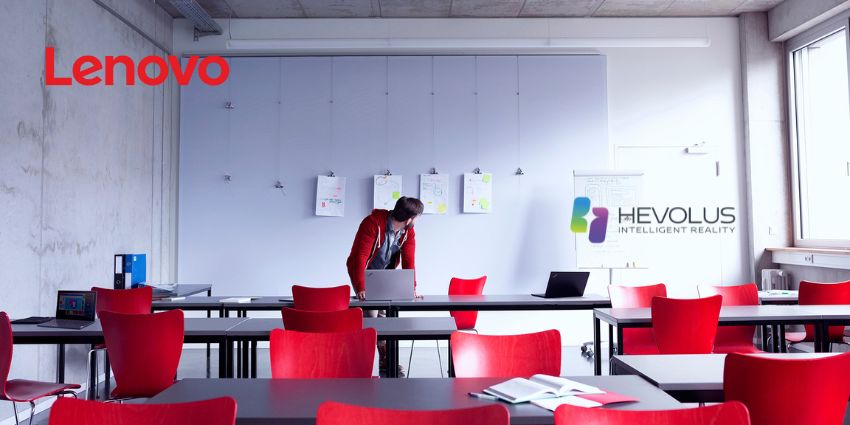
The pair have partnered to drive the adoption of AI-powered immersive learning and business environments across Europe, combining Lenovo provided XR hardware with Hevolus’ advanced AI and holographic technologies to redefine how people learn, collaborate, and engage.
Together, Lenovo and Hevolus have delivered one of Europe’s first fully integrated AI + XR human experience platforms, enabling immersive education, enterprise training, and interactive retail spaces that bring digital transformation to life.
“From immersive learning in schools to interactive product visualization in showrooms, our partnership equips organizations with scalable, secure, high-performance solutions that blend artificial intelligence, spatial computing, and cloud-based XR applications for business-critical value,” said Julien Levy, Product & Partner Manager at Lenovo EMEA.
Removing Barriers
One of the biggest barriers to XR adoption has been the complexity of content creation. Building training simulations or immersive classrooms once demanded advanced 3D modeling skills and costly tools.
That barrier is rapidly disappearing.
“Before, building XR scenarios required knowledge of 3D modeling. Today, with AI, teachers or trainers can generate entire environments in minutes, simply by describing what they want,” explained Levy.
Generative AI now allows 2D photos to be turned into 3D objects or text prompts to create immersive environments instantly. This represents a fundamental shift: XR is no longer restricted to specialist developers. Educators, enterprises, and even small teams can now produce compelling immersive experiences with little technical expertise.
Antonio Squeo, CEO, Hevolus, called this a ‘turning point’: “The challenge has always been content. But if a company or school can transform a photo or prompt into a 3D object immediately, that changes everything. AI makes XR development faster, easier, and more inclusive.”
Making XR More Natural
Beyond simplifying development, AI is transforming the way people interact with XR itself. Traditional XR systems often required controllers, calibration, or lengthy setup processes – barriers that discouraged repeat use.