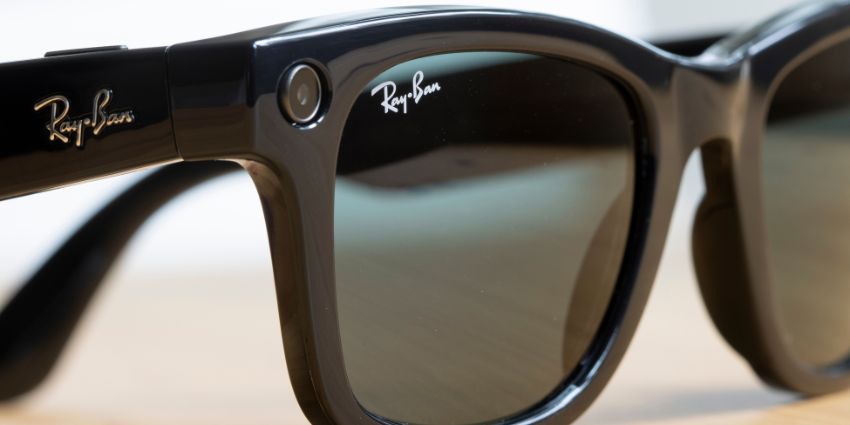
Meta is reportedly developing a prototype of AI-powered smart glasses capable of continuously recording audio and capturing photographs every few seconds – and the implications extend well beyond the consumer market.
According to the Financial Times, social media company is advancing a new hardware line that would allow wearers to use AI to query everything they have seen or heard throughout the day.
The super-sensing glasses would operate differently from Meta's existing Ray-Ban AI glasses. Rather than storing raw footage and audio, one proposed system would extract metadata from recordings and upload it to Meta's servers for AI to query – a distinction the company's proponents argue reduces privacy exposure.
In a statement provided to UC Today, a Meta spokesperson said the company's approach is "to develop new technologies that will help people throughout their day, with privacy built in from the ground up".
"This work includes projects like our Aria research glasses that we showed at Connect, which uses privacy protective technologies to help people without capturing photos and videos the way traditional cameras work. While we don't comment on internal prototypes, we're committed to getting our glasses right because they need to be loved by both people wearing them and those around them.”
What Meta Is Actually Building
Critically, Meta executives are reportedly planning not to activate the LED indicator that currently signals recording on existing Ray-Ban glasses when the super-sensing features are in use.
That means colleagues, clients, and meeting participants could be captured without any visible signal – a scenario that could alarm legal and compliance teams across industries.
Speaking to UC Today, Fox Rothschild’s Chief AI & Information Security Officer Mark McCreary outlined the risks.
"If these reports are accurate, Meta is reportedly testing prototype glasses that snap photos every few seconds with no clear signal to bystanders that it’s happening, and that’s a design choice that runs headlong into the law, not around it.
The whole point of that little LED on the current models is to give bystanders a fighting chance to say “hey, turn that off,” and courts have generally leaned on visible cues like that light to establish notice under wiretapping and eavesdropping statutes.
"More than a dozen states require all parties to consent before a private conversation gets recorded, so a device capturing audio with no indicator is a walking consent problem, not just a design quirk.
"Continuous, unlabelled photo capture raises its own issues too, particularly in states with biometric privacy laws if any facial data gets processed along the way. Meta may love the seamless, invisible design, but from where I sit, invisible is exactly the problem: if people can't tell they're being recorded, “always-on” starts to look a lot like “always-secret,” and that's a tough sell to a judge or a jury."
Posting on LinkedIn last month, Mark Smith, a software and AI consultant who has written on Meta's AI strategy, argued that the company has a deeper problem than indicator lights.
"The company cannot rely on long terms of service, small indicator lights, buried settings or broad claims that the product is 'designed for privacy,'" he wrote.
"The privacy model is not yet clear enough for a device that captures the physical world."
The Workplace Problem Nobody Is Talking About
The conversation around always-on AI wearables has so far centred on public spaces and consumer privacy. But the more immediate flashpoint may be the office.
Enterprise environments are already navigating complex rules around the recording of business communications.