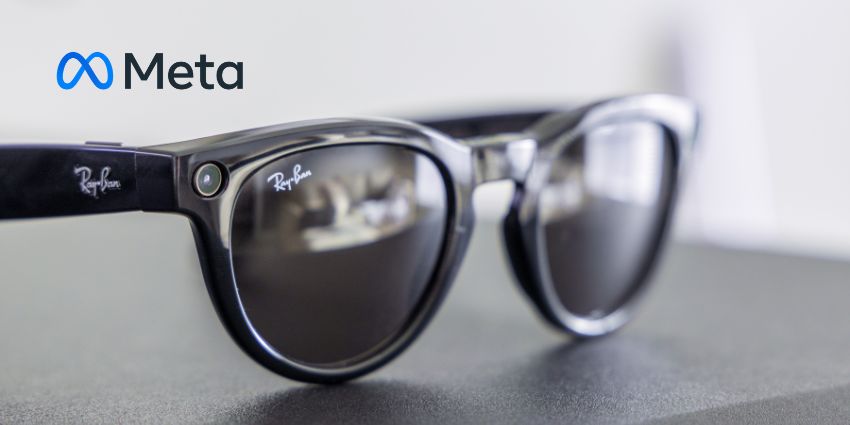
Meta is reportedly testing a facial-recognition feature for its smart glasses in a move that could redefine wearable AI – and reignite a familiar privacy storm.
According to The New York Times, the company has internally discussed a feature dubbed “Name Tag” that would identify nearby people and feed contextual information to users through an AI assistant embedded in eyewear.
In an internal memo viewed by the NYT, Meta’s Reality Labs said last May that the current political instability in the US presents a good opportunity for it to push ahead with its plans.
"We will launch during a dynamic political environment where many civil society groups that we would expect to attack us would have their resources focused on other concerns," the document said.
The glasses themselves are built in partnership with EssilorLuxottica, owner of Ray-Ban and Oakley.
They have been an unexpected commercial success, selling in the millions and giving Meta one of its strongest consumer-hardware footholds outside virtual-reality headsets.
A Return To Familiar Controversies?
While smart glasses already take photos, stream video and answer spoken queries, adding recognition would allow them to recall a colleague’s name at a conference, retrieve a customer’s profile before a meeting, or remind a wearer where they met someone before.
In practice, it pushes wearable computing into territory that regulators, civil-liberties groups and ordinary citizens have long regarded as sensitive.
The reported plan is especially notable because Meta dismantled facial recognition tagging on Facebook in 2021 after years of legal battles and public criticism.
In 2021, the company agreed to pay $2 billion to settle lawsuits in Illinois and Texas, which alleged that it had collected users’ facial data without consent through a now-defunct Facebook feature that automatically suggested tags in photos.
Earlier, in 2019, Facebook reached a $5 billion settlement with the Federal Trade Commission over claims that it had violated user privacy, including issues related to its facial recognition technology. At the time, Meta framed the move as a shift toward privacy-first design.
The reintroduction of the tech now signals a strategic rethink.
The company argues internally that the technology has matured and that stricter limits could avoid earlier abuses – yet even limited recognition revives old fears.
Groups such as the American Civil Liberties Union have warned that normalising identification in public spaces erodes anonymity, chills speech and enables new forms of harassment or tracking.
Meta’s history of data controversies complicates its effort to win trust – each new feature must overcome a backlog of scepticism.
The technical record of facial recognition adds to the concern.
Numerous academic studies have found uneven accuracy across demographics.