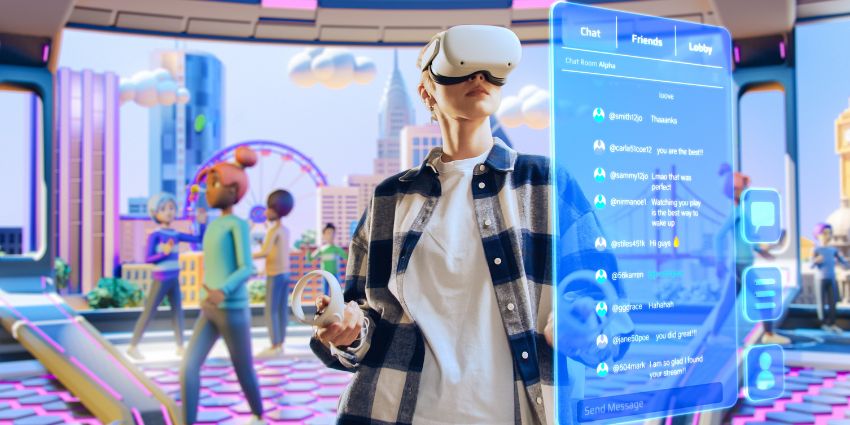
Horizon Worlds, the poster child of Meta’s VR ambitions, is dropping VR.
The company will now focus on mobile as part of its plans to build social virtual worlds.
The move reflects both practical realities and strategic recalibration – after years of heavy investment in Reality Labs and repeated attempts to grow a headset-based social network, Meta appears to have concluded that a VR-only audience is simply too small to support a thriving virtual world.
In a blog post, Samantha Ryan, VP of Content, Reality Labs said the move was part of the company making "decisive adjustments" to it business strategy.
"We heard your feedback loud and clear, and after a year of collecting data and running experiments, we agree. We’re removing individual worlds from our store shelves in VR, and we’re separating worlds from the Store in our mobile app. This change should result in more impressions for apps on the store."
Accessibility Over Immersion
Horizon Worlds originally launched as a VR-centric space, built around the idea that immersive presence would drive a new era of online interaction.
Yet adoption remained modest, even as Quest hardware improved and became more affordable.
For casual users, buying a headset, learning the controls and committing to wearing it for social interaction proved a high barrier.
Mobile access could change that equation.
Nearly everyone already owns a smartphone, and logging into a virtual space becomes as simple as opening an app.
That shift mirrors the success of platforms like Roblox and Fortnite, which built massive audiences by prioritising accessibility over cutting-edge immersion.
Their experiences may not match VR’s sensory depth, but they benefit from network effects that only come with scale.
With the move, Meta appears to be acknowledging that social platforms depend more on participation than technological novelty.
Without millions of active users, even the most sophisticated virtual environment struggles to feel alive.
By targeting mobile devices first, Horizon Worlds can tap into Meta’s enormous social graph across Facebook and Instagram, potentially drawing on billions of existing connections rather than relying solely on Quest owners.
Reality Labs Under Pressure
The pivot also comes amid mounting scrutiny of Meta’s Reality Labs division.
The company has invested tens of billions of dollars into VR and augmented reality infrastructure, with limited financial return so far.
Analysts estimate that the division has incurred over $70 billion in losses since 2020, largely due to hardware development, content production, and social VR initiatives like Horizon Worlds.
Recent restructuring saw around 10 percent of the Reality Labs workforce layed-off, affecting hardware and software teams as well as in-house VR studios.