
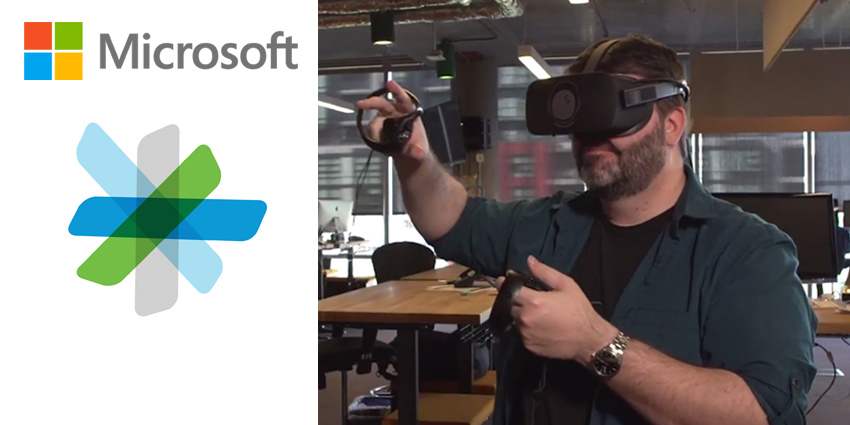
Microsoft Ignite has been lighting up the newsreels lately, as the company releases information about all its latest innovations for UC and collaboration. One of the most disruptive areas that Microsoft have begun to explore recently, has been that of "virtual reality", and how VR solutions can be used to enhance the meeting space. Of course, Microsoft isn't the only giant experimenting with this particular concept, Cisco has also started to embrace the connection between VR, and collaboration.
In an effort to find ways of making the communication and workflow experience more engaging for today's enterprise, both Microsoft and Cisco are taking very different approaches to the world of VR. While Microsoft is using something called "mixed reality", to blend the virtual world with the real world, Cisco is focusing more on building digital environments. So, what are the details, and benefits of each option?
Microsoft's "Mixed Reality" Space
 With mixed reality, Microsoft is trying to create digital versions of real-life solutions. With "digital twins", they're hoping to create virtual models of physical products, services, and processes, secured across all devices. The "Ignite" conference in Orlando this month highlighted this mixed reality concept, with an insight into a use case from Ford.
Ford is using the mixed reality concept to allow engineers and designers to collaborate on ideas in real-time, designing new cars and specifications in a virtual environment. While previously, the brand used clay models to design their cars, virtual reality concepts like the Microsoft HoloLens could make managing new models a far more streamlined process for Ford, therefore improving time to market.
Currently, Microsoft's mixed-reality concepts are also available through Microsoft Teams. For instance, you can make notes on product designs in a mixed-reality environment, and come back to them on Teams later for a quick refresh.
The only problem with this particular approach to VR, is that hurdles for adoption are high. As equipment costs skyrocket, and training requirements remain to be a significant concern, it's tough to see a world where mixed reality could be an "everyday" part of business at present. Of course, that doesn't necessarily mean that there isn't potential.
 On the other side of the fence to Microsoft, we have Cisco and

