Unified Communications (UC) is supposed to save time. But when meetings freeze, audio goes robotic, or calling fails – these painful moments harm productivity.
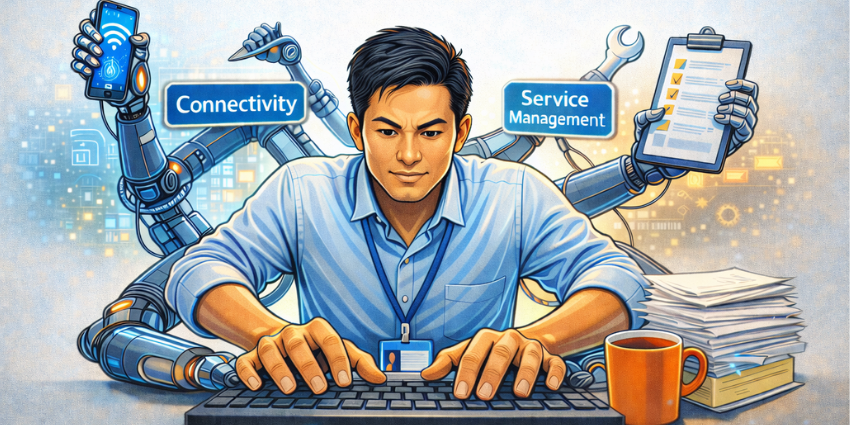
That is why buyers are paying closer attention to service management, connectivity, and UC performance as one linked story.
The money side is real, too. Research has shown that a single hour of downtime costs hundreds of thousands of dollars for many enterprises.
This is also why digital employee experience optimization has become an IT priority. If you want to find out how to unlock connectivity benefits or measure an ITSM’s impact on work - then you’re in the right place.
Looking for a reading list before your next buying committee meeting? Here are some useful articles to upgrade your service management & connectivity strategy:
- The 90 Day Playbook for ITSM & Connectivity Adoption Success
- The Service Management & Connectivity Market Map: 12 Vendors You Should Know
- The Top Service Management & Connectivity Events to Attend in 2026
UC Performance Monitoring: Fewer Guesses, Faster Fixes
This is the impact of UC performance monitoring in one line: when you can see the problems, you no longer need meetings to debate their existence.
UC performance monitoring and Quality of Experience (QoE) tools track signals that directly affect voice and video, like latency (delay), packet loss (missing data), and jitter (uneven delivery). Microsoft notes that device/software processing latency plus network latency has a big impact on end-to-end experience. In turn, this can act as a pillar in your enterprise employee experience optimization strategy.
For Microsoft Teams specifically, Microsoft recommends using Call Quality Dashboard (CQD) to build a process for monitoring and maintaining call and meeting quality, so issues can be investigated systematically.
Connectivity Tools: Better Routes for Calls and Meetings
When it comes to connectivity tools and their benefits, UC buyers care about smoother calls and fewer “Can you hear me ok?” complaints.
A big part of this is SD-WAN (software-defined wide area networking). In plain terms, SD-WAN helps your business choose better network paths for important apps. This provides two key benefits:
- Your Tier 1 customer call will be hosted on an infallible network channel. No more lagging and call issues during crucial moments.
- Having this flexible connectivity system means more adaptability in high-traffic moments. Businesses can protect their reputation for high-quality customer service by ensuring this continued service delivery around the clock.
ITSM: turning disruption into a repeatable process
ITSM (IT Service Management) is the system that helps IT teams handle incidents (something broke), changes (something is being updated), and service requests (someone needs access or help) consistently.
With a strong system in place, the ITSM impact on work will mean fewer tickets stuck in limbo, clearer updates, and less time spent trying to find “the right person.”