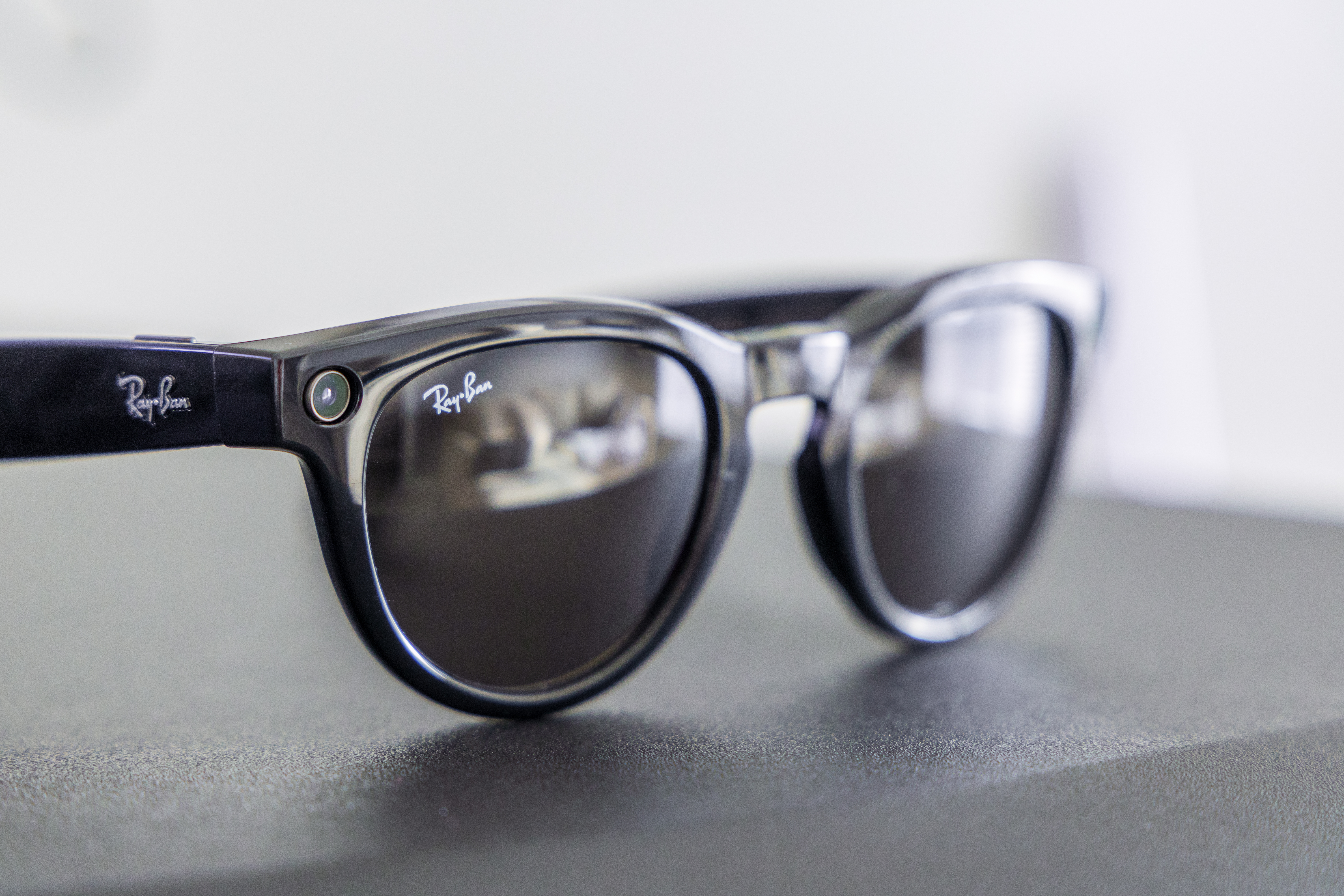
New details about Samsung's first smart glasses have surfaced online, offering the clearest picture yet of the company's upcoming wearable and confirming it as a direct competitor to Meta's Ray-Ban glasses.
The leaked renders, first published by Android Headlines in collaboration with regular tipster OnLeaks, suggests the device is further along in development than many had anticipated.
The glasses are being developed internally under the codename 'Jinju', and the design philosophy appears to be similarly understated to Meta's Ray-Ban glasses: eyewear that looks like eyewear, not a sci-fi prop.
Unlike the separately rumoured "Haean" glasses – which are expected to feature a micro-LED display and arrive in 2027 – Jinju will launch without a display.
The focus here is on ambient AI, audio, and camera functionality, keeping the form factor accessible and the price competitive.
What's Under the Hood
On the specs side, the Jinju glasses are shaping up to be a serious contender.
They're reported to be powered by a Qualcomm Snapdragon AR1 chipset – the same processor found inside Meta's Ray-Ban glasses – which signals that Samsung is aiming squarely at feature parity, if not superiority, with its biggest rival in this space.
Each temple could house a 12MP Sony IMX681 camera lens, giving the glasses dual camera capability for capturing photos and video on the go.
Audio is expected to be handled through directional speakers with bone conduction technology, meaning sound would be delivered through vibration rather than traditional speakers sitting near the ears.
It's a design choice that keeps the glasses looking minimal while still delivering a capable listening experience.
Reports say the lenses themselves are photochromic transition lenses, which darken automatically in bright light – a practical touch that could make these feel less like a gadget and more like something you'd actually wear day to day.
The whole package is expected to come in at around 50 grams, which is light enough to wear comfortably for extended periods.
Battery capacity is reportedly listed at 155mAh – comparable to what competitors offer in this form factor, where every millimetre of space counts.
How that translates into real-world usage will be one of the more closely watched metrics when the device eventually reaches reviewers' hands.
Android XR and Gemini at the Core
Like Samsung's Galaxy XR headset launched last year, the Jinju glasses are expected to run on Android XR, Google's dedicated wearables platform.
That integration brings with it tight compatibility with Google Gemini, meaning users will be able to interact with the glasses conversationally – asking questions, retrieving real-time information, and managing features through natural language commands.