Most frontline teams aren’t actively asking for AR or extended reality tech yet. At least, not directly. What they do ask for, regularly, is something that stops the job from being harder than it needs to be.
They keep asking the same thing. Why does every task still require stopping, checking a screen, calling someone, or writing the same detail down twice? That irritation makes sense.
It’s also why smart glasses for frontline work keep coming up in everyday conversations, especially among people who can’t spend a shift bouncing between a phone and a tablet. They’re watching teams at other companies work more safely, pick things up faster, and make fewer mistakes with smart glasses. Eventually, the question turns inward. Why isn’t that happening here?
If you ignore that for too long, you risk more than lower productivity and higher disengagement; you risk showing some of your most important workers that they’re better off elsewhere.
Related articles:
- The Business Case: Is XR Worth It?
- Long-term XR Business Success
- What Can the XR Market Promise Before 2030?
How Do Smart Glasses Improve Productivity For Frontline Workers?
AR and headsets have been floating around in some companies for years, particularly in the industrial landscape, but they didn’t start feeling like tools field workers really need until recently.
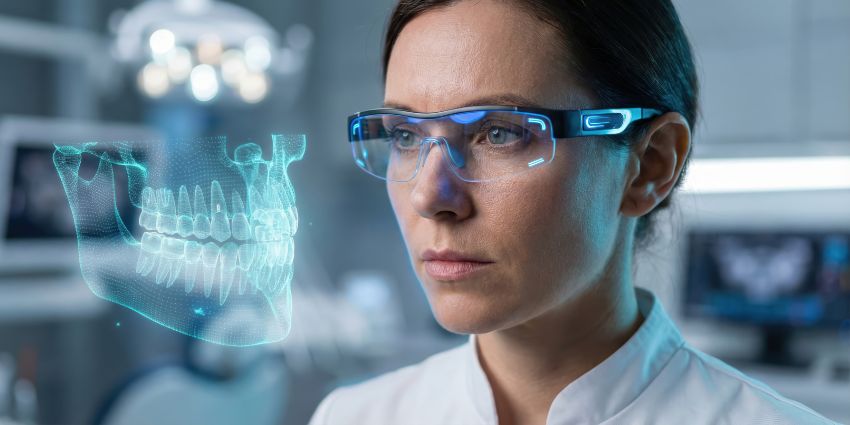
This isn’t about clunky headsets that overpromise and underdeliver. Today’s smart glasses are lighter, more comfortable, and stable enough to survive a full shift. The AI inside them actually does something useful. They’re starting to feel like the most natural way to handle the parts of work that matter most, like getting remote help without waiting, checking steps as you go, or capturing proof without slowing down.
There are plenty of case studies that prove the value of these tools. They show:
- Repairs moving faster because hesitation and rework get squeezed out. BMW reported 70–75% faster repair times after introducing smart glasses into dealer maintenance workflows.
- Warehouses getting measurably faster when workers stop bouncing between physical work and handheld screens. Samsung SDS reported up to 30% faster picking speeds using smart glasses in logistics workflows.
- Audit work collapsing from a multi-step administrative slog into something you can do while you walk. Clorox reportedly completed audits in one-tenth the time, saving about $949 per person, by using smart glasses for verification and capture.
People still worry about what wearables capture and where that information goes. That hasn’t disappeared. But there’s a new tension showing up alongside it. More workers are starting to feel uneasy about what they’re missing and whether sticking with older tools is holding them back.
How Will Smart Glasses Change Frontline Workflows?
Enterprise extended reality is taking off, slowly but surely, and frontline workers can see it. They’re tired of waiting for business leaders to approve pilots for tools that actually match how they work today. They’re pushing for a future where:
Hands-Free Becomes the Default
If you’ve ever seen someone in gloves, try to unlock a phone, scroll through a PDF, and keep the job moving, you know the problem. The moment hands-free help becomes available; screens start to look pointless. That’s why smart glasses for frontline work change attitudes so fast. They don’t feel like “new tech.” They feel like removing a nuisance.
“Show Me the Next Step Now” Replaces Lookup-based Work
Even the best-trained frontline employee needs a little backup sometimes. Boeing’s early smart-glasses work is still one of the best examples of where XR pays off: the company reported a 25% reduction in wiring production time, and multiple reports also cite error rates dropping sharply (one account said errors were cut in half).
Escalation Without Friction Becomes Normal
Remote assistance changes what escalation feels like. If a worker can share their view instantly, “call me back in an hour” starts sounding ridiculous. Smart glasses open the door to a world where anyone can get help instantly, which means projects and tasks are completed faster.
Capture Becomes Ambient, Not Administrative
Once people get used to capturing photos, timestamps, and confirmations as they work, they stop tolerating end-of-task paperwork. Enterprise smart glasses don’t just speed up tasks; they cut the “admin tax” that makes frontline jobs feel heavier than they should.
Discover:
- Enterprise XR: Pain Points and Solutions
- VR vs AR vs MR: Which is Best for Your Business?
- Step-by-Step: How to Integrate XR into Your Business
What Can Smart Glasses Be Used For in Frontline Work?
This isn’t necessarily a sign that every company needs to introduce XR for every employee straight away, but it does mean that companies need to rethink how they shop for tech for frontline workers handling very specific tasks.
Expectations are rising fastest in work that already has three traits: visual checks, time pressure, and zero tolerance for mistakes.
Expect demand for smart glasses for frontline work to show up first in jobs where seeing and confirming work is the job.
Inspection, verification, and compliance work
Roles built around inspections and audits feel the pressure early. The work is repetitive. The details matter. Mistakes are expensive. Once someone verifies steps and captures proof while they’re already moving, the old stop-and-document routine starts to feel unnecessary, almost outdated.
Clorox is a good example. When the company introduced smart glasses into audit workflows, audits were completed in one-tenth the time, with reported savings of roughly $949 per person. That change came from verifying steps and capturing evidence while moving, instead of stopping, photographing, uploading, and annotating later.
High-cost Downtime Work
Anywhere downtime burns money, patience is already thin. That’s where escalation expectations snap into focus. Workers don’t want better manuals. They want faster answers.
This is where enterprise smart glasses reset the bar. When expertise shows up instantly, hesitation disappears. Diagnosis tightens. Rework drops. Even a small delay starts to feel unnecessary once you’ve seen what immediate visual support looks like.
Flow-State Logistics Work
Logistics teams feel expectation shift through rhythm. Picking work lives or dies by flow. Every interruption breaks it.
Samsung SDS reported up to 30% faster picking speeds after introducing smart glasses in warehouse operations. The big change wasn’t speed walking. It was fewer glances down, fewer confirmations on handhelds, fewer moments of “did I scan that?”
The Invisible Effect: Smart Glasses Reset the UX Bar
Nobody walks off a shift saying, “Wow, that was amazing XR.” What they say is, “That was easier than usual.” Or they don’t say anything at all. They just move faster, make fewer mistakes, and stop asking for permission every five minutes.
This is the subtle effect of smart glasses for frontline work. The screen stops living in a pocket and starts living where the work happens. Guidance gets lighter. More selective. It appears when it’s helpful and fades when it’s not. No bouncing between apps. No pausing the job just to look something up.
Once that happens, expectations reset almost by accident. People don’t consciously decide they want better tools. They just lose patience for friction.
This is why the shift hits before formal deployment. You don’t need an enterprise-wide rollout for the comparison to start. One site, role, or pilot is enough to change how “good support” feels.
What Challenges Do Companies Face When Deploying Smart Glasses?
So, why aren’t companies going all-in already? You’d think every leader would be keen to at least start running demos, particularly as frontline turnover rates continue to grow.