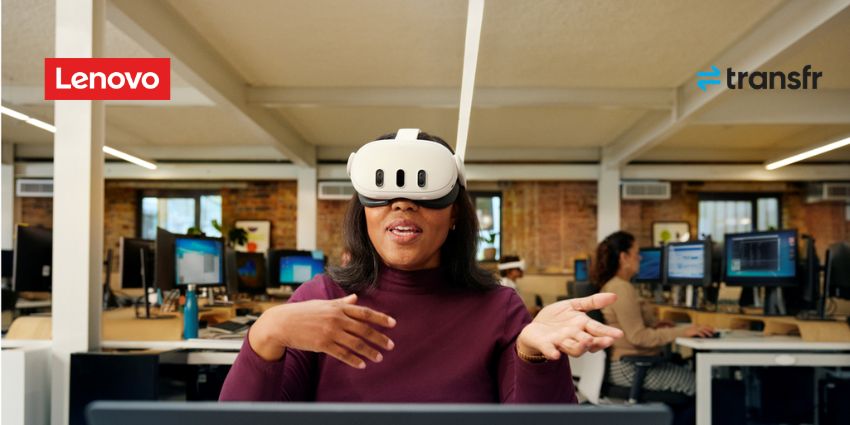

Immersive workplace and XR has crossed a practical threshold. In 2026, extended reality for business is no longer defined by futuristic demos or short-lived innovation pilots. Instead, enterprise XR is increasingly deployed as managed infrastructure that helps organisations train faster, support frontline teams more effectively, and improve collaboration in complex workflows.
Because of that shift, the enterprise conversation has moved on. Leaders are no longer asking, “Is XR ready?” Now, they’re asking a sharper question: how does workplace XR actually work—and where does it deliver measurable ROI?
In this guide: you’ll learn how XR works technically inside the enterprise, how it integrates with the digital workplace stack, and how to evaluate XR hardware for business and platforms with outcomes in mind.
What Is Extended Reality (XR) in an Enterprise Context?
Extended reality (XR) is an umbrella term covering four related technologies:
- Virtual reality (VR)
- Augmented reality (AR)
- Mixed reality (MR)
- Assisted reality (hands-free guidance + remote expert support)
In a business context, XR is best understood as a spatial interface layer. In other words, it enhances existing training, operations, and collaboration systems rather than replacing them. Therefore, value depends on matching the right modality to the right operational problem—not deploying XR for its own sake.
Real-world adoption signal: PwC’s UK analysis identified 1,550 unique public examples of XR business usage. It also found 66% of organisations using VR (vs AR), with engineering and manufacturing leading adoption.
How Does Immersive Workplace and XR Work Technically?
A mature immersive workplace and XR deployment typically runs across four connected layers: hardware, software, data, and governance. Together, these layers turn immersive technology into operational infrastructure.
1) The Hardware Layer: XR as an Enterprise Endpoint
First, the hardware layer provides access to immersive experiences. It includes VR headsets, AR smart glasses, MR devices, controllers, and spatial sensors. However, in enterprise environments, XR devices are evaluated like any other endpoint—not like a consumer gadget.
Therefore, IT teams typically assess XR hardware for business using criteria such as:
- Endpoint security (encryption, OS hardening, policy enforcement)
- Identity + access (SSO/IAM integration, role-based access)
- Device management (MDM/UEM compatibility, remote provisioning, app control)
- Network impact (bandwidth load, Wi-Fi coverage, latency sensitivity)
- Durability + ergonomics (frontline suitability, heat, comfort, fit with PPE)
- Battery life (session length, shift viability, charging/storage workflows)
- Visual fidelity (simulation accuracy, text legibility, pass-through quality)
In short: if the hardware can’t be managed like the rest of your endpoint estate, scaling becomes difficult. Consequently, “IT-friendly” XR wins—even if it’s less flashy.
2) The Software + Integration Layer: Where Value Starts
Next, the software layer is where business value appears. Enterprise XR platforms typically include immersive training modules, AR workflow overlays, spatial collaboration environments, and (in some sectors) digital twin interfaces.
Common enterprise use cases include:
- VR-based onboarding, safety, and compliance training
- Procedural rehearsal and equipment operation simulations
- AR-guided maintenance, repair, and inspection workflows
- Remote expert support (“see-what-I-see” assistance)
- Spatial design reviews and 3D collaboration
Crucially, the best deployments integrate XR with the systems you already run. For example, strong workplace XR implementations connect directly to:
- LMS/LXP (learning management and experience platforms)
- EAM/CMMS (asset management and maintenance systems)
- ERP (work orders, parts availability, operational context)
- Digital twin platforms (asset models, environments, simulation data)
- UC tools (e.g., Microsoft Teams/Zoom for remote support and escalation)
- Analytics dashboards (skills, productivity, quality, safety reporting)
Without this system-level connectivity, XR often becomes an isolated pilot. On the other hand, with integration, XR becomes part of how work is delivered.
3) The Data + Analytics Layer: Measuring Performance (Not Guessing)
Another defining difference between enterprise and consumer XR is measurement. In enterprise settings, XR should generate performance data that leaders can act on—not just usage stats.
Depending on the use case, XR programmes can capture:
- Time-to-competency and skill progression
- Task accuracy and procedural compliance
- First-time fix rates and escalation frequency
- Time-on-task and workflow completion rates
- Training assessment results and competency validation
Therefore, ROI becomes something you can demonstrate. Training outcomes can feed into skills data, maintenance actions can link to asset health, and usage insights can drive process optimisation.
4) The Governance Layer: What Makes XR Scalable
Finally, governance is what separates a cool pilot from a sustainable programme. In 2026, enterprises increasingly start XR evaluations with governance questions, not headset comparisons.
Typical governance requirements include:
- Secure provisioning, patching, and update management
- Content ownership (who creates, approves, updates, and retires experiences)
- Data policies (capture, storage, retention, analytics access)
- Device lifecycle planning (refresh cycles, repair, spares, deprovisioning)
- Accessibility and wellbeing considerations (comfort, session guidance, inclusion)
As a result, CIOs often position enterprise XR alongside endpoint management, collaboration platforms, and cybersecurity strategy. Governance isn’t the barrier—it’s the enabler of scale.
How Do Enterprises Use Virtual Reality (VR) in 2026?
Virtual reality places users inside a fully digital environment. Because of this, VR works best for training that’s risky, expensive, or difficult to scale in the real world. (More detail here: The role of VR in the workplace.)
In practice, enterprises use VR for:
- Employee onboarding and role readiness
- Safety and compliance rehearsal
- Equipment operation and procedural practice
- Scenario-based leadership and decision training
For example, new hires can practise complex tasks before touching real assets. Meanwhile, managers can assess competency consistently across regions. Over time, organisations typically aim for faster ramp-up, fewer incidents, and lower training costs.
Hardware reality: enterprises often prioritise deployment simplicity and manageability. Consequently, they may select platforms such as PICO for enterprise programmes (cost + management focus) or HTC VIVE where higher-fidelity simulation and dedicated training spaces matter. For broader device landscape context, see: Apple Vision Pro alternatives.
Where Does Augmented Reality (AR) Deliver the Most Value?
Augmented reality overlays digital information onto the real world, usually through smartphones/tablets or smart glasses. Because AR keeps people in context, it often delivers strong operational benefits for frontline workflows.
Instead of switching between manuals, screens, and tools, workers can see instructions, diagrams, and live data in their field of view. As a result, common enterprise AR use cases include (more examples here: How to bring augmented reality into your business):
- Maintenance and repair
- Logistics and warehousing
- Manufacturing and quality assurance
- Inspection and compliance workflows
By keeping knowledge inside the workflow, AR can reduce errors, shorten task completion times, and improve first-time fix rates. Therefore, AR is often one of the quickest routes to operational ROI.
Why Are Smart Glasses Gaining Momentum in 2026?
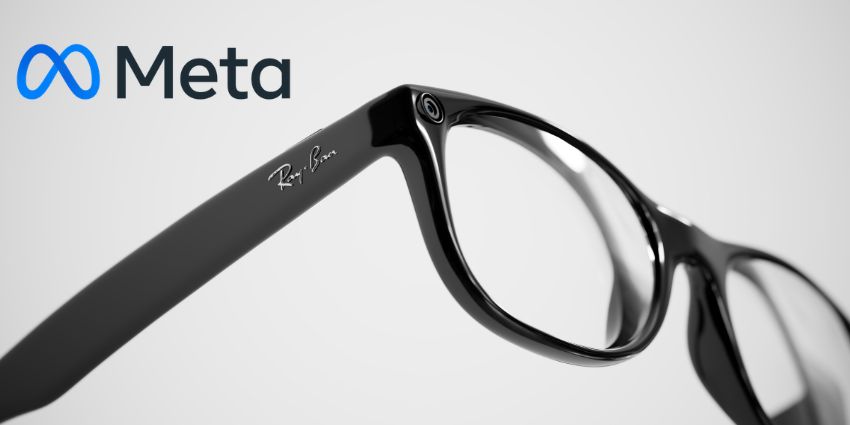
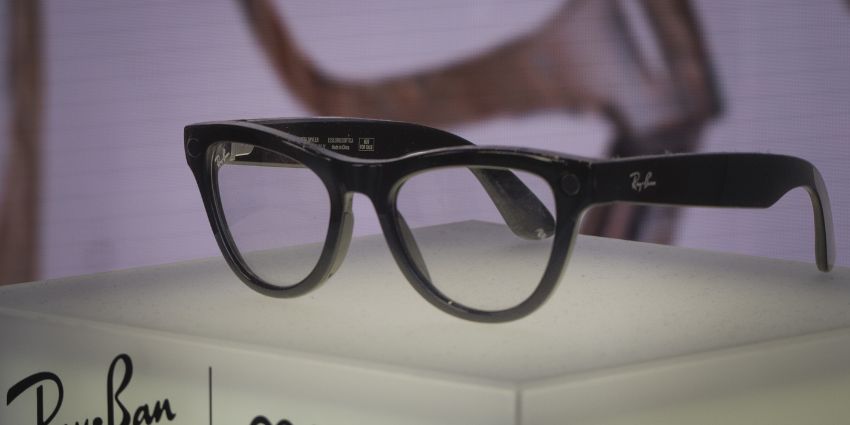
In 2026, smart glasses are increasingly viewed as one of the most practical XR form factors for daily enterprise use—especially for frontline teams. (Related: Why 2026 may be an inflection point for AR.)
Compared to VR headsets, smart glasses can be lighter and more “wearable” for shorter, frequent work moments. Additionally, comfort and fatigue tolerance become easier to manage when XR is used in bursts rather than extended sessions. If motion comfort is a concern, this guide helps: Stopping VR motion sickness.
Enterprise deployments also favour devices that support security, management, and workflow fit. For example, Microsoft HoloLens 2 is often used in MR/assisted-reality style deployments where spatial mapping and enterprise controls matter. Meanwhile, vendors like Vuzix continue to expand in lightweight enterprise wearables. For broader coverage, see: Best smart glasses for business.
What Makes Mixed Reality (MR) Different From AR and VR?
Mixed reality anchors digital objects into physical space and lets users interact with them. As a result, MR is most valuable when teams need shared spatial understanding—especially for complex 3D work.
In practice, MR enables spatial collaboration. Teams can review designs together, manipulate digital twins, and troubleshoot systems as if co-located. Therefore, enterprises use MR for:
- Design and engineering reviews
- Facility and space planning
- Complex system visualisation
- Cross-functional collaboration across distributed teams
MR sits between VR and AR, combining immersion with real-world awareness. Consequently, it delivers the strongest ROI when better spatial decisions reduce rework, shorten approval cycles, or prevent downstream errors.
Why Is Assisted Reality Critical for Frontline Operations?
Assisted reality focuses on hands-free guidance and remote expert support, usually delivered through lightweight glasses. Although it’s often overlooked, it can deliver some of the clearest operational value in field and frontline environments.
For example, workers can follow step-by-step instructions, capture images or video, and connect with experts without stopping work. Therefore, assisted reality can reduce downtime, speed issue resolution, and limit travel-heavy support models—especially where expertise is scarce and response time matters.
How Has XR Integration Changed Across the Enterprise?
The biggest shift in 2026 isn’t just hardware—it’s integration. XR has moved out of innovation labs and into core systems. Today, it increasingly connects with:
- Learning management systems
- Asset and maintenance platforms
- Digital twin environments
- Workforce analytics and performance dashboards
Because of this integration, training outcomes can feed into skills data, maintenance actions can link to asset health, and usage insights can drive continuous improvement. In short, XR becomes part of enterprise architecture, not a standalone tool.
What Should Enterprise Buyers Evaluate Before Deploying Workplace XR?
Successful XR programmes focus on outcomes, not devices. Therefore, enterprise leaders should ask:
- Where do errors, rework, or delays occur most often?
- Which training processes fail to scale across sites?
- Where are experts overstretched or unavailable?
- What systems must XR integrate with (LMS, UC, EAM, analytics, IAM)?
- What governance controls are required (security, lifecycle, data policies)?
Additionally, a UC Today-aligned evaluation should include buyer concerns across IT, HR, and LoB:
- IT: hardware compatibility, bandwidth load, endpoint security, MDM/UEM support
- HR: accessibility, inclusivity, wellbeing impact, ergonomic session design
- LoB: ROI on pilots, adoption rate, competitive differentiation
Ultimately, XR delivers the strongest ROI when it’s applied to specific, measurable problems—and deployed with governance, analytics, and change management in place.
Bottom Line: XR Works When It’s Treated Like Infrastructure
Extended reality is no longer experimental. In 2026, enterprise XR is practical, proven, and increasingly integrated into the digital workplace stack. However, “XR success” doesn’t come from buying headsets. It comes from identifying high-friction workflows, deploying the right modality, and operationalising the programme with security, measurement, and ownership.
For organisations navigating constant change, workplace XR isn’t a moonshot. Instead, it’s a tool for building safer operations, more capable teams, and stronger execution across the business—especially where training, frontline work, and 3D collaboration matter most.
FAQs
What is immersive workplace and XR?
Immersive workplace and XR refers to the use of VR, AR, MR, and assisted reality to improve training, frontline execution, and collaboration. In enterprise settings, XR works best as an enabling layer integrated with systems like LMS, UC platforms, and asset management tools.
How does XR integrate with the digital workplace stack?
Enterprise XR typically integrates with identity systems (SSO/IAM), device management (MDM/UEM), learning platforms (LMS), maintenance and asset tools (EAM/CMMS), UC platforms (e.g., Teams/Zoom), and analytics dashboards. Therefore, XR outcomes can be measured and governed like other workplace technology.
Which XR modality is best for business?
It depends on the use case. Generally, VR is best for immersive training and simulation, AR for real-time task guidance and frontline workflows, MR for spatial collaboration and 3D design reviews, and assisted reality for hands-free guidance and remote expert support.
What should IT evaluate for XR hardware for business?
IT should prioritise endpoint security, IAM/SSO compatibility, MDM/UEM support, network readiness, durability/ergonomics, battery life, and lifecycle planning. In other words, treat XR devices like governed enterprise endpoints.
How does XR improve ROI?
XR improves ROI when it reduces training time, improves competency validation, lowers errors and rework, reduces downtime, and keeps knowledge inside the workflow. However, ROI is strongest when programmes are designed around measurable KPIs and supported by governance and adoption planning.