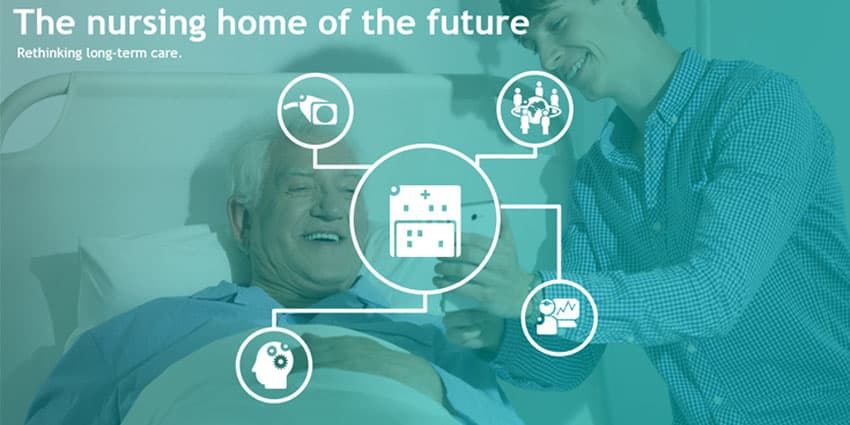
UC Today spoke with Jacques Der Ohanian, Senior Director, Head of Communications Vertical Solutions at ALE to dig deeper into the importance of shaping the nursing home of the future. A key focus for Alcatel-Lucent Enterprise in 2018, we were keen to see what lies ahead for the future.
Why a focus on elder people and the silver economy?
In most industrialised countries, people longevity is increasing. Consequently, the number of elder people over 60 will more than double by 2050. By 2100, this figure will have tripled.
Despite evolution in medicine, this will be increase the need for long term care in public or private facilities. Seniors are, and will be, more connected. They have more spending power, and the means to subscribe to assisted living services ahead of time. This makes it possible for them to extend their autonomy and well-being. Some of them even anticipate their future dependency.
"A key trend is providing connected services to early retired people to avoid negative scenarios associated with retirement".
What are the different needs that must be addressed?
"Needs will differ. However, the objective remains the same. Enhance well-being and provide care while keeping the contact with their family and friends. Contact is crucial. With a more active population than ever before, the ancient model of welcoming the elderly is no longer as easy.
Innovation must be centred around people. Whether it be the patient, the assisting staff or the care givers.
From the patient point of view, the main objective is to keep contact with family and service providers. Assisting staff need to coordinate with multiple service providers and care services. For medical services, think more about teleconsultation, pre and post ambulatory services and telemonitoring.
Reminder services, for example, ensuring a patient eats their meal or is active will be required. The utilisation of connected objects like smart sensors, movement detectors and electronic pillboxes will be important for the nursing home of the future".