Collaboration has always played an important role in driving business growth and moving companies forward towards future successes – but how much has cloud technology changed the way they accomplish this?
In order to find out, we decided to write an article that explores exactly what kind of impact cloud technology has had on collaboration in business, why the modern market makes it a necessary investment for any forward-thinking company and what benefits it can bring to help improve the efficiency and productivity of every team member.
What are cloud-based team collaboration apps?
Ten years ago, collaboration typically involved squeezing a group of people inside a meeting room for one or two hours a week and forcing them to think of something creative.
Creativity, however, knows no such limits and, though somewhat effective in the past, the traditional ways of sharing ideas and information are no longer capable of keeping up with the demands of the modern business user.
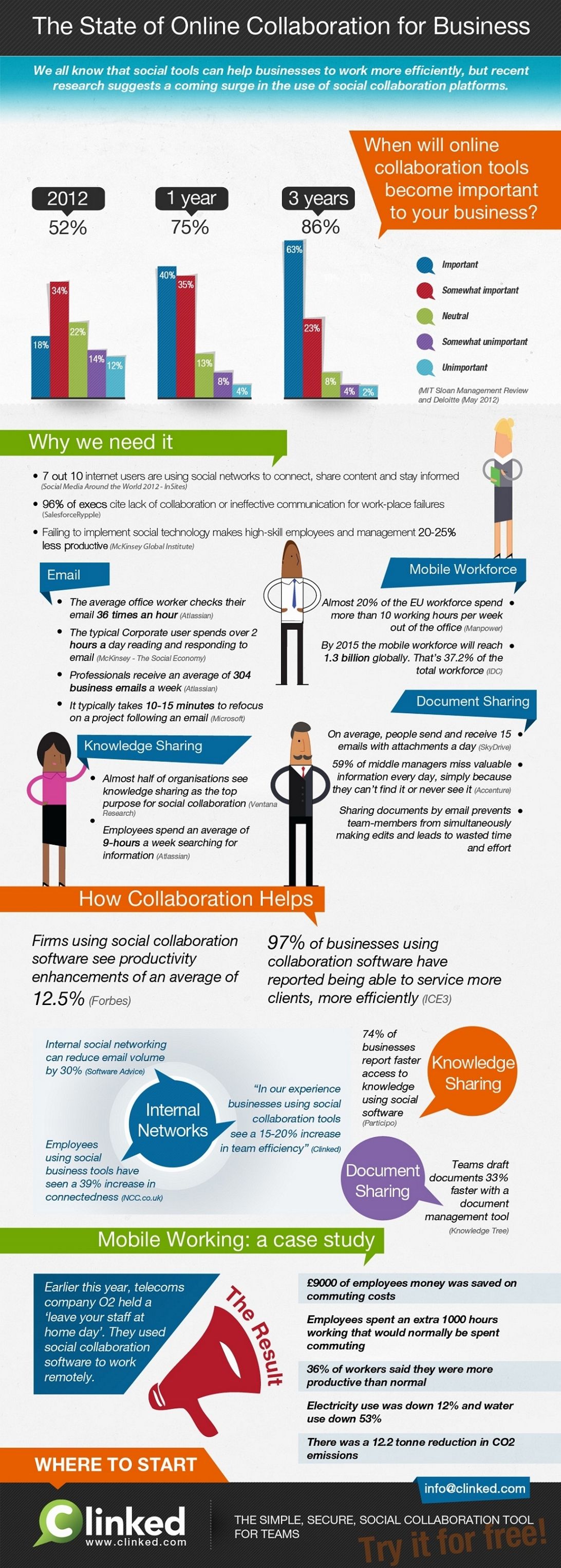
Unlike before, we now live in an age of digital transformation that is heavily dominated by mobile communications and, according to a recent report, it was shown that 7/10 Internet users now choose cloud-based apps such as Facebook Messenger, WhatsApp or Skype over voice calls and email for the convenience they offer.
Rather than wasting time waiting for a call to be answered or for an email to be read, millennials instead choose to communicate through video chat or text-based IM platforms where they can exchange information in real-time at whatever part of the day is most suitable for them.
With cloud-based team collaboration apps such as Slack, users are now free to engage in conversation through various channels across multiple devices at any time and in any location of their choosing.
Additionally technology like Sameroom from 8x8 provides integration across IM applications, allowing individual users within or across organisations to choose their preferred IM platform while remaining connected to the people they need.
The rise of millennials and the remote worker
With another report claiming that as much as 60% of office-based employees will regularly work from home by 2022, we can see that the number of people choosing to work remotely outside of the traditional office environment is set to grow considerably over the next five years – but why is this so?
As technology evolves, the expectations of users evolve with it and millennials have shown a much greater preference for remote working on account of the convenience and flexibility it brings into their lives.
When armed with the latest team collaboration tech, research has shown that 77% of millennials stated an increase in productivity rates while 53% claimed a reduction in stress levels and 52% reported that they were less likely to take time off work as a result of being able to work from home.
Moreover, given that the modern world is one that is heavily driven by mobile apps – everything from social media and transportation to banking and personal fitness – it makes sense for businesses to invest in a solution that centralises all of its employee’s communications into a single application that can be used seamlessly across multiple devices.