Ukraine’s battlefield realities are forcing a rethink of how modern militaries prepare personnel for combat.
With armoured vehicles and critical equipment almost constantly deployed to the front lines, access to hardware for training has become a serious bottleneck.
But a new Nordic defence technology initiative is stepping in with a solution that would have sounded experimental only a few years ago: immersive extended reality training.
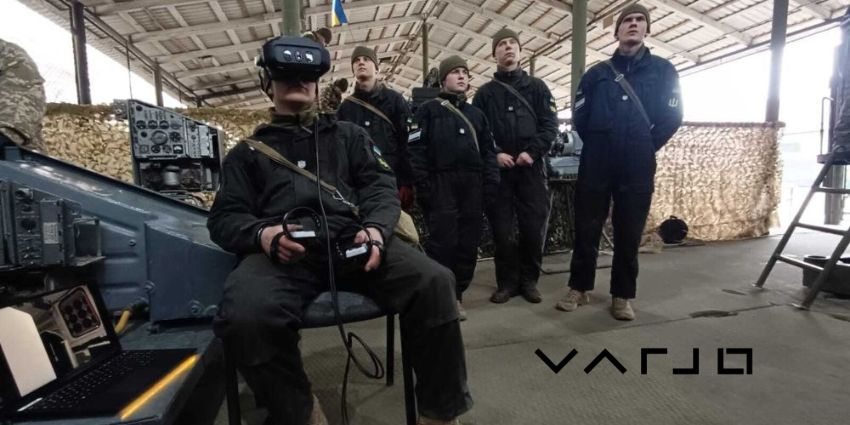
Finnish XR manufacturer Varjo and Norwegian simulation specialist Fynd Reality are delivering virtual training systems to the Ukrainian Armed Forces, funded through Norway’s Nansen Program and contracted by the Norwegian Defence Material Agency.
The project is valued at NOK 82.5 million (US$8.7 million) and will begin with an initial rollout of 39 XR training systems.
“XR training is solving a real operational challenge in Ukraine, where access to vehicles and safe training environments is severely limited,” said Timo Toikkanen, CEO of Varjo.
“Varjo's technology is built for mission-critical training use cases where security, reliability, and visual accuracy are paramount. Together with Fynd Reality, we can actively help accelerate and scale training for Ukrainian soldiers heading to the front lines.”
Behind the funding announcement lies a simple operational reality: Ukraine needs to train soldiers on equipment it cannot spare.
From Pilot Projects To Battlefield Infrastructure
The Nordic initiative aims to close that gap with immersive simulation.
Soldiers can familiarise themselves with vehicle interiors, learn procedures, and practise maintenance tasks without requiring physical access to equipment.
Training is already being deployed across multiple vehicle types, including Western-supplied armoured platforms such as the Leopard 2 A4.
The move reflects a broader shift in how defence organisations view immersive technology.
Virtual and mixed reality have long existed on the edges of military experimentation, but the urgency of Ukraine’s situation is accelerating their transition into operational infrastructure.
Military training has always been resource-intensive.
Every hour spent running a vehicle requires fuel, maintenance, logistics, and risk management. XR shifts the economics of repetition. Complex scenarios can be replayed endlessly without physical wear and tear, enabling faster iteration and broader access to training.
NATO Validation And Nordic Defence Collaboration
Fynd Reality says its platform has already been validated in NATO environments, signalling that the Ukrainian rollout is part of a larger evolution in allied training methods.