
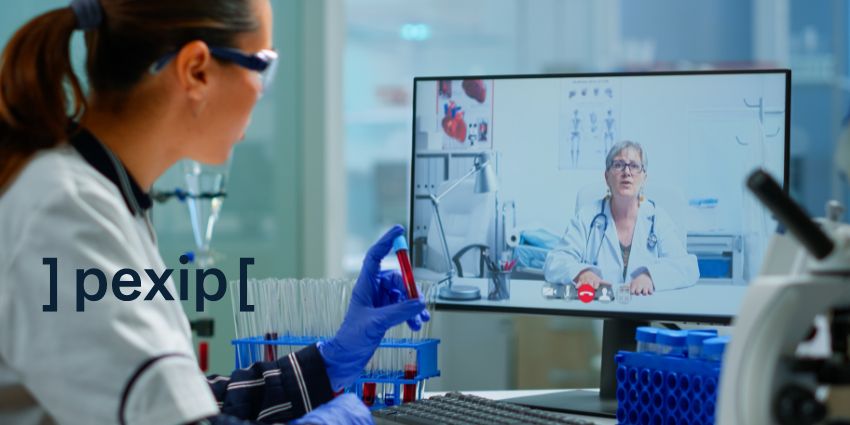
Imagine under-pressure healthcare providers increasing the size of their workforce ten-fold with a few simple clicks.
Imagine in-demand specialist doctors being able to treat patients all over the country without leaving their office.
And imagine vital examinations and consultations taking place with patients and their families wherever is convenient.
In today’s smart, super-connected world, video technology has the power to help turn these most transformational of dreams into reality.
Not so much changing lives; more saving them.
Add the kind of financial return on investment that is rarely experienced in other sectors, and the benefits are truly compelling.
Around the world, systems of primary healthcare vary hugely: some purely private or insurance-based, some state-delivered at taxpayers’ expense and free at the point of delivery, others a mix of the two.
Conversely, most countries’ secondary healthcare activities – such as elective or cosmetic surgery, dentistry, physiotherapy, ophthalmology, podiatry, etc. – are wholly commercial enterprises.
For providers with the right technology partners, the opportunities are significant.
“The single biggest challenge for healthcare providers of all kinds in all countries is the same – they do not have sufficient staff to meet continually-rising demand,” says Mike Brandofino, President and COO of rapidly-growing telehealth disruptor Caregility, whose specialist video-based healthcare solution is a global game-changer.
“Technology is able to confront that challenge and deliver truly transformational outcomes which drive efficiencies and improve patient outcomes.
“The pandemic forced healthcare providers to quickly deploy whatever methods of virtual communication were out there in order to continue functioning whilst simultaneously preventing further spread of the virus.
“That emergency ad hoc deployment spawned permanent benefits that we are now able to embed for the long-term via a purpose-built platform which integrates seamlessly with clinical workflows, and which dramatically improves the patient experience.
“We see every day the huge impact it makes. It is the power of technology at its transformational best.”
Powered by partnership with video technology experts Pexip, Caregility’s feature-rich telehealth platform securely connects clinicians and managers to hospitals and clinics, and doctors and nurses to patients and their families – wherever they are and whenever they need to interact.
In the US alone, 10,000 hospital rooms are equipped with Caregility devices and a further 20,000 other devices are supported by its platform.
It has also recently been deployed in two Saudi Arabia health systems, supporting the claim that Caregility’s solution applies globally.
“During the pandemic, Microsoft Teams and the other virtual collaboration tools that exist were ‘good enough’,” says Brandofino.
“But they don’t integrate well with healthcare providers’ existing workflows and systems, and they don’t create a consistent user experience for patients.


