
As businesses continue experimenting with what works best in the early years of hybrid work as the new normal, best practices for effective collaboration are gradually taking shape.
Every business is different and will abide by its own tweaks to the suggested formulae for optimised collaboration, but general concepts are emerging that could help most companies manage this significant working transition.
In a fascinating talk at London's UC Expo this week, Mark Licinio, Global Product Owner of Collaboration at BP Energy, offered insights into empowering smart collaboration through corporate strategy and meeting room design.
BP itself migrated from the traditional model of most employees being expected in the office every day to being expected on-premises three days a week. That's the company mandate, but, as Licinio described it, it's been a "slow ramp-up".
"Where I work is a campus site. We used to host 5,000 people (pre-Covid), and it's now hosting 2,000 on a busy day," Licinio said. "So there are still some buildings closed, some talk of opening a few more, but that's one of the things being done is telling employees, 'That's what we expect of you.'"
However, mandates do not encourage or facilitate effective hybrid collaboration in and of themselves. Licinio highlighted the work done by BP's physical and digital teams in addressing that issue.
"The other part of it is the physical," Licinio expanded, "and our physical workplace team are doing a lot to revamp offices from a scenario where everyone had their own desk to a hub desking model. On the digital side, we've got technology in the meeting rooms, upgrading from traditional video conferencing estate to being Microsoft Teams native."
Naturally, this means Licinio is overseeing a large number of projects in transition. A compelling question posed to him was, 'How do you successfully manage such a complex process'?
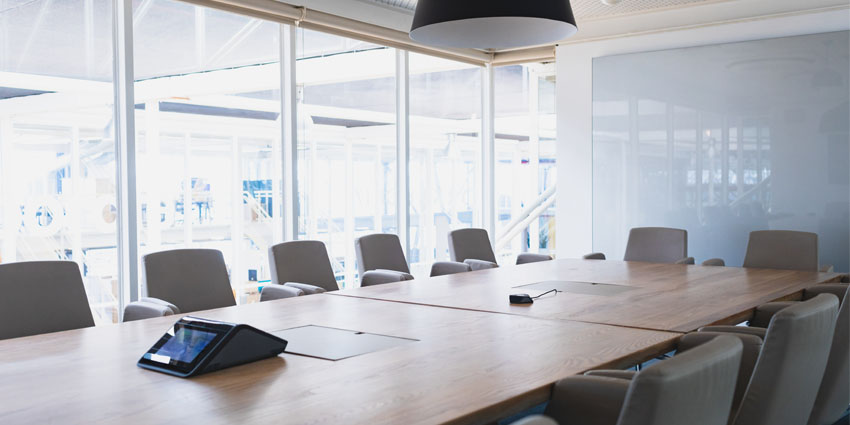
"A lot of my time now is spent testing different products for different spaces," Licion explained. "So that takes up time. I think it's probably successful when you factor in the physical factor of the room. For example, we've found basic larger rooms don't lend themselves to long audio tables, for example, where, if you're at the back, it isn't a great experience."
"It's about making those quality experiences consistent, which requires sampling innovative designs to see what works and then tweaking those designs to see what works best for users."


