
In the wake of the COVID-19 pandemic, workplaces around the world experienced a significant paradigm shift towards remote and hybrid work models, accommodating both in-office and remote work arrangements.
Four years on from the beginning of the pandemic, organisations have had time to tweak their models to what they believe works best for them, but the flexibility offered by hybrid models has inevitably sparked a debate over what arrangement works best for employees and employers alike.
UC Today took to LinkedIn to poll its audience in our attempts to decipher this conundrum and shed light on preferences among professionals — and whether their responses might challenge preconceptions — by asking individuals, "What works best for *you*? What model best helps your productivity, ability to collaborate and mental well-being?"
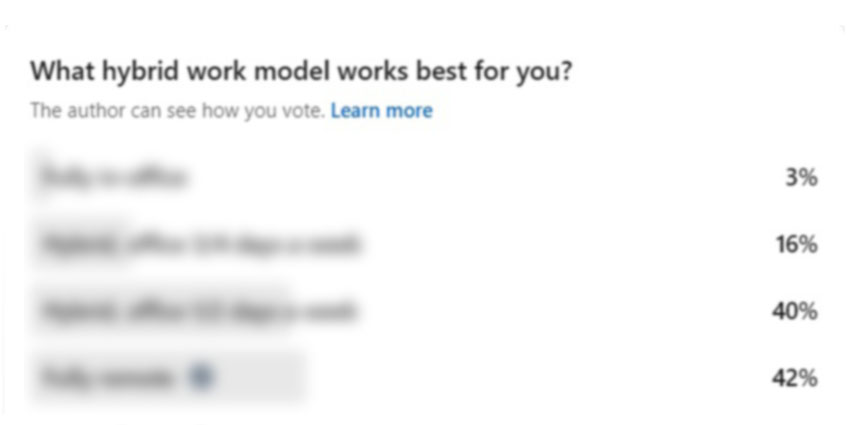
The poll sought to gauge opinions on four distinct hybrid work models: "fully in-office", "hybrid, in-office 3/4 days a week", "hybrid, in-office 1/2 days a week", and "fully remote". The results provided valuable and perhaps surprising insights into the evolving landscape of work preferences.
With 327 respondents, the most immediately striking figure is that only a minority, comprising 3 percent of respondents, favoured the traditional "fully in-office" model. This indicates a significant departure from the pre-pandemic norm, reflecting a widespread acceptance of remote work options among professionals.
The "hybrid, in-office 3/4 days a week" model garnered 16 percent of the votes, indicating moderate contentment towards a blend of office and remote work but preferring the former. This arrangement balances the benefits of in-person collaboration and the flexibility of remote work, appealing to those seeking a middle ground.
Meanwhile, a substantial 40 percent of respondents expressed a preference for the "hybrid, in-office 1/2 days a week" model. This result underscores a prevalent desire for flexibility, with employees valuing the opportunity to divide their time between office and remote environments.
The most striking revelation from the poll is the overwhelming support for remote work, with 42 percent of respondents opting for a "fully remote" setup. This preference highlights a profound shift in attitudes towards work-life balance and the efficacy of remote collaboration tools.
These poll results underscore the importance of organisations embracing flexibility in their work policies, with less than a fifth of respondents saying they prefer to spend most of their work week in an office environment.


