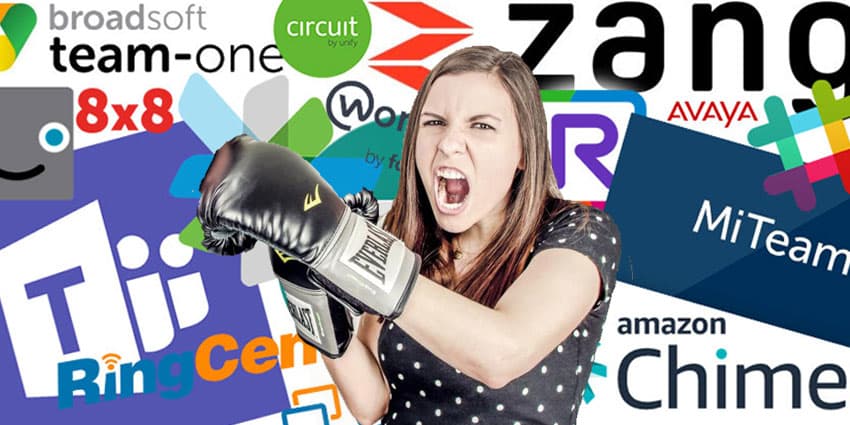
The collaboration market is heating up. Once upon a time, Slack were the only player. Then Microsoft caught wind of their success and the rest is history. If you are familiar with Geoffrey Moore’s "Crossing The Chasm", then you’ll appreciate how collaboration tools have rapidly leapt from Innovators to Late Majority.
The innovators are buyers that want the newest technology, now. Think about the people queuing up outside the Apple store when a new iPhone is released. The late majority are those that wait until a product is tried, tested, broken, fixed and it’s fourteenth iteration. The former is a product manager’s dream. The latter is a salesperson’s nightmare.
Collaboration Tools
When we reference collaboration tools, we are talking about the likes of Slack, Cisco Spark, and Microsoft Teams. But, we are also talking about everything that surrounds them like Google Drive and SharePoint. You cannot assess the functionality of one product without taking into consideration the full suite.
Our industry is a funny one in that terminology can mean different things to different vendors and customers. Often, you’ll hear people talk about Skype for Business when referencing collaboration. Sometimes, you can have a conversation about Slack and it is called a whole host of things. Persistent chat, workstream messaging, workplace collaboration, team applications, the list goes on.
There is no right or wrong answer here, but it is tough to compare all the players in this space when the space is so loosely defined. Oddly, there is no conclusion to be drawn as to which is the best at the end of this article as each serve a different purpose and service different needs. However, they can be sorted in three categories to make your life easier.
The Protagonists
Slack is considered the originator of this type of technology but that doesn’t necessarily mean they are the out and out leader. Slack offers free workspaces for an unlimited time which works great as an internal tool. For external access and little niggly things that boost productivity and reduce clicks, you must start paying for the standard package. For a full meeting experience and to use as your storage facility, you must step up to premium. As the originator, Slack set the bar with a fair pricing model, especially popular with small businesses that don’t need 20GB storage and 15-person virtual meetings.
Microsoft quickly caught onto the success and have turned Teams into an outright competitor across the board. Whilst the roadmap promises everything you can get in Skype for Business beautifully intertwined (that’s the high-level explanation), the current offering is competitive. Teams is free with Office 365 and offers the workspace environment, the meeting environment through either Teams or Skype and the storage through SharePoint and OneDrive.
Cisco Spark is another worthy competitor and I’ve covered the differences between Teams and Spark in detail, previously. As the big brother to Jabber, Spark is equally as capable in the collaboration department with various features such as messaging, meetings, document sharing all functioning to the highest standard. However, with so many similar tools in the chest, Cisco are perhaps in danger of creating confusion with their existing customers.
The Sleeping Giants
Neither Amazon nor Facebook are traditionally players in the business communications market, but these are serious names that we see sneaking in through the door. Workplace by Facebook has been adopted by the likes of Starbucks and utilises the same functionality as Slack and Teams but has the bonus of looking extremely like Facebook that you use at home, on the train and yes, probably at work anyway.
Amazon Chime has seemingly been sitting on the sidelines waiting for something to happen, but you could argue that Amazon have also been busy taking over the world. It’s not just Jeremy Clarkson that is doing his shopping via drones.
The Chime platform offers cloud-based voice, video, and chat with crystal-clear audio, and integration with a wide range of operating systems, including iOS, MacOS, Windows, and Android.