
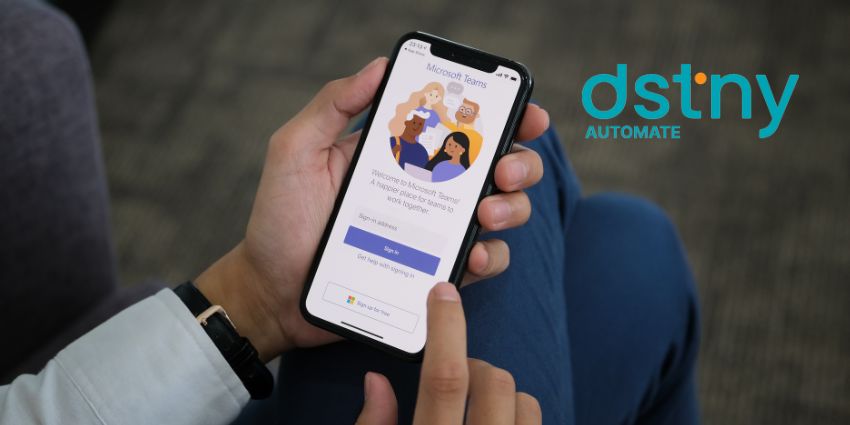
This new offering sits alongside Dstny’s existing Call2Teams PBX and Call2Teams Trunks product pathways and will be sold via vendors, distributors and resellers.
Call2Teams Go promises to be “a game-changer for Teams calling via PBX”, Dstny Automate’s Chief Product Officer Neil Greenwood said. This is because it enables native Teams calling, whilst eliminating the majority of previously necessary licensing costs.
Understanding the concept of ‘Teams native’ can be complex as it often means different things to different people.
Many voice providers say they integrate voice with Teams, but often this integration isn’t as tightly knit as it could be.
Greenwood explained to UC Today that many apps appear to be native but actually are just a front end to an external platform.
“Being native on the client side means you’re using the Teams voice capabilities within the platform, which comes with the networking and quality of service attributes that go from the client into the Azure Cloud and then to Teams,” he explained.
“With some integrations, you’ll see the dialer in Teams, but it’s actually presenting as a web client using WebRTC or simply acting as a remote interface to an existing app. So, whilst this gives a telephony experience it’s not essentially a native experience in Teams with all the additional capabilities that provides.
“The intuitive experience of Call2Teams Go means that disruption is minimalised. With such a seamless experience there is no need to retrain existing users.”
Delivering a True Teams Experience
Dstny has launched Call2Teams Go to help deliver the true Teams experience that organisations want whilst bringing their own telephony provider, and without the added complication of Teams Phone licensing, Call2Teams Go effectively unlocks the native Teams dial pad, typically associated with the Teams Phone System, but allows organizations to plug in their preferred voice services through Direct Routing.
Importantly, Call2Teams Go works without needing a Microsoft Phone System license for the end user.
This native experience means users can access essential Teams functions that are difficult to implement when an integration with Teams is not native, such as call transfers by username, device switching, Teams voicemail, and call history – all directly from the Teams app.


