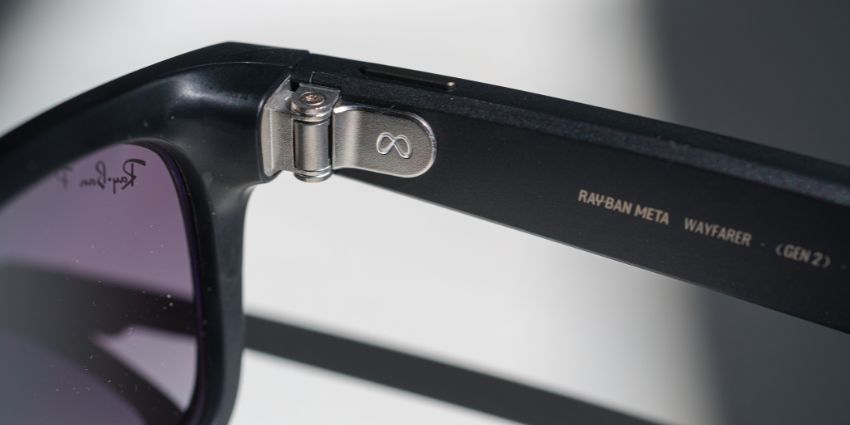

We’ve all noticed conversations about extended reality and immersive collaboration vendors changing in the last couple of years. Smart glasses, headsets, and spatial computing systems are starting to feel just as normal as your workplace phone or PC. In fact, by 2034, the market for the tech is expected to be worth over $3261 billion, and enterprise buyers are leading the charge.
It makes sense. The shift is practical. Distributed teams are tired of flat video grids for complex work. Design reviews, planning sessions, onboarding, even training initiatives all lose something when presence drops out of the equation. Immersive collaboration software promises to fix that, but only if it behaves like enterprise tech: predictable, secure, and usable on a Tuesday afternoon when no one feels experimental.
This guide looks at immersive collaboration vendors that hold real potential for enterprise leaders. If you’re ready for an XR update this year, here’s where you start.
The Top Immersive Collaboration Vendors
- Glue (Hyperspace)
- Igloo
- Meta
- Arthur
- Virtalis
- 3DExperience
- Virbela
- MakeReal
- Rendever
- MeetinVR
- The Wild
- Breakroom
- Microsoft
- Resolve
- MootUp
- Spatial
- Hoppin
- Remio
- INVIDAR
The Immersive Collaboration Vendors Enterprises Should Watch
Honestly, this isn’t a small market anymore. We’ve got vendors focusing on different types of hardware: smart glasses, headsets, and full systems, plus companies that prioritize the software side of immersive collaboration, concentrating on specific industries or use cases.
Here, we’re looking at the companies creating systems, tools, or platforms built to redesign how people work together. Some of these solutions tackle the same old communication problems we’ve been facing for decades, others make learning feel more inclusive, and some rethink events.
What makes them all worth enterprise attention is how they help to redefine the workplace in a way that improves experiences for staff, supervisors, contractors, and everyone else that uses them.
Hyperspace (Previously Glue)
Glue was one of the earlier companies to realize that immersive experiences had something worthwhile to offer hybrid teams. The platform gave organizations tools for creating custom metaverse-style spaces for knowledge sharing, and teamwork.
In 2024, Hyperspace acquired Glue, folding its core collaboration tech into a broader enterprise metaverse stack. Now the new ecosystem is more impressive than ever, with intuitive drag-and-drop templates for events, training, marketing and remote work.
Even better, it’s all “enterprise-ready”. That means SSO authentication and privacy tools come built-in, integrations exist for more than 100 business tools, and there’s support for virtually every device you can think of. Plus, with Kubernetes scale, expansion is easy.
Igloo Vision
Igloo, or Igloo Vision, describes itself as the “shared immersive space company.” The company offers organizations a platform to build dynamic meeting rooms and environments using the Igloo Core Engine (ICE).
What’s unique is how Igloo positions immersive collaboration around shared spaces where groups physically step in to interact with content, sometimes without headsets at all. Think: a room you walk into, walls covered in 360° visuals, teams circling around data together. AI and digital twins in these environments can even give teams a deeper level of shared context and decision support.
Clients have deployed immersive rooms for everything from safety training to executive planning sessions, teams don’t just meet about the project, they inhabit its data. That’s a different experience than a headset session.
Meta (Horizon Workrooms)
Meta’s pitch for work is pretty straightforward: take the work teams already do in meetings: presentations, whiteboarding, side conversations, and give it a sense of being in a room together instead of floating in a grid. Horizon Workrooms is built around that “shared room” idea, with things like a virtual meeting space, whiteboards, and the option to pull your real computer into VR via remote desktop.
The detail that makes Meta one of the top immersive collaboration vendors is access. Workrooms supports joining from VR and the web, which makes it easier to include people who aren’t wearing a headset. Plus, Meta for Business gives companies more comprehensive control over their content, headsets, and workflows.
If you’re weighing vendors and you’ve got a big installed base of Quest devices (or you’re considering one), Meta is often the “start here” option.
Arthur (Arthur Spaces)
Arthur isn’t just focusing on the metaverse or immersive collaboration, it’s designing environments where humans and AI can work together more efficiently. Companies can build virtual landscapes with built-in file and content-sharing capabilities, infinite whiteboards, graphs, and AI-powered configurable coworkers.
The AI focus is Arthur’s biggest selling point, particularly in the age of hybrid AI and human teams. You can design AI-assisted workflows with digital colleagues that provide meeting summaries, next-step guidance, and even training nudges.
Arthur is also explicit about letting non-VR participants join through a browser viewer in its broader product direction. That single choice changes procurement math, because it lowers the “headset tax” for cross-functional rollouts.
Virtalis
Virtalis takes a different approach to most immersive collaboration vendors. Its focus is on full-service virtualization solutions, built to help teams tackle really complex work. Their roadmap is deeply tied to digital twins and the practical problem of getting multiple specialists to interpret the same model the same way, without ten versions of the truth floating around.
What’s useful for 2026 buyers is that Virtalis keeps investing in the arguably less exciting side of immersion: handling large scenes, improving interaction predictability, and supporting modern standards like OpenXR. Their Visionary Render 2025.3 release notes call out improvements to rendering, tracking, and interaction behavior, exactly the stuff that determines whether a platform survives day-to-day use.
They also pair software with real-world immersive visualization setups (like power walls and collaborative display environments), which fits organizations where headsets aren’t always the preferred interface for group review.
Dassault Systèmes: 3DEXPERIENCE (Immersive Collaboration Experience)
Dassault isn’t interesting in building more attractive meeting rooms; it’s goal is to help businesses create full “digital twin” environments, particularly for industries like manufacturing, life sciences, and healthcare. The 3DExperience platform is framed around multi-user VR reviews where teams capture decisions directly in a shared environment.
For buying committees, this is a different category of immersive collaboration software. It’s less about “meeting better” and more about “reviewing, validating, and signing off” with fewer gaps between engineering, ops, and leadership. It also makes the business case easier to defend because collaboration isn’t bolted onto a workflow, it is the workflow.
Plus, the support from Dassault is comprehensive, covering everything from proprietary software development, to multi-source data integration.
Virbela
Virbela’s story got more interesting recently, and not in a gimmicky way. The platform returned to its founders in a 2025 reacquisition, with the company openly talking about refocusing on accessibility and web delivery. That’s the sort of update enterprise buyers pay attention to, because it usually signals product priorities: make it easier to join, easier to roll out, easier to keep running.
On the product side, Virbela is pretty blunt about offering “two ways to bring people together”: a quick, no-download option (Virbela Go) and a full-scale virtual campus approach for work, education, and events. That split is smart. Different stakeholder groups want different levels of commitment. IT might want a contained pilot. HR might want a persistent space for onboarding cohorts. Universities might want a campus they can “walk” prospective students through.
Virbela hasn’t gone quiet either. The company keeps rolling out updates and new relationships, including a late-2025 partnership tied to building out a virtual innovation campus. It’s the kind of move that suggests long-term intent, not a platform sitting on autopilot.
MakeReal
MakeReal was one of the earlier names people associated with immersive collaboration vendors, and it zeroed in on training from the start. That choice makes sense. Learning is where XR earns its keep fastest. The company helps organizations practice complex or high-risk tasks in shared virtual spaces, without tying up equipment, shutting down operations, or testing everyone’s patience in the real world.
MakeReal designs immersive experiences around the companies they support, which means you can get training solutions as VR simulations, desktop apps, or something hybrid. That matters for adoption: lots of enterprises want the benefits of immersive collaboration software, but they don’t want “headset or nothing.”
They also have long-running industry ties, like earlier work in construction training partnerships, showing the team understands regulated environments and frontline realities, not just office workflows.
Rendever
Rendever’s an interesting case because it doesn’t start with “meetings.” It starts with shared experience, and that changes the whole vibe. The platform was built for senior living and healthcare settings, where “collaboration” often means getting residents, staff, and families aligned around care, engagement, and quality of life.
What they sell today is a group VR system with guided programming and a library of experiences designed to be used together by people in the same facility, reacting in real time. Rendever positions this as a direct response to social isolation, and they’ve leaned into measurable outcomes like improving engagement and reducing isolation-related risk factors.
If you’re mapping immersive collaboration vendors to business value, Rendever fits under employee and resident experience, not IT productivity.
MeetinVR
MeetinVR feels like the product of a very specific frustration. Someone finally said, “If we’re doing meetings in VR, they should actually feel like work.” Since then, the team has kept pushing updates to a platform that’s been part of serious workplace conversations for years, not just demo days.
A few details stand out for enterprise buyers reviewing immersive collaboration vendors. First, MeetinVR puts a lot of emphasis on body language, spatial audio, and room setup, small things that decide whether people stay engaged with content.
Second, it’s not locked to one device type: it’s positioned for multi-user collaboration across headsets, with admin and management tooling available too. Plus, the company offers access to custom replica rooms, or digital twins of business environments, for specific projects.
The Wild (Autodesk)
The Wild started gaining ground in the last few years as a platform that makes XR in the workplace genuinely useful. It’s built for AEC and design teams who already live in 3D tools and just want fewer misunderstandings, fewer approval loops, fewer “wait, which version are we looking at?” moments.
The Wild links directly to Revit, SketchUp, and BIM 360 workflows, and it supports a wide mix of access methods across VR and desktop. That flexibility matters because design reviews rarely happen in perfect conditions. Somebody’s in a headset, somebody’s on a laptop, somebody’s joining between flights.
The other big “update” here isn’t a feature; it’s the corporate reality. Autodesk acquired The Wild (and referenced IrisVR as part of the same XR push). For enterprise buyers, that changes the risk calculus: procurement teams understand Autodesk. They understand the ecosystem. They can picture how immersive collaboration software fits inside an Autodesk-centered toolchain.
Breakroom
Breakroom feels like it was built by someone who’s run one too many “training sessions” that were really just a series of slides. Unlike most immersive collaboration vendors, this company is all about realistic, skills-based training on the job. You even get a full LMS that lets teams create courses, quizzes, waivers, and run instructor-led sessions inside the virtual world.
People can join through a browser, which avoids the awkward “we bought headsets and now everyone’s nervous” phase. Plus, Breakroom’s platform continues to evolve, with stronger VR experiences growing alongside no-code gamification tools, built-in communication apps, custom avatars, and AI assistants.
There’s even a range of deployment options for different immersive setups, and tools that allow companies to localize content for specific regions, without having to rebuild.
Microsoft (Teams Immersive Events)
If your company runs on Teams, Microsoft has basically forced the immersive collaboration question back onto the agenda, whether you asked for it or not. Recently, Microsoft retired the standalone “Mesh” experiences most people are already familiar with, and replaced them with immersive events in Microsoft Teams. Now customizable 3D events and avatars are moving closer to the center of the Teams experience.
For companies considering immersive collaboration vendors, Microsoft feels particularly accessible. Instead of introducing a brand new selection of tools, you can just upgrade the meetings and collaborative sessions you already have with spatial experiences.
Once your teams are fully connected in their new metaverse environment, you can use the same tech to expand into XR events too.
Resolve (Resolve BIM)
Resolve is for construction teams who are tired of finding problems when it’s already expensive to fix them. The platform sits squarely in BIM coordination, and the headline is speed: multi-user model reviews across web, desktop, and VR, with a focus on catching issues before they become rework.
Two updates are worth calling out because they show where Resolve is aiming. First, the company’s own 2025 recap highlights that they expanded beyond VR and pushed more integrations so teams can pull the info they need without hopping systems. Second, Resolve launched an integration with Revizto, letting teams review Revizto-tracked issues inside Resolve’s environment. Revizto’s announcement includes a strong enterprise proof point from Mars project engineers who say it helped eliminate double-tracking and sped up coordination.
This is one of those immersive collaboration platforms where the ROI conversation is unusually direct. If your buying committee has construction ops at the table, Resolve tends to get serious attention.
MootUp
MootUp is what you pick when your “collaboration” problem is really an engagement-at-scale problem. It’s positioned as a 3D virtual and hybrid events platform designed to work across devices, with a clear promise: people can join from desktop or mobile, and VR is optional.
That device flexibility is a big deal in enterprise planning meetings, customer events, partner summits, and internal kickoffs; anything where you can’t control what attendees show up with. MootUp also supports very large audiences (10,000+ simultaneous users in its platform messaging), which is a different procurement conversation than “VR meeting rooms for ten people.”
The practical value sits in the middle: avatar-driven interaction plus structured spaces for booths, sessions, and networking. If you’re comparing immersive collaboration vendors, MootUp often lands with marketing, enablement, and community teams who need something more alive than webinars.
Spatial
Spatial’s gotten clearer about what it is: a place to build interactive 3D spaces and publish them across devices, not a single “VR meeting room” product. That’s important if you’re on an enterprise team trying to run onboarding, internal comms, training, or even customer walkthroughs without forcing everyone onto the same hardware.
Spatial makes a big deal out of publishing to Web, mobile, and VR/AR. There’s also been a genuinely useful update for buyers that care about maturity. Spatial launched Spatial Enterprise in August 2025 and called out 3 million live activations as a scale proof point.
If there’s development muscle in the room, or a trusted partner on hand, Spatial makes its intent pretty clear. The Unity SDK lets teams build their own interactive spaces, complete with physics and real interaction, then publish them wherever they need to live. That flexibility matters when off-the-shelf layouts don’t quite match how work really happens.
Hoppin
Hoppin is a bit of a curveball in an enterprise collaboration list, but it earns a spot if you look at “collaboration” as shared experience that drives decisions. Their platform is framed around social VR tourism: hotels, resorts, destinations, where people explore 180°/360° environments together.
Here’s the enterprise angle: Hoppin includes conversion mechanics that a lot of immersive platforms ignore. They talk about “in-VR calls to action” where a guest can request more info and get follow-up by email, which is basically immersive CX instrumentation.
They’ve also built a supporting stack: Hoppin’ Studio, a web CMS for managing and deploying 360° content, plus “Stations” (kiosk-style deployments) for high-traffic physical locations.
Remio
Remio’s current messaging is a little split personality, part “virtual world fun,” part “corporate collaboration.” But that’s also why it shows up in enterprise experiments: it’s built as a multiuser world that can host events, run team sessions, and keep people engaged longer than a standard meeting format usually does.
On the product side, Remio’s platform leans into branded virtual rooms for internal company events and external engagement. In plain English: if you want a space that feels like “yours,” and you want it to support a mix of meetings, sessions, and experiences, Remio fits.
For buyers comparing immersive collaboration vendors, Remio tends to work when culture and participation are the problem you’re solving: onboarding cohorts, internal community, global town halls, where immersive collaboration software needs to feel social enough that people actually show up.
INVIDAR
INVIDAR doesn’t read like a headset-first collaboration company. It reads like a “we build the 3D thing your business actually needs” company, and that’s why it can fit in enterprise programs where off-the-shelf platforms hit a wall.
They position themselves around real-time 3D and bespoke software for large enterprises, with a focus on building custom solutions rather than forcing buyers into a single template. In immersive collaboration terms, this tends to show up in customer experience walkthroughs, digital twin-style environments, interactive demos, and internal tools where leadership wants their data and their process reflected in the experience.
For organizations treating immersive collaboration software as part of a broader digital transformation program that flexibility is the appeal. It’s also why INVIDAR often lands with innovation leaders who need something concrete they can deploy, measure, and iterate.
Making the Right Call on Immersive Collaboration Vendors
Interest in immersive collaboration vendors is just going to keep growing. Enterprises are now weighing these platforms against real expectations: faster alignment across distributed teams, clearer decision-making in complex projects, and collaboration experiences that hold up beyond a pilot phase.
What stands out across the market is how differently vendors approach the problem. Some immersive collaboration platforms focus on high-fidelity design and digital twins. Others prioritize scale, accessibility, or structured training. The strongest investments tend to start with a clear use case, a realistic rollout plan, and agreement on what success should look like six or twelve months in.
For organizations evaluating immersive collaboration software, the next step is less about finding a single “best” vendor and more about understanding how immersive tools fit into existing UC, CX, and workplace strategies. For help moving forward:
- Explore deeper research into vendor direction and enterprise adoption trends.
- Learn from other decision-makers through the UC Community.
- Experience the technology firsthand at upcoming events.
Collaboration is shifting into a different phase. Immersion, participation, and access are starting to come together in ways teams have been missing for years. It’s time to dive in.