
Hybrid work is now a core part of enterprise operations worldwide, yet Barco’s meeting barometer shows that 71% of employees struggle with hybrid meetings, and 61% find it hard to get noticed in video calls feeling disengaged, deal with technical issues, or feel excluded from the in-person teams.
So as organisations refine how, where, and why people work together, workspace tech trends in 2026 are shifting from novelty to necessity. The focus is clear: employee experience, meeting equity, and intelligent offices that make commuting worth it again.
Below are the key hybrid office technology trends shaping 2026, explained simply, with definitions and answers to the questions people are actively searching for.
Related articles:
5 Use Cases Show How Workspace Tech Improves Employee Experience
The Smart Workspace Vendors to Know About in 2026
Top Workspace Tech Events to Watch in 2026
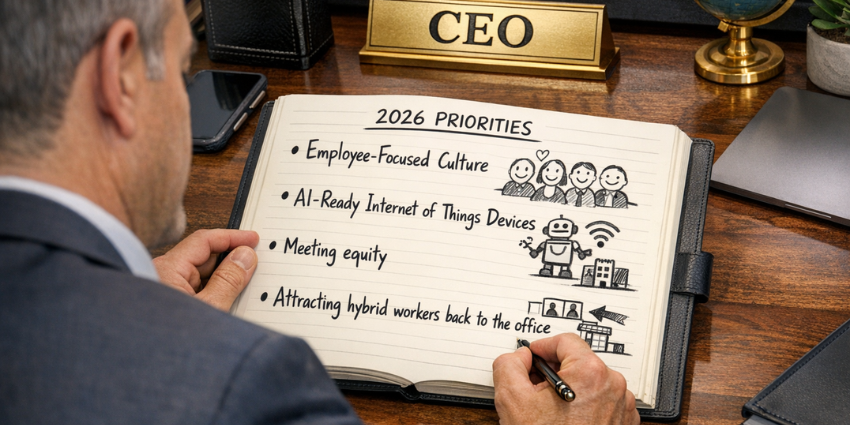
1. Employee-Focused Company Culture Becomes the Core Tech Driver
Definition: Employee-focused workplace technology
Technology designed to improve employee experience, wellbeing, productivity, and inclusion – not just reduce costs.
In 2026, the most important workplace tech trend is intent. Businesses are investing in tools that support employees as their most valuable asset, rather than treating them as replaceable resources.
This shift is driving adoption of:
- AI as a work copilot
- Frictionless desk booking and room systems
- Reliable, inclusive meeting technology
- Smart environments that adapt to people, not policies
Experienced leaders understand that employees are their greatest asset-and that the true return on investment comes from people. In 2026, work environments that feel supportive, innovative, and empowering will outperform those that don’t. If optimising employee experience is the end goal, what other workplace technology trends should leaders be paying attention to this year to make it a reality?
2. AI-Ready Internet of Things (IoT) Devices Power the Intelligent Office
Definition: Office intelligence tools
Connected workplace systems that collect and analyse real-time data to optimise space, energy use, security, and employee experience.
AI-ready IoT devices are becoming standard in hybrid office technology in 2026, connecting once-separate systems into a single intelligent ecosystem.
Expect to see:
- Smart lighting and climate control that adapt to occupancy
- Connected office equipment with predictive maintenance
- Enhanced security systems using AI and sensor data
- Tailored AI models that surface insights across departments
As Tony D’Onofrio of Sensormatic Solutions notes:
AI-ready Internet of Things devices and tailored models will proliferate in the coming year, helping to unify disparate systems and connect the dots between business areas.
3. Hybrid Creep Accelerates – and Technology Determines Whether It Works
Definition: Hybrid momentum (often referred to as “hybrid creep”)
Hybrid momentum describes the natural increase in in-office collaboration as teams recognise the value of being together, without formal mandates.
In 2026, many organisations are seeing hybrid momentum accelerate. Teams are choosing to spend more time together in person, particularly for collaboration, creativity, and decision-making.
When designed intentionally, this shift is a positive signal, not a rollback of flexibility.
However, for hybrid momentum to work at scale, two things must be true:
- Remote employees must not be disadvantaged
- The office experience must genuinely add value
This is where workplace technology plays a defining role.
It is key for enterprises to understand the best ways of attracting hybrid workers back into the office. Read our guidance on this here.
4. Meeting Equity Technology Goes Mainstream
Definition: Meeting equity technology
Tools that ensure remote and in-office participants can see, hear, and contribute equally during meetings.
Meeting equity technology ensures that increased in-office presence doesn’t come at the expense of inclusion.
By giving remote participants equal visibility and influence through:
- AI-powered video conferencing tools
- Smart conferencing systems with advanced audio and video
- Face recognition and speaker tracking for natural interaction
As Logitech’s David Houseman explains:
In 2025, the concept of “meeting equity”- ensuring all participants, whether virtual or in-person, can see, hear, and contribute equally – gained traction through pilot projects. In 2026, leading organizations will roll out large-scale implementations, driven by employee expectations and the potential for better recruitment, productivity, and customer engagement outcomes.
AV systems are also becoming increasingly important for ensuring meeting equity – Read more on this here.
5. Making the Commute Worth It
Definition: Collaboration devices
Hardware such as video bars, microphones, displays, and peripherals that support seamless teamwork.
As hybrid momentum grows, leading organisations are investing in collaboration devices and intelligent spaces that make being in the office the obvious choice.
That includes:
- High-quality video bars and immersive meeting rooms
- Seamless cross-platform collaboration tools
- AI desk and room booking systems that remove friction
When the office offers better collaboration, energy, and outcomes than home, attendance increases naturally.
Frequently Asked Questions
What are the biggest workplace tech trends in 2026?
The biggest trends include employee-focused workplace technology, AI-powered office intelligence tools, structured hybrid work systems, meeting equity technology, and advanced collaboration devices.
What office technology supports hybrid work best?
The most effective hybrid office technology in 2026 includes desk booking systems, smart conferencing tools, AI-powered video solutions, and scheduling platforms that align people, spaces, and time.
What is meeting equity and how do companies improve it?
Meeting equity ensures all participants—remote or in-person—can contribute equally. Companies improve it through smart audio/video systems, AI speaker tracking, and inclusive room design.
What are office intelligence tools and why do they matter?
Office intelligence tools use IoT sensors and AI to analyse occupancy, usage, and performance. They matter because they reduce waste, improve employee experience, and support better decision-making.
What upgrades make employees actually want to come into the office?
High-quality collaboration devices, reliable meeting experiences, comfortable environments, and technology that removes friction—making the office better than working from home.
Want to learn more about devices and workspace tech? Read our ultimate guide here.