
Apple has long been synonymous with redefining consumer technology, from the iPhone to the tablet.
Its next move, however, may not be another screen at all – but a tiny wearable designed to make its voice assistant, Siri, finally useful in the flow of work.
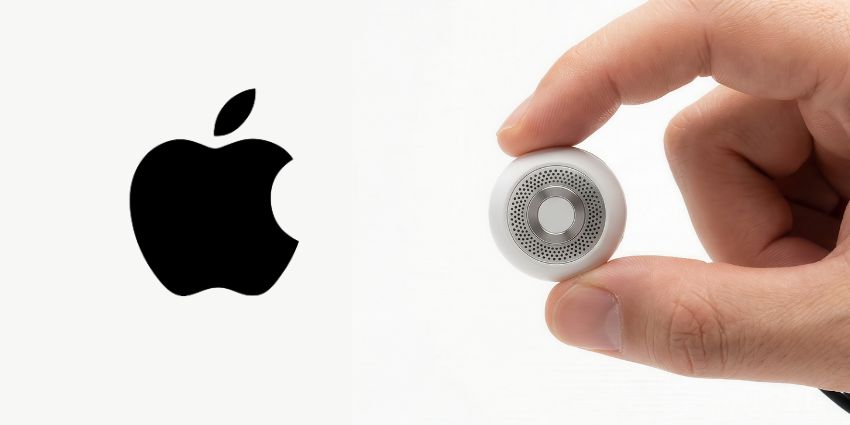
Reports suggest Apple is not developing just one device but a trio of AI-powered wearables — an AirTag-sized assistant pin equipped with cameras and microphones, AI-enabled AirPods, and smart glasses code-named N50.
All are expected to connect tightly to the iPhone and rely on a major overhaul of Siri, reportedly leaning on models from Google while keeping user data inside Apple’s infrastructure.
Bloomberg has also reported that development of these devices is accelerating, with the glasses potentially entering production as early as late 2026 ahead of a public release around 2027.
For enterprise technology leaders, the idea is less about novelty hardware than about whether such devices could ever be deployed at scale.
“It’s a combination of vendors looking for the next big wearable and hoping enterprises will find value in the devices,” Irwin Lazar, president and principal analyst at Metrigy told UC Today.
“Outside of earbuds, the wearables market has struggled in recent years.”
His point is valid – vendors are searching for the next viable device category but enterprise buyers are asking a simpler question: does a wearable assistant solve a real problem?
From Chatbots To Assistant Surfaces
Enterprise AI has so far been dominated by chat interfaces.
Copilots embedded in productivity applications, chat panels in collaboration tools, and standalone assistants have become common across large organisations. They offer utility but remain interruptive.
Assistant surfaces promise something different. A pin, earbud, or pair of glasses could capture meetings automatically, provide reminders based on what a worker sees or hears, retrieve information without switching applications, and trigger actions in real time.
Apple’s rumoured pin is particularly intriguing because it would act as a new endpoint inside enterprise systems.
It would need integration with identity providers, calendars, communication platforms, and document repositories.
The same would be true of AI-enabled AirPods and smart glasses, suggesting Apple is trying to seed assistant surfaces across its ecosystem rather than rely on a single device.
Yet the commercial logic remains uncertain. Apart from earbuds, recent wearables have struggled to find sustained enterprise demand.
Devices like the Apple Vision Pro showed technical ambition but limited business adoption.
That history explains why analysts view the current push as both technological optimism and market necessity.
Vendors hope advances in generative AI will give wearables a purpose they lacked before.
Security And Governance First
The promise of ambient assistants comes with obvious risks. A device that listens constantly and sees what employees see raises profound questions about privacy, compliance, and corporate data protection.
“Security is critical if devices are lost, stolen, or compromised,” Lazar says. “Tethering them to a phone, as with earbuds, would reduce some of that risk.”
But security is only the beginning. Lazar points to ethical concerns about inadvertently capturing personal information, especially in regulated industries or shared offices.
“As with any Agentic AI solution, there’s also the concern of the agent taking action based on bad information,” he added.
There is also the question of where enterprise data lives. Few organisations rely on Apple for their business data storage. Integration with identity providers, collaboration platforms, and document systems will be essential.
Those concerns reflect real barriers to adoption. Enterprise IT teams will demand device management hooks, policies for cameras and microphones, role-based access controls, audit trails, and clear data boundaries.
Regulators in the US – and particularly Europe – will ask harder questions still.
Reliability Is The Real Test
Even today’s most advanced assistants often fail at basic workplace tasks. They generate inconsistent summaries, misunderstand permissions, or fail to execute commands reliably. In a chat window, such errors are irritating. In an always-on wearable, they are unacceptable.
That is why Apple’s overhaul of Siri matters. Hardware innovation without assistant competence will not create a new enterprise category.
The assistant must understand meetings, recognise participants, respect access controls, and retrieve information accurately. It must integrate with existing enterprise systems and behave predictably within real workflows.
If it does not, enterprises will treat these devices – whether pins, glasses, or AI-enabled AirPods – as curiosities rather than infrastructure.
The Next Wave Of Enterprise Endpoints
Apple faces stiff competition from other tech firms exploring similar concepts.
Meta has reported early traction with Ray-Ban smart glasses, and Snap Inc. plans to release new Specs later this year.
The wider race will ultimately come down to how firms can balance battery life, privacy controls, reliability, and integration with enterprise systems.
Enterprise adoption will depend on practical value: meeting capture, secure note-taking, contextual reminders, and reliable access to corporate data.
If they succeed, joining meetings, capturing notes, and retrieving information could become ambient processes rather than deliberate tasks.
For Apple, the stakes are high – the company’s strength in hardware design could give it an advantage if it can deliver an assistant that is both capable and trustworthy.
But enterprise credibility depends less on design than on governance, reliability, integration and most perhaps most importantly – cost.