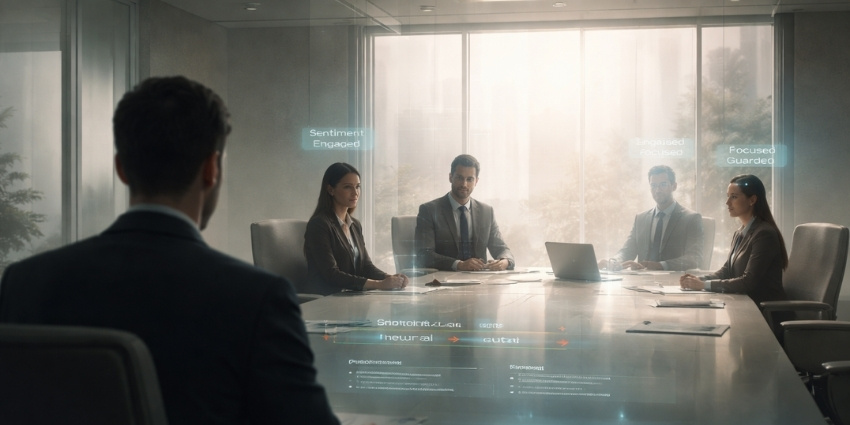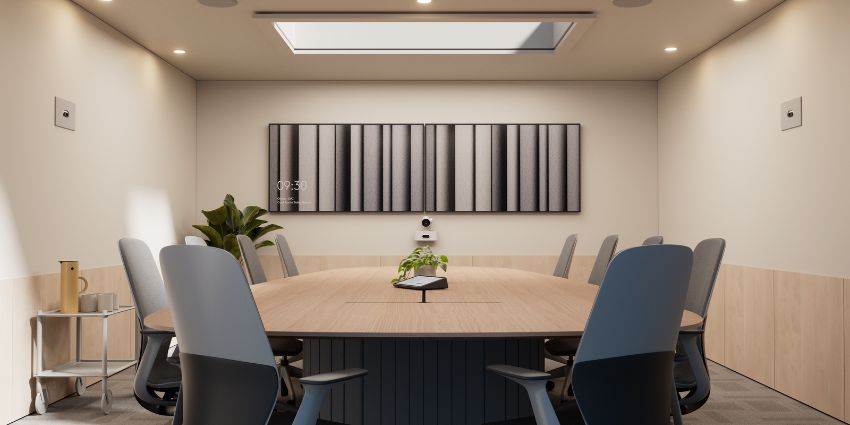

Logitech has introduced two new enterprise conference cameras, the Rally AI Camera and Rally AI Camera Pro, targeting large, complex meeting spaces such as boardrooms, classrooms, and town halls.
The devices combine AI-powered video framing with occupancy tracking, offering more automation than typical enterprise cameras.
“Rally AI Cameras are designed to power the hybrid-first office, where the tech fades into the background to let the digital and physical worlds blend,” said Henry Levak, VP of Product at Logitech for Business.
“From small walls to town halls, they provide a cinematic experience for meeting attendees while quietly solving problems that IT managers, Facilities teams, and Workplace Experience professionals face every day.”
Multi-Camera Coordination
Both cameras use Logitech’s RightSight 2 system, which automatically adjusts framing based on participant location and activity.
RightSight 2 separates people detection, tracking, and composition into distinct processes, creating smoother transitions and fewer abrupt camera movements as participants enter, leave, or move within the room.
The system supports Group View, Speaker View, and Grid View, and in multi-camera setups, it can blend inputs from multiple cameras rather than switching abruptly.
A Camera Zone feature lets administrators restrict framing to a defined area, preventing activity outside the meeting from interfering with the shot.
Dual-Camera Architecture and 4K Imaging
Both models share a custom lens paired with a one-inch image sensor, capable of capturing 4K video across a 115-degree field of view.
The standard Rally AI Camera uses digital zoom for framing adjustments.
The Pro model adds a second motorized optical camera with up to 15× hybrid zoom, letting it capture distant speakers while maintaining wide-room coverage.
Logitech says this dual-camera approach avoids the limitations of digital-only or optical-only setups.
The company is also introducing its first in-wall mounting option, allowing cameras to be recessed into walls.
Ceiling, wall, and display mounts are also supported.
The Pro model is slimmer than previous Rally cameras, reducing visual intrusion in design-conscious spaces. Both models include a physical privacy shutter that clearly indicates when the camera is off.
Analytics, IT Oversight, and Integration
Beyond video, the cameras track room usage and occupancy, feeding data into Logitech Sync.
This enables automatic room booking and release, helping organizations reduce wasted space and “ghost meetings.”
The cameras integrate with Logitech Rally audio components as well as certified third-party systems from Shure, Q-SYS, Biamp, and Nureva, and support USB or single Cat-cable installation for longer runs.
For IT teams, the combination of automated framing, occupancy tracking, and networked management could reduce time spent on manual setup, monitoring, and troubleshooting.
RightSight 2 and Camera Zone mean IT no longer needs to intervene as frequently for framing adjustments, and remote management via Logitech Sync allows administrators to deploy updates, check device status, and monitor room usage from a central location.
How the Cameras Compare in the Market
The enterprise conference camera market has grown rapidly as hybrid work becomes the norm.
Competitors like Poly, Cisco, Huddly, Yealink, and Aver all offer AI-enabled cameras with varying degrees of automation and video quality.
Many focus primarily on either optical performance or software-driven features, while Logitech emphasises a combination of dual-camera hardware, automated framing, occupancy analytics, and modular integration.
Compared with Poly Studio, which emphasises wide-angle 4K optics but relies more heavily on manual framing, Rally AI cameras use AI to continuously track and reframe participants.
Cisco’s Webex Room Cameras offer integration with Cisco collaboration software, but lack the dual-camera hybrid zoom approach found in the Rally AI Pro.
Huddly and Yealink devices are typically smaller and more compact, optimised for smaller spaces, whereas Logitech’s new cameras target larger rooms with multiple participants.
By combining automated video, analytics, and flexible installation options, Logitech aims to position the Rally AI line as a high-end solution for organisations seeking both meeting quality and insights into space utilization, while reducing the day-to-day burden on IT teams.
The Rally AI Camera Pro adds Presenter View, a software-driven feature that keeps a speaker framed within defined boundaries even while moving, and hardware preset buttons for repeatable camera positions.
These additions aim to meet the needs of training rooms, lecture halls, and executive presentations, where consistent framing and clarity are critical.
Pricing and Availability
The Rally AI Camera is priced at $2,499 and is scheduled to ship in summer 2026. The Rally AI Camera Pro will be available in spring 2026 for $2,999. Both models come in graphite and off-white finishes.
With these releases, Logitech is aiming to make AI-driven cameras a more integral part of meeting management, blending automated video, room intelligence, and analytics to give IT teams and facilities managers better oversight of hybrid workspaces.