
Neat has joined Google Meet’s certified hardware ecosystem, enabling its devices to run Meet natively.
The expansion aims to provide organisations with greater flexibility in choosing collaboration hardware while standardising the Google Meet experience across spaces – from small huddle rooms to large boardrooms – without relying on secondary devices.
“Neat brings unique, AI-powered collaboration devices into the Google Meet hardware ecosystem, providing customers with additional flexibility and choice,” said Mark Ewing, Director of Product Management, Google Meet Hardware.
“Neat and Google Meet are delivering secure, scalable meeting solutions for rooms of all sizes.”
Google Meet Runs Directly on Neat Devices
The rollout currently covers Neat Bar Gen 2 and Neat Bar Pro. Support for Neat Board 32, Neat Board 50, and Neat Board Pro – including full touch functionality – is expected soon.
All devices run on Android 13 and integrate with Neat Center, the cloud-based management platform.
IT teams can remotely configure, monitor, and update devices across multiple locations, streamlining management for organisations with distributed teams.
Neat’s hardware includes AI-powered video and audio processing designed to enhance meeting quality. Neat Symmetry keeps participants centred, Neat Boundary restricts the visual field to relevant areas of the room, and Neat Focus adjusts audio depending on who is speaking.
These operate alongside Google Meet’s native features, including real-time captions, transcription, translation, and Gemini-powered AI tools for note-taking and in-meeting assistance.
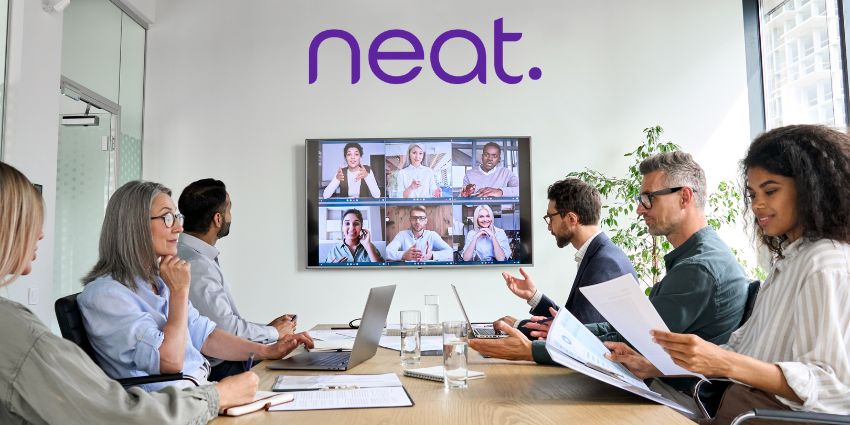
The combination of hardware and software is designed to support hybrid meetings, allowing participants to join from multiple locations without losing functionality or quality.
Admins Can Deploy Quickly
For administrators, the setup aims to be straightforward.
Devices that are already configured – including Neat Bar Gen 2, Neat Bar Pro, and Neat Pad – automatically appear in the Google Workspace admin console.
The devices provide telemetry data comparable to other Android Open Source Project (AOSP)-certified hardware, allowing IT teams to track usage, performance, and room engagement alongside existing devices.
The rollout began on 20 January 2026 and is staged gradually. Full visibility across Rapid Release and Scheduled Release domains may take up to 15 days.
Neat says it guarantees support for devices through 2033. Cloud-based management allows firmware updates, configuration changes, and remote troubleshooting across multiple rooms, reducing the need for on-site visits.
Flexibility
The devices are designed to work across a variety of room sizes. Small huddle rooms can use the Neat Bar Gen 2, a compact, all-in-one device. Larger rooms can deploy the Neat Bar Pro, which supports multiple screens and advanced zoom capabilities. Neat Boards provide touch-enabled displays for interactive collaboration sessions.
Neat Pad functions as a dedicated touch controller and room scheduling display, helping teams manage bookings and control meetings efficiently. Companion mode allows participants to join from a second device to take notes, participate in polls, or engage in Q&A sessions.
These capabilities aims to help maintain a consistent Google Meet experience across rooms and support hybrid work environments.
Considerations for IT Teams
Google Meet already supports a range of certified devices from partners such as Lenovo and ASUS. Neat’s AI-powered features integrate with Google Meet, offering automated framing, audio adjustment, and room intelligence alongside Google’s native software.
The need for reliable video conferencing has grown with hybrid and remote work patterns. Organisations require solutions that are easy to deploy, scalable across multiple locations, and consistent for end-users.
While technically robust, the integration requires planning. Some devices may not appear in the admin console immediately, and IT teams must coordinate deployments with network upgrades or security policies. AI features like automated framing and audio adjustments can improve meetings but may require adjustment in rooms with unusual layouts.
Costs are another factor. Neat devices are available through global sales channels and authorised resellers. Organisations must budget for procurement, as well as support and maintenance contracts, particularly when devices are deployed across multiple sites.
Looking Ahead
Neat’s native Google Meet support reflects the trend of combining intelligent hardware with AI-enabled software to support modern workplaces. Support is guaranteed through 2033, and Cloud-based management allows organisations to scale deployments while maintaining a standard interface.
The integration also demonstrates Google’s approach to certifying a variety of hardware partners, giving IT teams more choice without affecting the platform’s user experience.