
Sam Altman wants to build a device that could change the way people work.
The first hardware from OpenAI, developed in collaboration with former Apple design chief Jony Ive, is explicitly not a smartphone.
Early reporting points to a small, possibly screenless gadget designed to assist users throughout the day – quietly, without demanding constant attention.
Altman compares the experience to “sitting in a cabin by a lake”: calm, focused, and aware – the opposite of today’s noisy, attention-hogging screens.
Details remain scarce, but the first product could be AI-enabled earbuds, with a smart speaker and glasses to follow.
A New Computing Interface?
The ambition is more than consumer hardware; it’s a rethink of how humans interact with AI.
Today, large language models rely on users to prompt them, open them, and direct them.
OpenAI’s hardware strategy appears designed to remove that dependence.
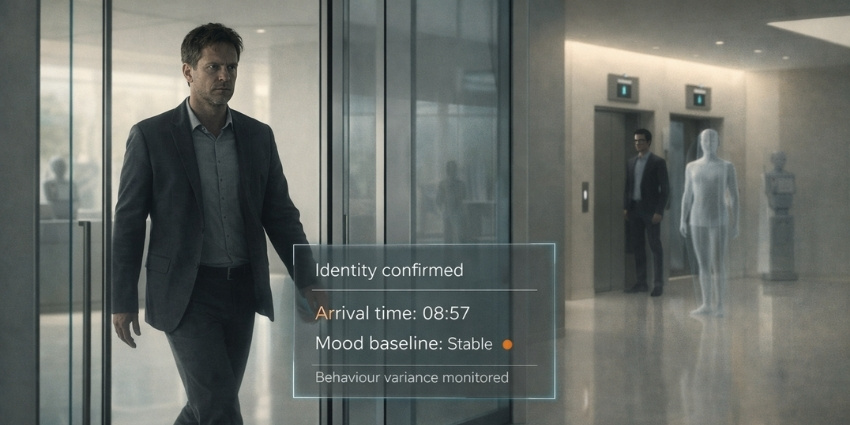
Users would exist alongside AI, which would continuously monitor activity, understand context, and offer assistance proactively.
For enterprise environments, the implications are immediate. A device that is always present could transform the way teams collaborate, shifting interactions from discrete events – meetings, calls, and emails – to a continuous stream of intelligence.
Collaboration platforms might begin to function less as destinations and more as data sources feeding an external, ambient AI layer.
AI as a Participant
This approach depends on continuous contextual awareness.
Without it, even the most advanced models remain reactive. With it, AI begins to resemble a participant in work itself.
OpenAI’s hardware ambitions may therefore be less about consumer devices than about overcoming structural limitations in enterprise AI adoption.
Most organisations still interact with AI in fragmented ways: text prompts, embedded features, and isolated applications.
A persistent, context-aware device could transform that relationship. Rather than waiting to be invoked, AI would already be present, interpreting and responding as work unfolds.
The broader technology landscape already shows movement toward more AI-infused endpoints and collaboration systems.
Established vendors are layering intelligence directly into their platforms rather than waiting for users to summon it.
For example, Cisco has introduced agent-based capabilities in its collaboration stack that embed AI assistants and automation into meetings and workflows, alongside integrations with major enterprise suites, underscoring a shift toward AI that works with users rather than merely responding to prompts.
Microsoft has pushed AI deeper into its devices and software with projects such as Copilot+ PCs and native AI tools in Windows and its productivity apps.
Even collaboration platforms like Zoom are rolling out “AI-first” solutions that combine communications with automated assistance and enhanced workflow support.
Together, these efforts suggest that while OpenAI’s hardware ambitions are unique in their scope, they sit within a broader industry trend where AI is becoming embedded at the edges of work itself – not just inside apps, but as part of the tools people use to communicate, collaborate, and get things done.
Listening as Data
Within the UC industry, that shift is already beginning to register. Speaking to UC Today, Adam Bootle, UC Sales Manager at Shure, said:
“Audio is no longer a passive input. It is a rich, real-time data signal that enables AI to understand context, intent, and what is truly happening in a conversation – driving clearer insights and more meaningful outcomes.”
He emphasised that this is part of a wider evolution from AI as a tool to AI as an active participant in workflows:
“We are intentionally moving from AI as a standalone feature to AI as an active participant in workflows,” Bootle said, adding that emerging systems are increasingly capable of delivering recommendations and, in some cases, taking governed action.
Trust, Governance, and the Enterprise Barrier
Of course, caution is warranted. Attempts to build AI-native hardware have struggled.
The Humane AI Pin, for example, failed to achieve mainstream adoption despite significant attention.
The difficulty is less technological than behavioural – users must trust a system that is continuously present and interpreting their environment.
Bootle stressed the importance of trust and governance for enterprise adoption:
“Agentic, ambient AI has the potential to reshape enterprise collaboration – but only if it’s built on trusted, professional-grade audio that respects privacy, governance, and how people actually work.”
For regulated industries, a device that continuously listens and interprets context raises complex questions around privacy and compliance. That could slow adoption, even if the potential productivity gains are significant.
A New Era in Work?
Whether OpenAI’s hardware succeeds or not, the attempt is already raising fundamental questions.
Computing shifted once from desktop to mobile; the next shift could be from interaction-based systems to ambient intelligence.
If the company delivers a trusted, context-aware interface for AI, work may no longer require actively opening software to use it.
Tasks, meetings, and communications could become part of a continuous, intelligent flow – and the very nature of enterprise work could evolve around it.
For now, there are more questions than answers. but the company’s gamble seems well underway.