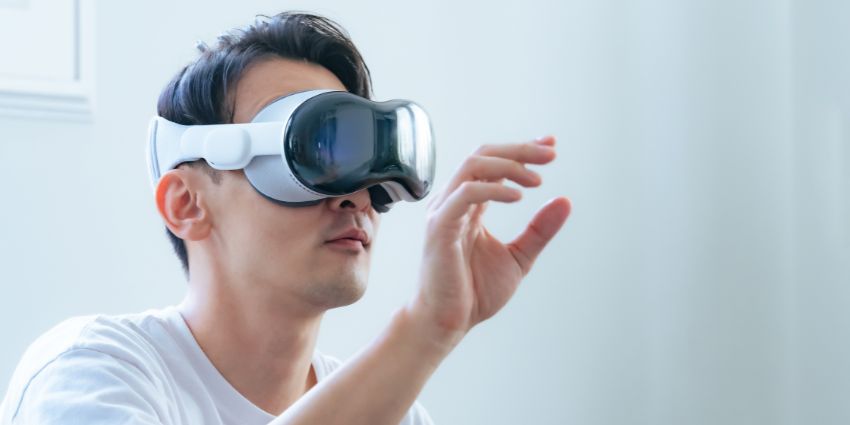

Apple Vision Pro is about to get its biggest consumer moment yet – live NBA games in immersive 3D.
But while the six LA Lakers games kicking off this week are aimed at wowing basketball fans, they could also quietly demonstrate something else: the kind of technical muscle that could finally make the case for a more widespread adoption of Vision Pro in the workplace.
If Apple and Spectrum can pull off live professional sports with seven simultaneous camera feeds, 150 Mbps streaming bandwidth, spatial audio, and real-time 3D graphics overlays, they’re demonstrating something important. Vision Pro can handle the complex, high-stakes scenarios enterprises actually need.
That includes remote surgical consultations, live factory floor monitoring, immersive client presentations, and virtual site inspections where timing and visual fidelity aren’t optional.
Why Live Sports Is the Ultimate Stress Test
Basketball moves fast. A single possession involves split-second decisions, rapid camera switches, and constant motion across a large space.
Broadcast it poorly and viewers notice immediately – lag, stuttering, or misaligned audio breaks immersion instantly. That’s exactly why it’s the perfect proving ground for enterprise XR applications.
The technical requirements mirror what businesses need. Seven viewing angles – from the scorer’s table to beneath the baskets, the player tunnel, broadcast booth, and a roaming courtside perspective – demonstrate seamless multi-feed management.
The 150 Mbps bandwidth proves the infrastructure can handle data-intensive applications.
Spatial audio captured through ambisonic microphones shows directional sound works in chaotic environments. And floating 3D graphics for scores, rosters, and shot clocks prove that real-time data visualisation integrates smoothly without overwhelming the viewer.
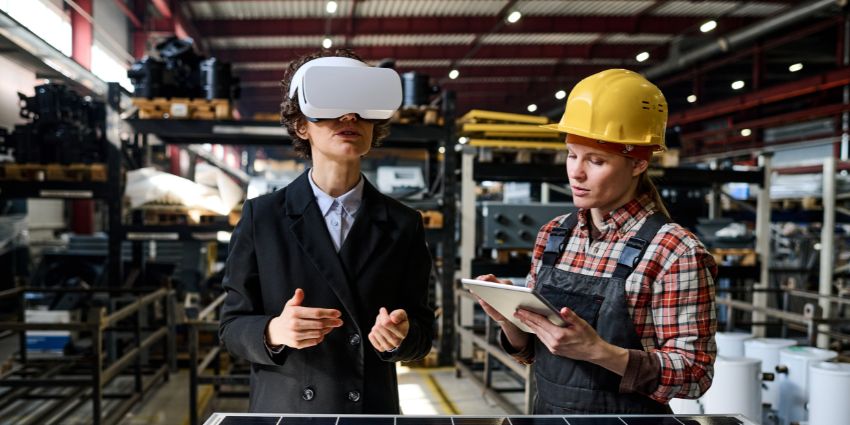
Now translate that to enterprise use cases. A construction company giving clients a virtual walkthrough of a building site needs multiple camera perspectives and real-time data overlays. These overlays show project timelines or structural specifications.
Or a medical device manufacturer training surgeons remotely – high-fidelity video with spatial audio helps trainees understand exactly where instruments are positioned.
If Vision Pro can handle live professional sports in a packed arena, it can handle those scenarios.
The ROI Conundrum for Enterprise Buyers
For consumers, Vision Pro’s $3,500 price tag remains a huge barrier. Buying the headset to watch six basketball games – even in immersive 180-degree video – is a luxury purchase that’s hard to justify.
But enterprises don’t calculate return on investment the same way individuals do.
Consider the business scenarios where Vision Pro’s capabilities might actually make financial sense.
A global architecture firm who uses headsets to give clients immersive walkthroughs of proposed designs. This helps close a $5 million project that might otherwise have gone to a competitor.
A medical training company eliminates $50,000 in annual travel costs by conducting remote surgical training sessions where participants feel like they’re standing in the operating room.
Zooming in, the hardware cost becomes negligible compared to the value delivered.
That’s the calculus consumer adoption struggles with but enterprise buyers understand instinctively.
The Path Forward for XR in the Workplace
Apple’s enterprise play has always been about finding use cases where the technology solves expensive problems or creates significant competitive advantages.
Live sports broadcasting in Apple immersive isn’t the end goal – it’s proof of concept for what comes next.
The technical specifications matter here. Both Vision Pro models – the newer M5 chip version and the original M2 – support these broadcasts with visionOS 26 or later. This shows Apple’s commitment to maintaining capability across hardware generations.
That matters for enterprise buyers planning multi-year deployments who need assurance their investments won’t become obsolete immediately.
The question isn’t whether Vision Pro can win over consumers on a wide scale anymore – production cuts and gutted marketing budgets have answered that. The question is whether this immersive sports experiment might actually demonstrate enough enterprise value to justify keeping the product alive.
For Apple, that might be the only win left on the table.
Apple Vision Pro Alternatives: Smart Picks for Teams, Meetings, and Workplace ROI