
Career education is having a moment.
Policymakers are paying more attention, superintendents are under pressure to show outcomes, and parents are increasingly sceptical of a one size fits all “university by default” path.
Yet for many students – especially those without access to professional networks – the day-to-day reality of career guidance is still rooted in abstract inputs: brochures, fairs, videos, and personality assessments.
That mismatch is what Transfr set out to fix.
Bharani Rajakumar, Founder, Transfr, describes it as a problem of exposure and clarity, not ambition. In his view, the system often asks young people to choose pathways based on second-hand descriptions rather than first-hand experience.
For Lenovo’s Global Head of Strategic Alliances for XR and Vision AI, John Iaia, the bigger challenge is making immersive career exploration operational across districts and workforce programmes.
“What I’m hearing most these days is a clear shift from curiosity to scale,” Iaia said.
“Customers already believe and understand that XR can work. They’re now asking if it’s operational. Can we deploy across multiple sites? Can we manage it securely? Can we support it long-term and show measurable impact?”
Rajakumar argues that the stakes are high because career decisions have long tails, and the costs of a wrong turn are often borne by the learner.
His broader point is that career education needs to feel less like marketing and more like reality.
“In a digital first world, we’re still guiding careers using analog tools.”
At the same time, he points to a structural mismatch: underemployment in many communities, alongside severe shortages in high-growth roles.
These shortages coexist with high underemployment because of a lack of exposure. By providing first-hand immersion in high-growth roles, we are removing the ‘information poverty’ that often limits a student’s earning potential and long-term economic mobility.
For schools, districts and state-level education leaders, that turns career readiness into a measurable economic issue, not just an aspirational one.
Why Career Education Still Feels Abstract
Even where vocational pathways are receiving new attention, the typical inputs students receive can remain detached from the work itself.
Many learners are still trying to imagine a day in the life of a role from a short description, a single talk in a classroom, or a brief careers fair conversation.
The problem is not that these activities are worthless.
It is that they rarely provide the kind of practical clarity that prevents misalignment later.
A student might be drawn to a role for the salary, social media visibility, or family influence, then discover the day-to-day tasks are not what they expected.
What A VR Career “Test-Drive” Looks Like in Practice
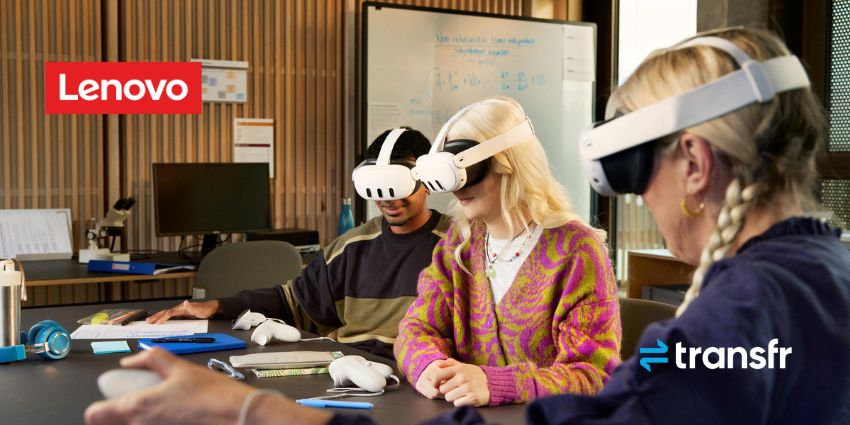
The “career test-drive” concept is simple: let learners perform realistic tasks in a simulated environment before they choose a pathway. That includes the physical and procedural realities of roles that are hard to grasp from a classroom description alone.
For learners, the value is straightforward. They can practise sequences, follow safety steps, work under time constraints, and get a feel for whether the work suits them. Importantly, they can also discover what is not for them without paying the full price of that discovery later.
“When they step into an immersive experience, they’re following safety procedures, solving real problems, working under time constraints,” Rajakumar explained.
Those moments can also be revealing in very practical ways. Someone exploring a role that involves heights, confined spaces, blood, or high-pressure decision-making can find out quickly whether they can see themselves doing it every day. Schools and workforce programmes often talk about “retention” and “completion”. In many cases, the earlier issue is simply whether people truly understand what they are signing up for.
Transfr’s approach, Rajakumar said, is designed to span the pathway from exploration to training, with work-based learning modules aligned to real-world expectations.
“Ultimately, if they want to get training, they can get trained,” he said.
“There’s a work-based learning experience in the headsets, like a pre-apprenticeship program, where when you’re finished with that experience, you can sit down and actually sit for a certification exam.”
Engagement, Recall, and Confidence
In education technology, “engagement” is an easy word to throw around.
But the more useful question is what learners retain, and whether that changes decisions and outcomes.
Rajakumar argues immersion improves learning because it mirrors how people build skills through action and repetition.
“Humans don’t primarily learn by being told,” he said. “We learn by doing.”
He also argues that job previews can widen participation, particularly for learners who do not see themselves represented in certain pathways.
For education leaders, there is also a pragmatic dimension. When learners feel more confident about a pathway early, it can support better course choices, fewer drop-outs and fewer late-stage pivots.
That has implications for learners and families, but also for schools trying to demonstrate outcomes and effective use of budget.
From Pilot Projects to Reality
XR has been effective at producing impressive demos for years.
The harder part is turning that into something a district can run week after week, and support year after year. That is where the conversation often shifts from learning theory to operational detail.
Rajakumar described procurement and operational fit as the difference between impact and stagnation.
“I want to talk about something that people think is not sexy, but I think it is very sexy and very important – and that is procurement,” he said.
From Lenovo’s side, Iaia argues that pilots often falter not because the content is weak, but because the operational handoff is messy. He frames Lenovo’s role as removing friction by packaging solutions so districts are not forced to stitch together hardware, software, and long-term support themselves.
“One of the real barriers to scale… is sustaining the XR deployment,” Iaia said.
“The actual deployment of these solutions, the training, what happens when things are broken, how do you fix them, the life cycle… that’s some of the less sexy part of this deployment, but extremely important to scale.”
That operational layer matters because education environments do not have limitless capacity.
If a programme creates a burden for IT teams, educators and administrators, it risks becoming another short-lived initiative.
If it fits into established procurement paths and comes with dependable support, it has a better chance of becoming routine.
What Education Leaders Should Know
For education leaders and policymakers, the message is to treat career education as a core layer of economic development, not a nice-to-have.
Iaia argues success should be measured like any other programme.
“I’d measure the scale of the distribution of these solutions. I’d measure the outcomes of those solutions. And also… I’d measure the equity of those solutions,” he said, pointing to access as a key test of whether immersive career exploration is truly becoming a standard layer rather than a one-off initiative.
Ultimately, the argument is not that technology should replace careers guidance, but that it can make it more honest and more practical, before a missed turn becomes expensive.
Rajakumar’s view is that career decisions should be treated like any other high-stakes choice: you should be able to see what you are signing up for.
“If a career can shape forty years of someone’s life, shouldn’t they be able to experience it before committing to it?”