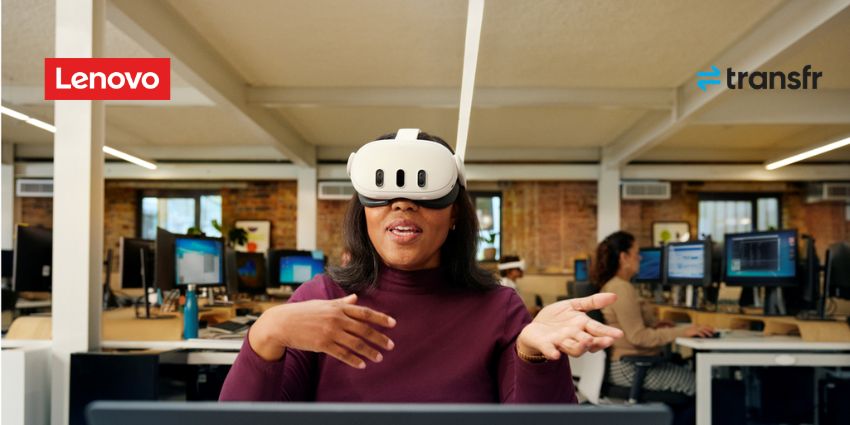

Rather than acting as a generic visual tool, enterprise XR is now used where traditional workplace systems fall short. In particular, it shines in complex training, high-risk work, and knowledge-heavy tasks. As a result, XR’s value shows up in real operations—where accuracy, speed, and decisions directly shape business results.
Because of that, XR is moving beyond pilots and into core workflows. It is no longer just a support tool for frontline staff. Instead, it is changing how organisations train teams, align processes, and make critical decisions across the immersive workplace and XR landscape.
Importantly, XR can also shape decisions before work even begins—especially when it helps buyers evaluate complex products or personalise solutions. As Christian Homburg, Professor of Marketing at Alliance Manchester Business School, explains:
“What is clear is that XR technology will have powerful benefits in terms of B2B sales. It can both help customers with product evaluation and personalising complex products, and provide the buyer with significant value during the decision-making process.”
In short, XR improves outcomes across the buyer journey. However, the strongest enterprise returns still come when XR is deployed against operational pain—training, execution, and problem-solving.
Navigation
- Why XR creates different value across industries
- Healthcare: safety, readiness, and precision
- Logistics: throughput, accuracy, and onboarding
- Manufacturing: capturing expertise at scale
- Why enterprise XR adoption is accelerating now
- What enterprise leaders should do next
- FAQs
Why Does XR Create Different Value Across Industries?
XR does not deliver the same impact everywhere. Instead, its value depends on where friction exists. When risk is high, margins are tight, or skills are scarce, immersive tools reduce uncertainty in human performance. Consequently, ROI tends to concentrate in workflows where mistakes are costly and consistency matters.
Because of this, sectors like healthcare, logistics, and manufacturing often benefit the most. Their challenges differ, but the outcomes are similar: measurable gains leaders can track, defend, and scale.
How Is XR Improving Safety and Readiness in Healthcare?
In healthcare, XR value centres on precision and readiness. Clinical work leaves little room for mistakes. However, traditional training often struggles to replicate real-world pressure, complexity, and risk.
That is where XR steps in. Immersive simulations allow clinicians to practise procedures safely. Meanwhile, augmented reality can support teams during live work by improving visual guidance and spatial awareness.
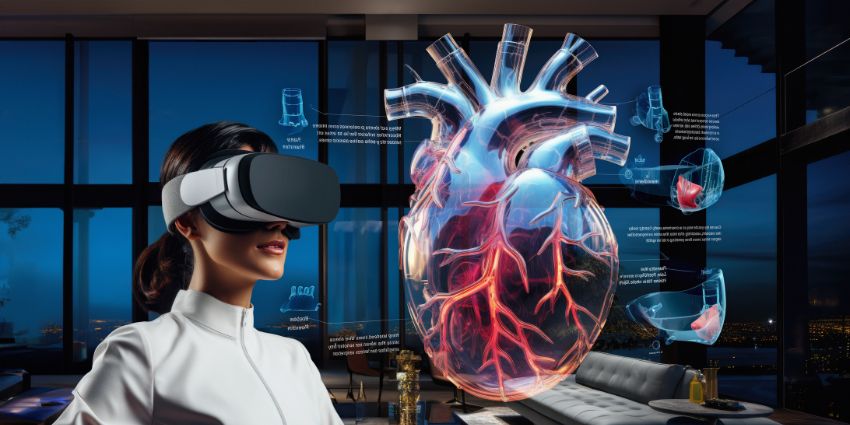
For example, AR-guided surgery tools like Augmedics xvision project 3D spinal views directly into a surgeon’s line of sight. As a result, surgeons rely less on indirect screens and gain better spatial context during difficult procedures.
Consequently, healthcare organisations can target outcomes such as:
- Faster clinical readiness and standardised training
- Better skill retention and confidence under pressure
- Lower risk of errors and complications
XR does not replace expertise. Instead, it strengthens it where accuracy matters most.
Why Is XR Gaining Momentum in Logistics and Warehousing?
In logistics, the value looks different. Here, XR focuses less on immersion and more on consistency at scale. High-volume fulfilment relies on speed and accuracy. Even small errors can trigger delays, rework, and unhappy customers.
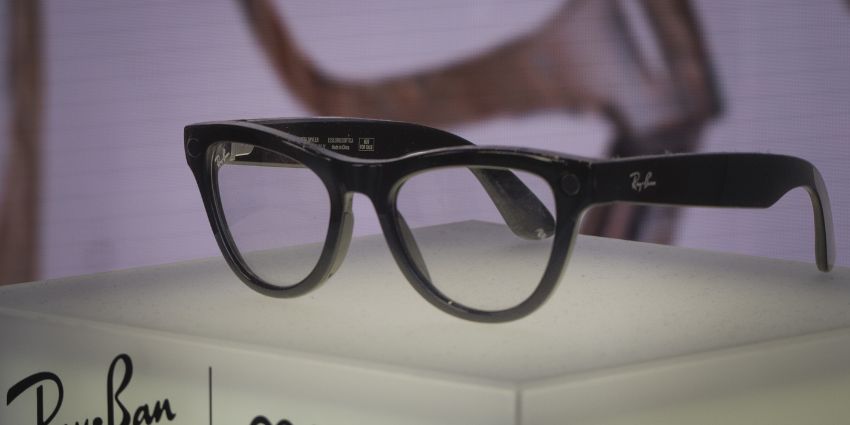
As a result, AR smart glasses have gained traction in picking and warehouse workflows. In practice, visual guidance replaces paper lists and frequent device switching, which reduces cognitive load during repetitive tasks.
Consequently, XR deployments in warehouses are typically designed to:
- Increase throughput without sacrificing accuracy
- Speed up worker onboarding, especially during peak seasons
- Reduce mental strain and errors in repeatable workflows
Because of this, XR has moved from “innovation theatre” to a dependable operations tool—especially where productivity and error rates are already tightly measured.
How Does XR Help Manufacturers Scale Expertise?
Manufacturing faces a different issue: losing knowledge. Many critical tasks depend on deep expertise that is hard to document and harder to replace. As skilled workers retire, organisations risk downtime, quality loss, and slower issue resolution.
XR helps by turning expertise into repeatable guidance. Platforms like Taqtile Manifest and Scope AR embed visual instructions and remote expert support directly into the workflow. Therefore, technicians can complete complex jobs with more confidence, regardless of experience level.
As a result, manufacturers commonly target outcomes such as:
- Faster repair and troubleshooting cycles
- Less machine downtime and fewer repeat visits
- Higher first-time fix rates and more consistent execution
More importantly, XR turns expertise into a shared digital asset rather than a fragile human one. Over time, that reduces operational risk.
Why Is Enterprise XR Adoption Accelerating Now?
Across industries, XR is not replacing people or systems. Instead, it boosts human performance at key moments—during training, execution, and problem-solving. That’s why adoption is accelerating beyond pilots and into core operations.
Additionally, enterprise growth is being driven by practical realities:
- XR targets painful workflows where delays and errors are already visible
- XR lowers risk where mistakes are costly or regulated
- XR shortens ramp-up when skills are limited and turnover is high
In other words, XR works best when it fits real conditions—not generic innovation goals.
What Should Enterprise Leaders Take Away?
XR value does not come from headsets alone. It comes from deploying immersive tools where pressure is highest and error margins are smallest. Therefore, the best starting point is always a high-friction workflow with KPIs attached.
Across sectors—including automation and retail—XR is delivering real gains. Not hype. Not experiments. Just better ways for people to do demanding work at scale and under pressure.
Ultimately, enterprise leaders should stop chasing novelty and focus on fit. The strongest results come from aligning XR with operational pain points, measuring performance, and scaling with governance.
FAQs
How does XR benefit different industries?
XR delivers value where work is complex, risky, or difficult to standardise. For example, healthcare uses XR to improve readiness and precision, logistics uses XR to improve throughput and accuracy, and manufacturing uses XR to capture and scale scarce expertise.
Which industries see the strongest ROI from enterprise XR?
Industries with high training costs, safety risk, distributed assets, or complex procedures often see strong ROI. These commonly include healthcare, logistics, manufacturing, utilities, and field services.
Is XR mainly a training tool?
Training is often the entry point. However, XR also supports frontline execution through guided workflows and remote expert support, and it can improve decision-making in complex environments where spatial understanding matters.
What should enterprise leaders measure to prove XR value?
Measure outcomes tied to operations: time-to-competency, error reduction, first-time fix rates, downtime avoided, task completion time, and consistency across sites. If XR doesn’t move a KPI, it’s a pilot—not a strategy.