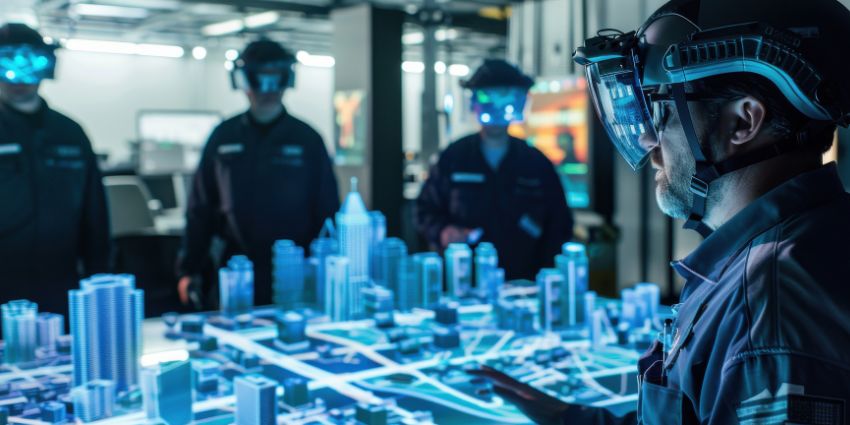

Enterprise XR isn’t emerging to impress. It’s emerging to solve problems that traditional workplace tools can’t keep up with. Training cycles stay slow. Performance varies across teams. Safety incidents remain costly. Meanwhile, downtime rises as skills, systems, and processes struggle to scale together.
Extended reality for business addresses these pressures where manuals, slide decks, and videos consistently fall short. When work is complex, high-risk, or time-sensitive, immersive and contextual tools outperform static content. That performance advantage is what’s driving enterprise adoption.
At its core, workplace XR helps people learn faster, make fewer mistakes, and perform more consistently in real-world conditions. Therefore, for organisations facing skills shortages, operational strain, and rising compliance demands, XR can translate into measurable business value.
Navigation
- Why training is the #1 enterprise XR use case
- How AR and assisted reality improve frontline execution
- Enterprise XR vs consumer XR: what’s different?
- Where enterprise XR delivers measurable value
- Buyer checklist: what to validate before scaling
- FAQs
Why Workforce Training Remains the Primary Enterprise XR Use Case
Training remains one of the most persistent pain points in enterprise environments. Across logistics, manufacturing, utilities, and healthcare, traditional training is often expensive, disruptive, and difficult to standardise.
Shutting down operations to train staff hurts productivity. Meanwhile, shadowing experienced workers doesn’t scale. Classroom instruction also struggles to replicate real-world complexity. As a result, workers often reach live environments underprepared, increasing the risk of errors and safety incidents.
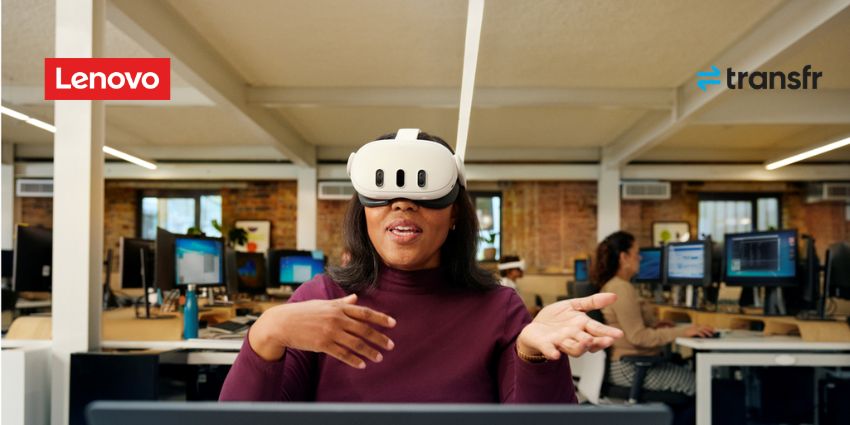
Virtual reality (VR) changes that equation. It enables immersive, repeatable training without placing people or physical assets at risk. Therefore, employees can rehearse procedures, safety scenarios, and equipment handling multiple times before live work begins.
In practice, mistakes become learning opportunities rather than operational failures. Consequently, organisations can improve readiness while protecting uptime.
The results are operational, not theoretical:
- Faster onboarding and time-to-competency
- Improved knowledge retention
- Fewer safety incidents
- Greater consistency across teams and sites
Training leaders also gain something critical: standardisation. Every employee experiences the same scenarios and is measured against the same criteria. That makes skills validation more reliable, especially across distributed sites.
Platform reality in 2026: enterprise programmes commonly run on device ecosystems designed for scale and management. For example, teams may choose Meta Quest for Business as a cost-effective entry point, HTC VIVE for higher-fidelity simulations and lab environments, or PICO for enterprise-first pricing and deployment models. Meanwhile, Varjo tends to suit ultra-high fidelity design, simulation, and research use cases.
How Operational Inefficiency Is Driving AR and Assisted Reality Adoption
Beyond training, operational inefficiency is a major driver of enterprise XR. Technicians still rely on dense manuals, outdated documentation, and phone calls to complete complex tasks. However, those interruptions introduce errors, rework, and downtime—costs that quietly erode margins.
Augmented reality (AR) and assisted reality address this gap by embedding guidance directly into the workflow. Step-by-step visual instructions appear within the worker’s field of view. As a result, cognitive load drops and workers don’t need to stop to search for information.
The impact is typically immediate:
- Higher task accuracy and fewer avoidable mistakes
- Faster completion times and less rework
- Increased confidence among less-experienced staff
Remote expert assistance strengthens resilience even further. An experienced specialist can see what a technician sees and guide them in real time, without travel. Consequently, organisations reduce dependency on a shrinking pool of experts while accelerating issue resolution.
In many environments, remote support has moved from “nice to have” to operational insurance. That’s especially true where equipment is mission-critical and downtime is expensive.
Common enterprise platforms in this space include solutions such as PTC Vuforia and TeamViewer Frontline, which support guided workflows and remote assistance. In addition, many deployments prioritise integration with collaboration tools like Microsoft Teams, depending on the enterprise stack.
What Makes Enterprise XR Different from Consumer XR?
Confusion between consumer XR and workplace XR is still a barrier to adoption. While the technology may look similar, the priorities are fundamentally different.
Consumer XR is built for entertainment. Sessions are short, experiences are individual, and success is measured by engagement and immersion.
Enterprise XR is designed for reliability, scalability, and measurable outcomes. Therefore, devices and platforms prioritise durability, security, device management, and long-term support. Content is also purpose-built around workflows, compliance requirements, KPIs, and performance metrics.
Integration is expected. Enterprise XR needs to connect with learning management systems, asset management platforms, identity systems, and analytics. Without integration, scale and ROI are hard to achieve.
For buyers, this distinction is decisive. Enterprise XR isn’t about impressive demos. Instead, it’s about solving problems that appear in safety reports, productivity dashboards, and operating budgets.
Often, the most effective deployments are the least visible. They simply make work safer, faster, and more predictable.
Where Enterprise XR Delivers the Most Measurable Value
For organisations evaluating XR today, the question isn’t whether the technology works. It does. Instead, the challenge is identifying where it fits operationally and how to measure impact.
High-impact use cases usually begin with clear friction points:
- Slow onboarding and inconsistent role readiness
- High error rates and avoidable rework
- Inconsistent task execution across teams or sites
- Critical knowledge trapped in a small group of experts
When XR is applied directly to these issues, value becomes easier to prove. Performance improves, risk decreases, and knowledge becomes more evenly distributed across the workforce.
UK adoption signal: PwC identified 1,550 unique public examples of XR business usage in the UK, with VR currently used more widely than AR. Source: PwC UK – Business benefits of XR.
Buyer Checklist: What to Validate Before Scaling XR
Enterprise XR programmes succeed when treated as infrastructure. Therefore, buyers should validate not only the headset, but the whole operating model.
IT buyer concerns
- Hardware compatibility: does it fit your endpoint estate and environment?
- Bandwidth load: can your network support live video, updates, and device syncing?
- Endpoint security: encryption, policy enforcement, and lifecycle controls
HR buyer concerns
- Accessibility: inclusive design across different needs and contexts
- Inclusivity: minimise barriers to participation and adoption
- Wellbeing impact: comfort, session duration, fatigue, and user tolerance
Line of Business (LoB) buyer concerns
- ROI on pilots: does it move a KPI that matters?
- Adoption rate: will teams actually use it in the workflow?
- Competitive differentiation: does it strengthen execution or customer outcomes?
Additionally, avoid common scaling traps: unmanaged demo equipment costs, weak use case validation, and unrealistic customer expectations. XR programmes fail when treated as one-off deployments. They succeed when embedded into everyday work.
Enterprise XR Is About Execution, Not Experimentation
Enterprise XR isn’t chasing a “wow” factor. It’s a practical response to modern operational strain. When deployed with intent, XR turns learning into performance, guidance into confidence, and complexity into something teams can manage at scale.
For enterprises under pressure to do more with less, XR is increasingly less about experimentation and more about execution.
FAQs
What is enterprise XR?
Enterprise XR is the use of VR, AR, MR, and assisted reality to improve training, frontline work, and collaboration. Unlike consumer XR, it prioritises security, device management, integration, and measurable outcomes.
Why is training the most common enterprise XR use case?
Training benefits because XR makes complex practice repeatable and safer. Therefore, organisations can reduce time-to-competency, improve standardisation, and lower risk in high-stakes environments.
How do AR and assisted reality improve frontline performance?
They embed guidance in the workflow. As a result, workers can complete tasks with fewer errors, faster completion times, and less reliance on scarce experts—especially when remote assistance is enabled.
How do I measure ROI from workplace XR?
Measure outcomes tied to operations: time-to-competency, error reduction, first-time fix rate, downtime avoided, and consistency across teams. If XR doesn’t move at least one KPI, it’s a pilot—not a strategy.