
Slack has long been known as a platform for team chat and collaboration.
But under Salesforce’s ownership, the messaging platform is evolving into something far more ambitious: a hub where work begins, decisions are shaped, and AI agents act on behalf of employees.
The latest version of Slackbot, rolled out this year, exemplifies this shift.
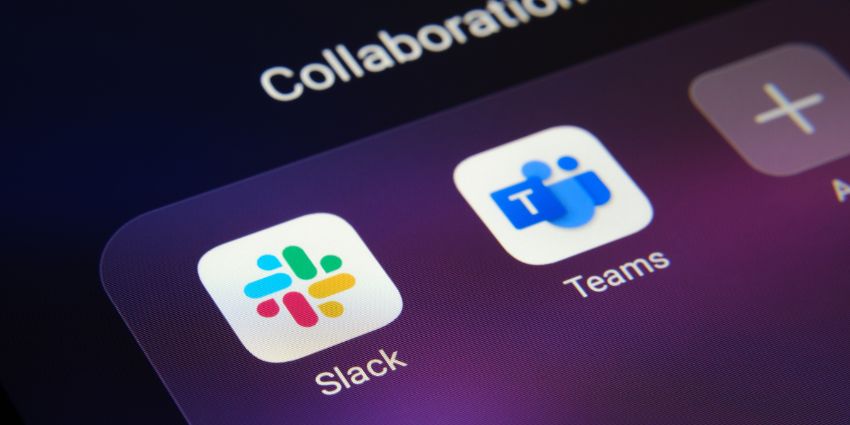
No longer a simple assistant for reminders or summaries, Slackbot is now positioned as a persistent, context-aware agent capable of navigating multiple enterprise systems – from Google Drive to Microsoft Teams – while retaining memory of past conversations and actions.
“AI has raised expectations in our personal lives, but work is fundamentally different,” said Rob Seaman, GM, Slack.
“To truly be useful at work, AI needs context: an understanding of your conversations, your tools and how decisions actually get made. With Slackbot, we’ve built an intuitive, deeply native experience inside Slack that people can trust to help them move work forwards, not just answer questions.’”
From Chatbot to Work Agent
For years, the platform basically served as a lightweight helper: nudging teams about deadlines, answering basic queries, or managing simple workflows.
The new iteration, however, is a marked departure.
Parker Harris, Salesforce’s CTO, has described it as a “super agent” and “employee agent,” powered by generative AI and designed to operate alongside knowledge workers.
The platform now has the ability to pull context from conversations, channels, documents, calendars, and connected enterprise applications.
In practical terms, it can draft emails, schedule meetings, update records, and even coordinate across tools such as Microsoft Teams and Google Drive – provided it has the necessary permissions.
Crucially, Slackbot remembers previous interactions, giving it persistent awareness of project history and team decisions.
Posting on LinkedIn, Marc Boscher, Founder and CEO of Unito, underscored the significance of this memory.
“Slack’s update changes everything. Agents now persist in channels. They see conversation history and can reference what was discussed yesterday, last week, or last month. That’s not a feature. That’s infrastructure.
“The context layer is the moat – and the teams that figure out how to give agents rich, persistent, connected context are the ones who’ll actually get value out of this technology. Everyone else is just running very expensive demos.”
Governance, Security and the Top-of-Stack Challenge
While Slackbot’s capabilities are impressive, they raise urgent questions for enterprise leaders.
With an agent able to act across applications and retain sensitive information, governance, compliance, and security are paramount. Who decides what Slackbot can access? How are its actions logged? And how can organisations prevent “shadow agents” or uncontrolled autonomous workflows?
For IT and UC leaders, these questions are no longer theoretical.
Slackbot is not just a tool but a potential control layer for enterprise workflows, and decisions about permissions, audit trails, and policy enforcement must now account for the agent’s ability to read, write, and act across multiple systems.
A misstep could lead to operational risk, data leakage, or inadvertent breaches of compliance requirements.
The race to control the top of the stack extends beyond Slack.
Browsers, productivity suites, and collaboration hubs all compete to be the first system employees see each morning.
The platform that succeeds becomes both the start and end of the workday, embedding workflows, storing context, and defining productivity norms. Salesforce’s aggressive move with Slackbot illustrates the strategic importance of being that starting point.
The Future of Agentic Collaboration
Looking ahead, Slackbot’s ambitions are only growing.
Parker Harris has signalled plans to expand capabilities beyond text, including voice interactions and web-browsing features. As these agents become more capable, the distinction between human and AI-driven workflow will continue to blur.
Yet the value is clear: platforms that can provide persistent context, seamless integration, and trusted execution will generate real productivity gains. Enterprises that fail to manage governance, or underestimate the potential of context-aware agents, risk being left behind.
As Boscher notes, models are commodities; it is the context layer that forms the moat.
In the current landscape, Slackbot’s second act is more than an incremental upgrade.
It is a test of whether AI agents can truly become colleagues rather than transient assistants, and which platforms can maintain trust, security, and adoption at scale.
For IT leaders, UC professionals, and enterprise strategists, the next few years will reveal whether the hub that wins the “first screen” also wins the future of knowledge work.