






The UC Incident Response Playbook: The Smart Strategy for Managing UC Breaches

The UC incident response gap: When chat, meetings, and trust collide

8
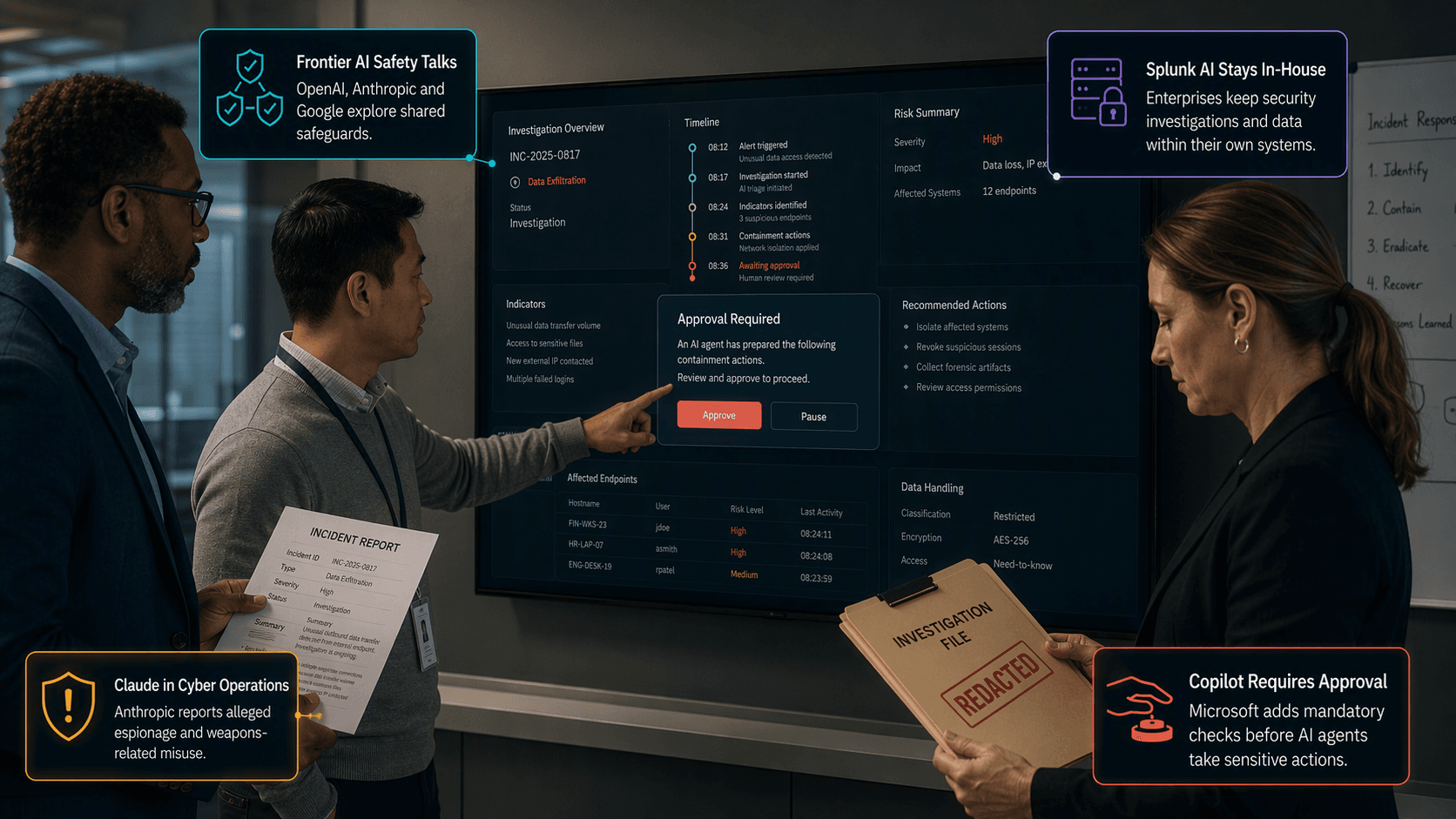
Cybersecurity illustration showing a modern UC incident response scenario inside collaboration tools, with chat threads, meeting artifacts, and identity alerts forming a digital breach map.
Security, Compliance & RiskGuide

Published: February 19, 2026

Rebekah Carter - Writer

Rebekah Carter

It’s funny how often the same phrase comes up in post-incident reviews: “We didn’t see it coming.”

Companies swear they’re being hyper-vigilant, constantly watching UC systems for any sign of exotic exploits, malware, or suspicious activity. They miss the fact that a lot of breaches don’t start with those things anymore. They start with something simple. A chat message, a meeting invite, or a shared file that looked routine enough to ignore.

That’s the problem with UC incident response today. It still assumes the danger lies somewhere else, in endpoints, inboxes, and networks, while collaboration quietly becomes the easiest way in. Microsoft didn’t revoke hundreds of fraudulent certificates tied to Teams abuse because attackers were bored. They did it because chat and meetings work. People trust them. They move fast. Most people don’t pause to inspect a meeting invite.

That’s why UC and collaboration tools are emerging as one of the biggest security blind spots for teams, and why leaders need to rethink their breach response playbook.

Related Articles:

Why Traditional Incident Response Models Fail in UC Environments

Most incident response programs were built for a world where breaches arrived through email, malware tripped an alert, and the response team regrouped somewhere outside the systems under attack. That model doesn’t work when collaboration tools are now the primary work surface.

Traditional IR models assume:

  • Attacks start at endpoints or in email
  • Evidence lives in logs, servers, or backups
  • Response teams can safely coordinate out-of-band
  • Collaboration is informal, secondary, and low risk

None of that holds up once identity is compromised.

When an attacker gets access to an account, chat, meetings, file shares, and bots all become part of the attack surface and the observation layer. Sometimes, response teams coordinate in the same Teams environment that attackers were later confirmed to be monitoring. Most incident response strategy documents end up failing because:

  • Security teams chase endpoints while attackers sit in channels
  • Legal asks for records that weren’t preserved
  • IT keeps collaboration running to avoid disruption, unaware it’s now hostile territory
  • Evidence spreads across transcripts, reactions, edits, and AI summaries no one classified as records

Email still matters. The FBI’s IC3 reported $8.5 billion lost to BEC scams in 2025, and Verizon’s DBIR keeps pointing to identity-driven social engineering as the common thread. Now, though, meetings and chat are where urgency changes things. A calendar invite from a familiar name bypasses defenses that would stop a suspicious attachment in its tracks.

Defining the UC Incident Response Scope Today

A usable UC incident response playbook today needs to start by being uncomfortably specific about what actually carries risk in the modern workplace. Collaboration artifacts aren’t “soft signals” anymore. They’re operational records that shape decisions, approvals, and money movement.

At a minimum, a serious Incident Response Strategy needs to put these firmly in scope:

  • Chat and messaging: Threads, edits, deletes, reactions, private messages; all the places intent and social pressure show up.
  • Meetings and their fallout: Invites, participant lists, recordings, transcripts, side chat, plus AI-generated summaries and action items that live long after the call ends.
  • Shared content: Files, collaborative documents, whiteboards, and version histories that regularly change hands.
  • Apps, bots, and integrations: OAuth permissions, third-party tools, and “temporary” bots that never actually left.
  • External access paths: Guests, federated users, contractors, and anyone brought in “just for this project.”
  • Identity, human and non-human: Compromised user accounts and AI or service identities acting on their behalf.

If you don’t decide what counts as a record before an incident, you’ll argue about it mid-response. That argument always costs time you don’t have.

Curious about the role of Service Assurance and AIOps in UC security? Check out our feature on the topic here.

UC-Specific Incident Detection: How Attacks Surface

If you’re waiting for a clean alert that says, “collaboration breach detected,” you’ll be waiting a long time. UC incident response lives in the gray space defined by behavioral signals, timing, and social cues that don’t look malicious until you line them up.

Common detection signals in collaboration environments tend to cluster around a few patterns:

  • Identity drift in familiar spaces: A known user suddenly pushes urgency in chat, asks to “jump on a quick call,” or escalates decisions that usually move slower. This is how a lot of BEC-style fraud now unfolds.
  • Meeting abuse: Bursts of new invites, external participants joining internal calls, or links that move people off-platform. Fake Zoom and Teams invites exploiting urgency have become a repeat problem lately.
  • App and bot creep: New OAuth consents, bots added to channels, or integrations showing up with broad permissions “for convenience.” These risks often stay invisible until something breaks.
  • Artifact acceleration: AI summaries, transcripts, or shared files are spreading faster than the original conversation. When the recap travels further than the meeting itself, that’s a signal worth paying attention to.
  • Metadata anomalies: Join/leave timing, unusual session lengths, late-night access patterns, or sudden shifts in who’s collaborating with whom.

Detection in a collaboration breach playbook isn’t about catching everything. It’s about spotting when collaboration stops behaving like collaboration and starts behaving like a delivery mechanism. A solid incident response strategy treats those early signals seriously, before urgency turns into damage and before the evidence trail gets muddy.

The Simple UC Incident Response Strategy

A workable incident response strategy for UC environments usually rests on three pillars. Identification, evidence preservation, and containment.

Identification & Triage: Start With Identity, Not Infrastructure

Most UC breaches don’t announce themselves with malware alerts. They show up as people behaving “slightly off” in trusted spaces.

Effective triage focuses on:

  • Who is acting, not just what happened
  • Sudden urgency from familiar accounts
  • Approval requests that bypass normal friction
  • Meetings or chats used to shortcut written controls

Remember, once identity is abused, collaboration becomes the delivery mechanism. If identity isn’t the first lens, teams chase noise while the breach keeps moving.

Evidence Preservation: Secure the Record Before You Coordinate

In UC incidents, the evidence usually lives in:

  • Chat history, including edits and deletes
  • Meeting invites, recordings, transcripts, and side chat
  • AI-generated summaries and action items
  • File versions and sharing paths
  • App and permission change logs

The dangerous instinct is to “jump into chat and sort it out.” However, collaboration tools are often both the crime scene and the whiteboard. Coordinate too early, and you overwrite the trail you’ll need later. Preserve first. Talk second.

Containment: Narrow, Targeted, and Boring

Containment doesn’t mean pulling the fire alarm on collaboration.

A smart collaboration breach playbook focuses on precision:

  • Quarantine compromised identities
  • Revoke risky OAuth tokens or app access
  • Remove malicious links or shared files
  • Temporarily restrict external collaboration paths

Big dramatic shutdowns create panic and shadow workarounds. Quiet, targeted containment buys time without breaking trust.

Coordination: How Security, IT, Legal, and Comms Run UC Incidents Together

Collaboration incidents force uncomfortable overlap. Security wants speed. Legal wants precision. IT wants stability. Comms wants to avoid panic. All of them are usually trying to coordinate inside the same UC environment that might already be compromised.

A functional incident response strategy makes that tension explicit instead of pretending it won’t exist. Here’s what actually works.

Clear ownership beats consensus

During a UC incident, someone has to make decisions. Not everything, just the final calls.

That usually means defining, in advance:

  • An incident lead with authority to prioritize actions
  • A technical lead who controls access, identity, and platform changes
  • A legal/compliance owner for records, holds, and disclosure decisions
  • A communications owner who decides what gets said, when, and to whom

Our post-breach interviews with IT leaders tend to circle the same lesson: delays come from waiting for agreement, not lack of data.

Separate coordination from contamination

Collaboration tools can’t always be trusted during a UC breach. Plan for:

  • A dedicated, restricted incident workspace
  • Limited access, strong authentication, and logging
  • A clear rule for what not to discuss in general channels

If response chatter becomes part of the evidence trail, you’ve just complicated your own investigation.

Control the narrative early

Silence creates workarounds and new risks.

Effective coordination includes:

  • Clear internal guidance on what employees should not do
  • Consistent messaging about access changes or restrictions
  • Fast correction when rumors or bad assumptions spread

Remember, UC incident response is as much about managing people as managing platforms.

Designing UC-Ready Incident Response Architecture

There tends to be a point in this process when someone asks, “Do we need a new tool?” Someone else says, “Let’s wait for the next platform update.” Eventually, UC incident response turns into a shopping exercise instead of a design problem.

The organizations that handle collaboration breaches well think about architecture first.

Treat collaboration as a system of record

If chat, meetings, and AI summaries influence decisions, approvals, and payments, they’re not “soft signals.” They’re records.

That means:

When records are ambiguous, investigations stall, and trust disappears.

Design for identity failure, not perfect behavior

Most collaboration breaches don’t start with broken software. They start with a stolen or abused identity. Your collaboration breach playbook needs to assume:

  • Credentials will be compromised
  • Bots and apps will be over-permissioned
  • External access will be abused at some point

Containment and investigation paths should revolve around identity isolation, not platform shutdowns.

Evaluate platforms on incident readiness, not features

When you do buy UC and collaboration tools, the question shouldn’t be “what features does this platform have?” It’s:

  • How quickly can we preserve collaboration evidence?
  • How cleanly can we isolate identities and apps?
  • How visible are access and activity changes during an incident?

The UC cybersecurity landscape for 2026 is shaped by AI, hybrid work, and platform sprawl. Emerging buyer trends all point the same way: collaboration is becoming infrastructure, and infrastructure needs to be properly governed.

From UC Security to UC Incident Readiness

There’s a temptation to treat UC incident response as a technical hygiene issue. Clean it up later. Patch around it. Hope the platform catches the worst of it. That mindset gets expensive fast. You’re not just dealing with the cost of lost data and fines. You’re dealing with the costs of downtime, lost productivity, and shadow tools popping up because people can’t get answers fast enough.

UC security work does important things. It hardens platforms, reduces exposure, and catches a lot of noise before it turns into damage. Our Ultimate Guide to UC Security, Compliance, and Risk defines that foundation. But security assumes prevention works most of the time. Incident response exists for the moments it doesn’t.

What keeps showing up in breach reviews is a simple mismatch. Collaboration platforms evolved faster than response thinking. Meetings became decision engines. Chat became a transaction layer. AI summaries became de facto records. Yet too many incident response strategy documents still treat collaboration like background chatter instead of business infrastructure.

This isn’t about overcorrecting or locking everything down. It’s about realism. Breaches don’t arrive through a single channel anymore. They spread socially, hide in familiar tools, and leave evidence in places teams weren’t trained to look.

If collaboration is where work happens, and it clearly is, then UC incident response has to meet it there, fully and unapologetically.

Call RecordingCloud Security Posture ManagementCollaboration SecurityCommunication Compliance​Endpoint Security
Featured

Share This Post