
Calendars are no longer filled with back-to-back nine-to-five meetings – they’re fragmented, shuffled, and constantly changing.
Frank Weishaupt, CEO of Owl Labs calls this pattern micro-shifting, and for IT leaders it’s forcing a rethink of how meeting rooms are designed, deployed, and managed.
At ISE 2026, Weishaupt spoke to UC Today about how these evolving work patterns are reshaping hybrid collaboration, the challenges IT teams face, and what systems are actually keeping work flowing.
He described micro-shifting as employees building their workdays in small, unpredictable blocks.
“People aren’t following a strict schedule anymore – they’re in meetings, switching to focused work, and then handling personal tasks – often within the same hour.”
For IT teams, supporting this flexibility isn’t just about installing cameras and microphones – it’s about managing systems that can handle constant change.
Meeting room technology needs to be reliable, easy to deploy, and predictable, even when the human schedules it supports are anything but.
Weishaupt added that the evolution of hybrid work is less about technology itself and more about how organisations structure their support.
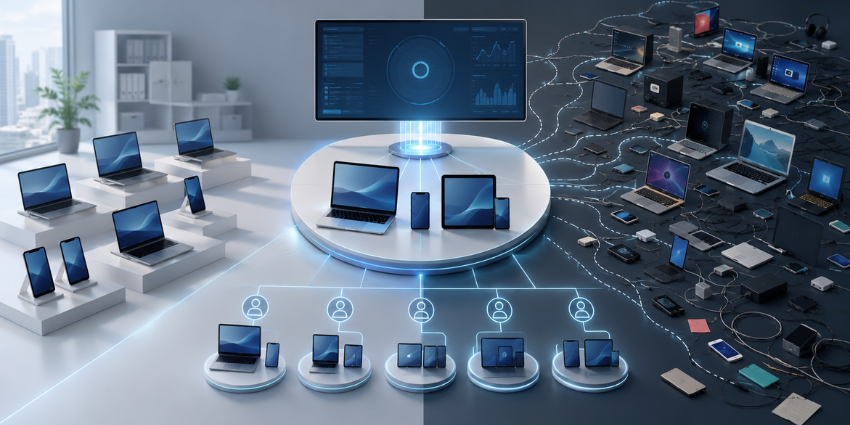
“It’s about giving IT teams the tools to manage a fleet of devices seamlessly, while still delivering a great experience for users,” he said.
“The technology has to disappear into the room. It should just work.”
Making Technology Work for IT Teams
While hybrid work has become the norm, many IT teams still struggle with deployment, management, and support. Weishaupt stressed that the best technology reduces friction for IT while still serving employees’ shifting schedules.
Devices like Owl Labs’ 5 Pro – which debuted at ISE 2026 – are aiming to illustrate the principle: multiple connectivity options, straightforward management, and the ability to integrate into existing infrastructure without constant intervention.
“It’s designed to be a fixture in the room, not just a portable gadget,” Weishaupt explained. “IT teams can set it up once and rely on it every day.”
The broader point for IT leaders is clear – flexibility for users is only valuable if it doesn’t come at the expense of manageability.
AI That Actually Helps
Amid widespread AI hype, Weishaupt urged IT leaders to focus on practicality over novelty. “What used to be called machine learning is now AI,” he said.
“For us, it’s functional – helping manage fleets, identify who’s physically in the room versus on a screen, and making sure calls run smoothly. That’s it.”
For IT teams, this approach means AI is only valuable when it reduces friction and administrative load.
Predictive maintenance, automated monitoring, and smarter support workflows allow IT staff to focus on improvement rather than firefighting, a critical factor as hybrid work and micro-shifting grow more common.
Consistency Across Spaces and Geographies
Weishaupt noted that while different organisations have unique needs, the core challenges of hybrid collaboration are remarkably similar across industries and geographies. “A room is a room, to a certain extent,” he said.
From Fortune 100 boardrooms to schools and local governments, IT teams face the same pressures: unpredictable schedules, diverse devices, and the need for reliable systems.
He emphasised the importance of standardisation without rigidity. While uniform systems reduce support costs and improve reliability, organisations must still allow flexibility for evolving work methods, new tools, and experimentation. “You need stability, but room to grow,” Weishaupt said.
Beyond devices and software, he highlighted that hybrid work is ultimately a human challenge. Employees now expect flexibility and control over how they work – a shift that demands IT teams rethink not only technology but also how they structure support, governance, and deployment.
“Micro-shifting isn’t just a schedule issue,” he said. “It’s about people trying to balance personal and professional priorities within the same day. IT has to enable that, not slow it down.”
The Future of Meetings
Weishaupt sees a clear lesson emerging from these shifts: meeting technology must adapt to human behaviour, not the other way around.
Reliable hybrid systems, practical AI tools, and IT-friendly deployment are no longer optional – they’re a baseline requirement for organisations navigating micro-shifting employees.
“The best meeting technology is the kind you barely notice,” he said. “It just works, every day, for everyone.”