
AV design workflows are taking another step toward virtual-first planning following the announcement that AVer Information Europe B.V. has joined the Modus Match Partner Program.
Through the integration, AVer’s TR Series AI Auto Tracking cameras and PTZ camera portfolio are now fully verified and supported inside the ModusVR platform.
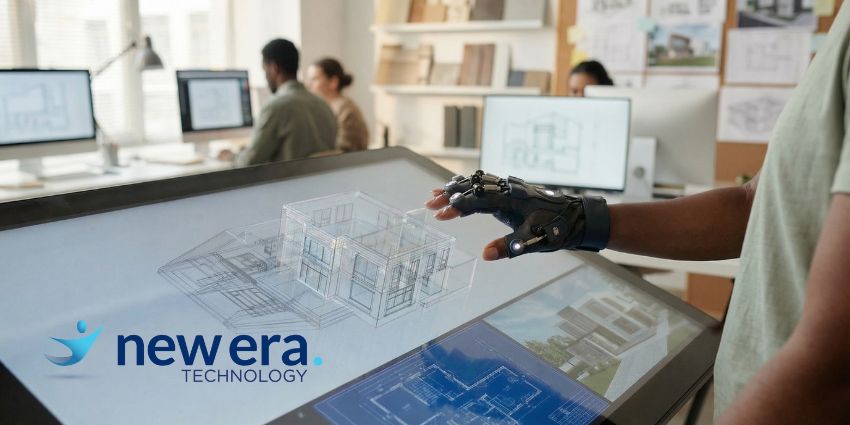
The collaboration allows AV professionals to simulate real-world camera performance in immersive 3D environments during the planning stage, helping teams move beyond traditional design methods that relied on static drawings and assumptions.
“Presentation cameras are an important part of many of the spaces our users design in Modus,” said Ken Brueck, Co-Founder of Modus VR.
“With AVer’s TR Series now part of the Modus Match program, integrators can accurately visualize placement and confidently define camera coverage in classrooms, divisible training spaces, and auditoriums before installation begins.”
Eliminating Guesswork From Camera Placement
Camera placement has historically been one of the most challenging aspects of AV system design.
While audio and display positioning can often be predicted with reasonable accuracy, camera performance depends heavily on sightlines, mounting height, obstacles, and room layout.
Even small miscalculations can lead to blind spots, poor framing, or the need for additional site visits.
By joining the Modus Match programme, AVer is aiming to remove much of this uncertainty.
The Modus Match designation means AVer cameras are represented as manufacturer-certified digital twins rather than generic 3D models.
Every relevant specification has been validated by the company’s engineering team to ensure simulations closely match real-world behaviour.
This level of accuracy allows integrators to experiment with camera placement inside a virtual version of a client’s space.
They can evaluate fields of view, test pan tilt zoom coverage, and assess mounting positions before any hardware is installed.
The result is a more predictable design process and a reduced likelihood of costly adjustments during deployment.
Real-World Accuracy
The concept of digital twins has become increasingly important across multiple technology sectors, and AV is no exception.
Within the ModusVR platform, AVer cameras now behave as they would in real environments, with verified focal lengths, zoom ranges, pan and tilt limits, and physical dimensions.
This enables designers to visualise exactly what a camera will capture, rather than relying on estimates.
Sightlines can be checked against obstacles such as lecterns, displays, and architectural features. Teams can also explore multiple mounting positions and heights to determine the optimal configuration for a room.
The accuracy of these digital twins also extends to project documentation.
Because the models use real manufacturer data, bills of materials generated from the platform reflect actual products and configurations.
This connection between design and procurement can help reduce specification errors and streamline project timelines.
Supporting Faster Approvals
Beyond technical accuracy, the partnership aims to improve collaboration and communication during the design process.
Immersive walkthroughs allow clients and stakeholders to see how a space will function before installation begins, making it easier to align expectations and secure approvals.
Virtual validation can significantly reduce the need for follow-up site visits, often referred to as truck rolls, which can add cost and delay to projects. By identifying potential issues early in the design phase, integrators can deliver installations that work as intended from day one.
Addressing The Needs Of Hybrid Collaboration Spaces
The growing importance of video in modern workplaces and educational environments has made camera performance a critical consideration. Hybrid meetings, remote learning, and distributed collaboration all depend on reliable, high-quality video capture.
For AVer, the Modus Match integration is part of a broader effort to support partners as these requirements evolve.
“Our TR Series cameras are built for intelligence and movement,” said David Kuo, President at AVer Information Inc.
“By joining the Modus Match program, we’re giving our partners the power to validate camera placement and coverage in a virtual twin of their client’s space. It’s about total design certainty and ending the era of onsite adjustments. Whether it’s a university lecture hall, corporate boardroom, or K-12 classroom, integrators can now design with confidence knowing exactly what AVer cameras will capture.”
As organisations continue to invest in collaboration technology, the ability to predict system performance before installation is becoming increasingly valuable.
The AVer TR Series and PTZ Series camera libraries are available immediately to all ModusVR subscribers at no additional cost through a platform library update. Integrators can begin using the verified models in new and existing projects, exploring camera coverage and positioning in virtual environments.
The partnership signals continued momentum toward virtual-first AV design. By combining manufacturer-verified hardware models with immersive simulation, AVer and Modus VR are helping integrators plan with greater confidence and deliver more predictable outcomes.