
The hybrid office has long suffered from a coordination crisis. While enterprises have invested heavily in physical rooms and software, the two have rarely communicated effectively, leaving employees to navigate a maze of double-bookings, ghost meetings, and incompatible hardware. In a striking move to bridge this gap, Zoom has unveiled a suite of updates centered on Zoom Spaces, designed to transform static offices into agentic AI-powered proactive environments.
Among the new features are proactive recommendations in Workspace Reservation and improved voice commands for Zoom Rooms, underpinning Zoom’s pitch that its collaboration suite, complemented by agentic AI, will sculpt the intelligent office.
Jeff Smith, Head of Product for Workplace AI, Meetings, and Spaces at Zoom, commented:
“AI has become a central part of our digital workday, and in order to be successful, organizations need to harness its power to transform workspaces into intelligent, connected environments that can adapt to people’s needs. Adding AI to physical spaces helps teams maximize office use, increase collaboration, and drive meaningful business impact.”
The Agentic AI Shift in Workspace Management
The core of this update is the introduction of agentic AI capabilities to Zoom Spaces. Unlike previous generations of AI that waited passively for user input, the new Zoom Spaces AI features are designed to act proactively based on context and data. For facility managers and operations teams, the most immediate impact will be seen in the overhauled Workspace Reservation system, expected to roll out later in February 2026.
The system is engineered to solve the eternal headache of space utilization by taking the burden of logic off the employee. Instead of a user manually scouring floor plans for a desk, Zoom’s AI Companion will detect overlapping bookings or identify unreserved spaces to recommend the best available room proactively. This shift aims to eliminate the friction of the “five-minute scramble” to find space, allowing the tech to manage attendance logistics while employees focus on collaboration.
Voice Command and the Invisible Interface With Zoom Spaces
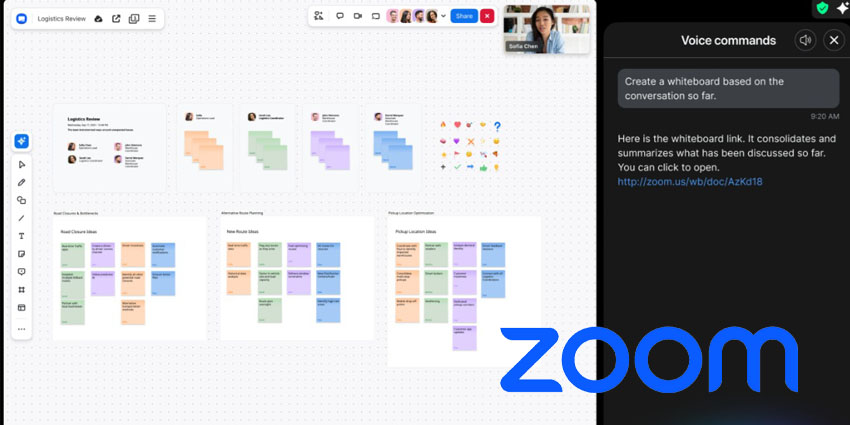
Beyond scheduling, Zoom is pushing for a hands-free, voice-first meeting experience that minimizes physical interaction with room controllers. The company announced enhanced voice commands for Zoom Rooms, moving the user experience closer to ambient computing. Users will soon be able to initiate complex workflows, such as creating a Zoom Whiteboard or generating action items, simply by speaking to the room.
This “invisible interface” is supported by the introduction of smart name tags that identify participants in a physical room, ensuring they are correctly attributed in meeting transcripts. By combining voice control with identity recognition, Zoom aims to remove the administrative burden from meetings, ensuring that in-room participants enjoy the same level of digital equity and automated documentation as their remote counterparts.
Breaking Down the Hardware Walled Garden with Cisco Rooms Interoperability
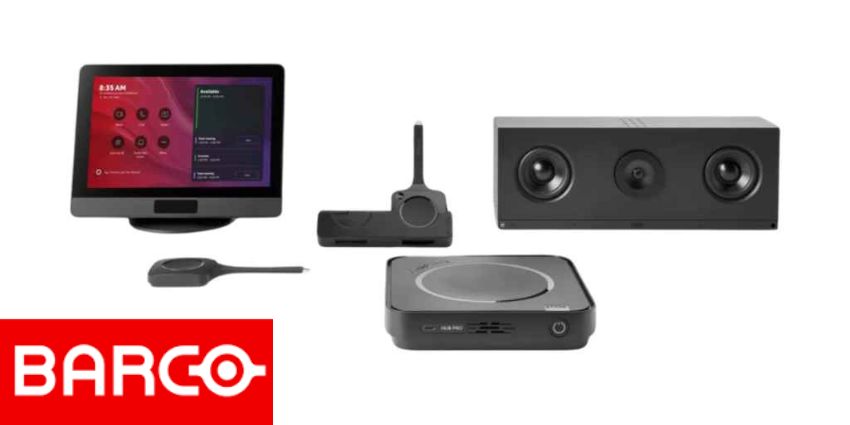
In a pragmatic move that acknowledges the messy reality of most businesses’ hardware estates, Zoom has significantly expanded its ecosystem interoperability. The headline announcement for buyers managing legacy infrastructure is the arrival of Zoom for Cisco Rooms. This integration allows organizations to run the native Zoom Meetings experience directly on Cisco hardware, eliminating the need for complex workarounds or expensive hardware replacements.
Simultaneously, Zoom is courting high-end media verticals through the Zoom Enhanced Media add-on and a new partnership with Vizrt via the ISV Exchange. These updates bring professional-grade broadcasting tools into the Zoom fold, supporting 60fps high-frame-rate video, higher bit-rate streams for razor-sharp detail, and high-bandwidth modes for multiple simultaneous HD streams.
This bifurcation of the offering suggests that Zoom is no longer treating all meetings equally, providing specialized, high-fidelity pipelines for industries like gaming and healthcare where standard video quality is insufficient.
What Zoom Spaces’ Agentic AI Upgrade Means for IT and AV Leaders
For the IT and AV leaders responsible for the corporate estate, the Zoom Spaces AI update underpins the industry’s broader transition from connectivity to intelligence.
The introduction of agentic capabilities offers a potential solution to the “ghost meeting” phenomenon that plagues real estate ROI. If the system can autonomously manage inventory and release unused space, organizations can finally obtain accurate utilization data, potentially justifying reductions in total office footprint or optimizing energy usage based on actual occupancy rather than theoretical bookings.
However, this intelligence comes with a new layer of governance complexity. IT leaders must now consider the privacy implications of “smart” rooms that track identity and location to function effectively. Furthermore, the Cisco integration offers a significant reprieve for CIOs sitting on depreciating Cisco assets, allowing them to extend their use while standardizing the user experience on Zoom’s software.
The challenge will lie in the implementation; moving from a passive room model to an agentic one requires not just a software update, but a shift in organizational trust. Leaders must decide how much autonomy to grant their infrastructure in the name of efficiency.