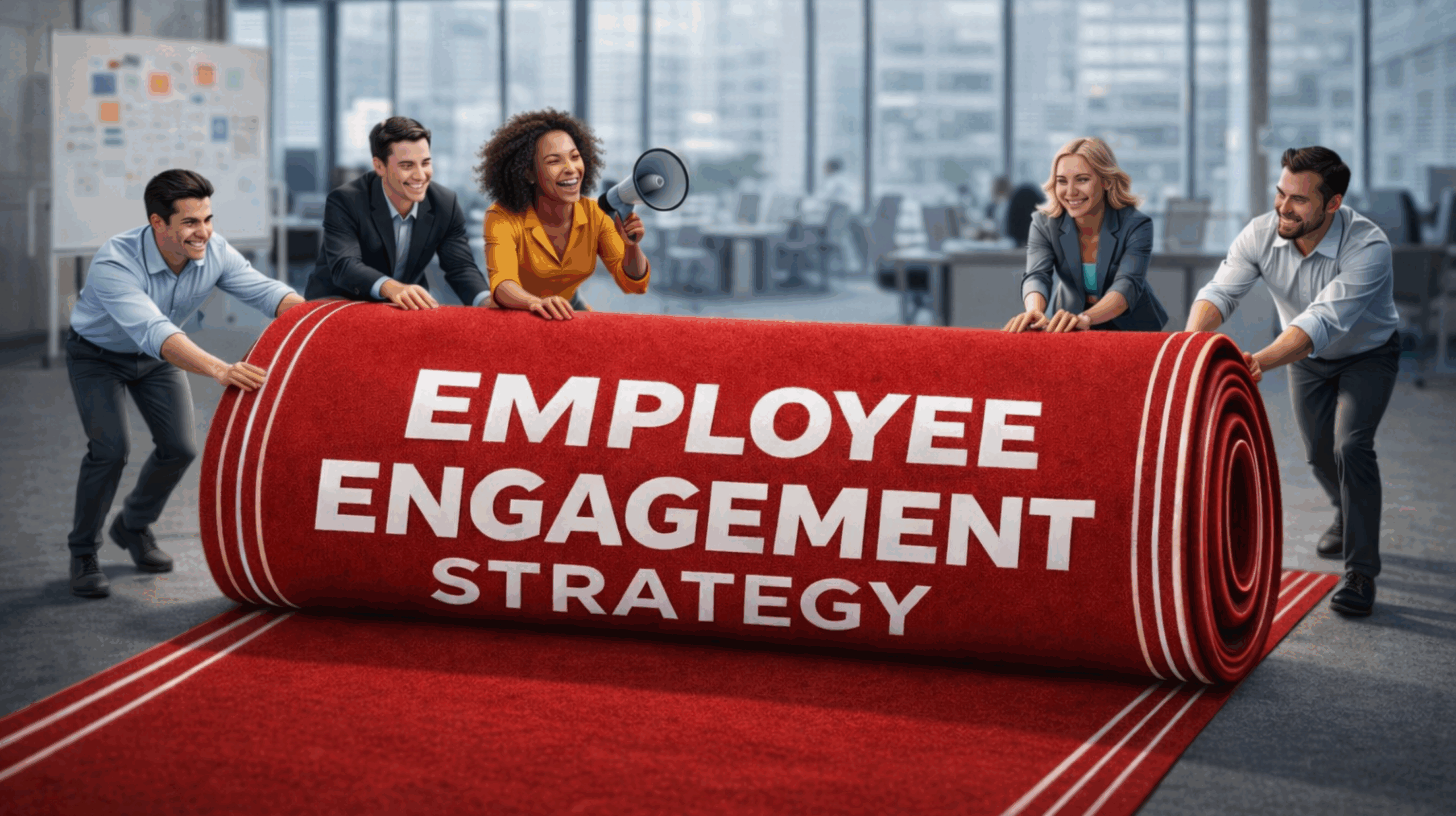
Employee engagement platforms are getting smarter. Employees are getting busier. And your employee engagement rollout strategy is now the difference between “love this” and “please stop adding tools.”
This is the operational guide for HR and IT teams who need to deploy employee engagement and recognition at scale in 2026. It focuses on implementation, adoption, and culture alignment.
What Does Scaling Engagement Platforms Mean In 2026?
If you operate across regions, languages, and work styles, scale includes:
- Multiple HRIS, identity providers, and collaboration tools
- Local culture norms around praise, feedback, and incentives
- Different labor rules and privacy expectations
- A mix of frontline, deskless, and knowledge workers
A helpful gut check: can one rollout plan work in HQ and in a warehouse? If not, you need a “core plus local” design.
Also, define the experience you are trying to deliver. Gartner frames employee experience as how people interpret their interactions with the organization. That includes context, not just tools.
How Do HR And IT Govern The Right Employee Engagement Deployment?
A practical governance model looks like this:
- Executive sponsor (HR or COO): sets priorities, removes blockers
- HR product owner: owns use cases, policy, and comms
- IT product owner: owns integrations, identity, security, and uptime
- Comms lead: owns messaging, launch moments, and leader toolkits
- People analytics lead: owns measurement, privacy-safe insights, and reporting
- Regional champions: validate cultural fit and localization
Keep governance lightweight. Too many approvals slow momentum. Too few create chaos.
Culture is not fluff, either. SHRM research links stronger workplace culture with higher motivation and retention outcomes. Treat culture alignment as a deployment requirement, not a poster.
Related Articles
What Should Your Employee Engagement Rollout Strategy Look Like In The First 90 Days?
A 90-day rollout succeeds when it produces repeatable behaviors. That means: recognition happens weekly, managers participate visibly, and the tool works inside daily workflows. If recognition still depends on reminders, or only HR uses the platform, the rollout has failed, even if logins look good.
Most rollouts fail because they launch features, not habits.
Here is a 90-day approach that usually works better:
Days 0 to 15: Define “Moments That Matter”
Pick 3 to 5 moments where recognition should happen naturally, such as:
- onboarding wins
- project milestones
- customer praise
- peer support
- safety and quality achievements
Days 16 to 45: Build The “Minimum Lovable” Experience
Focus on:
- simple recognition flows
- clear naming and categories
- mobile access for frontline users
- a small set of rewards rules, if rewards exist
Do not launch every module at once.
Days 46 to 75: Pilot With A Real Mix Of Teams
Include:
- one HQ function
- one frontline group
- one regional office
Measure friction. Fix it fast.
Days 76 to 90: Launch With Leader-Led Rituals
Rituals beat reminders. Examples:
- “Friday wins” in team meetings
- monthly peer-nominated kudos
- customer story shoutouts
This is where adoption becomes cultural.
Bold truth: If managers do not model it, employees will not either.
Want a fast shortlist of the employee experience platforms enterprises should know in 2026? Start here.
How Do You Drive Adoption Of Recognition Software Without Forcing It?
You drive adoption by making recognition frictionless and useful in the flow of work. Embed it in Teams or Slack, turn on SSO, start with 2–3 high-value use cases, and require manager modeling through a simple weekly ritual. Measure manager participation and repeat usage, then iterate fast. If it needs constant reminders, it is not adopted.
Four adoption levers tend to matter most:
1) Put recognition where work happens: If your people live in Microsoft Teams, Slack, or a mobile app, meet them there. Fewer context switches means more usage.
2) Use small nudges, not spam Avoid daily prompts. Use smart nudges tied to real events, like milestones.
3) Give leaders a script
Provide:
- sample messages
- examples of “good recognition”
- a 10-minute weekly routine
4) Clarify what “good” looks like
Recognition should be specific. It should connect to values. It should feel fair.
Also, watch shadow behavior. Microsoft’s Work Trend Index highlights how employees are adopting AI quickly, sometimes ahead of organizational plans. That pattern can show up in HR tech too. If the official tool is hard, people will route around it.
How Do You Keep Culture Alignment Global Without Going Generic?
Global scale needs consistency. It also needs respect for local norms.
Try this “core plus local” model:
- Core: global values, recognition principles, minimum data rules
- Local: language, reward types, celebration styles, labor constraints
Do not assume rewards motivate everyone the same way. In some cultures, public praise is motivating. In others, it is uncomfortable.
Also, avoid “one leaderboard to rule them all.” Competitive mechanics can backfire. Use them carefully, and test.
What Are The Most Common Employee Engagement Failures And How Do You Avoid Them?
Here are the patterns that show up again and again:
- Failure mode: A feature dump at launch
Launch 2 or 3 use cases, then expand.
- Failure mode: No manager enablement
Implement leader toolkits and a weekly ritual.
- Failure mode: Unclear governance
Have one HR owner, one IT owner, and a tight steering group.
- Failure mode: Weak integrations
Fix: identity, HRIS, and collaboration integration first.
- Failure mode: Measuring the wrong things
Fix: tie metrics to retention, productivity, and wellbeing goals.
Gartner’s employee experience guidance also reinforces that EX connects to business outcomes, not just employee happiness. Use that framing with stakeholders.
FAQs
What Is An Employee Engagement Platform?
An employee engagement platform is software that supports communication, recognition, feedback, and wellbeing initiatives. It helps organizations create consistent engagement practices.
What Is Employee Recognition Software?
Employee recognition software is a tool for giving praise, rewards, or acknowledgements. It often supports peer-to-peer and manager recognition.
How Do I Increase Adoption Of HR Tech?
Make it easy, integrate it into daily workflows, and build leader-led rituals. Train managers first, then scale through champions.
What Metrics Should I Track For Employee Engagement Rollouts?
Track active usage, manager participation, recognition frequency, and survey movement. Then connect to retention, productivity, and wellbeing outcomes.
How Do I Scale Engagement Platforms Globally Without Losing Culture?
Use a core global framework plus local customization. Localize language, norms, and rewards while keeping principles consistent.
Next up: For a deeper dive on the broader strategy, explore AI, Collaboration, Employee Engagement, And The Digital Workplace.