
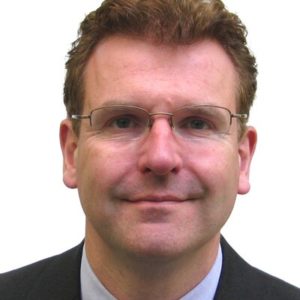
This month marked the first time the world’s largest telco application development hackathon, ‘TADHack’ went virtual. The global event took place on October 10-11, where teams from 20+ cities connected for the overnight hackathon. TADHack or the Telecom Application Developer Hackathon promotes the use of telecom solutions to solve real-world social problems. I caught up with the event’s organizer, Alan Quayle. He has a career that spans over 30 years and has worked for the likes of BT, Lucent (now Nokia), Cambridge Technology Partners (now Atos Consulting), and founded Teltier (one of the first Telecom API companies sold to Cisco in 2003).
TADHack is the largest global hackathon that happens throughout the duration of a weekend, and TADSummit is the largest conference focused on programmable telecoms, both of which Quayle runs. He has had a hand in many of the technologies we use every day, himself. If you use ‘Verizon Fios,’ (a bundled internet, telephony, and television service operated over fiber-optic communications networks) – there is a high probability that the box in your home is based on some of Quayle’s patents and standards stemming from his work in optical access technology.
He has even worked on the development of digital video compression technologies, which still get used by the likes of YouTube and Netflix. Enough about quite possibly one of the world’s most impressive men, and back to the global virtual hackathon he recently put on. There were a lot of winners spanning a range of countries, and I want to highlight a few of them. Scoring $1,000 in prize money, a Berlin-based Student-teacher Notification Application (STeNA). It is a communication tool that allows teachers to communicate with their students after school independent of how modern their telephones are.
“Teachers can send a text to the entire class, and students can respond individually to the teacher,” according to a blog post. The team of developers built a portal where teachers can maintain class and student phone numbers along with sending SMS messages and make voice calls to students without a mobile phone. Addressing the nature of this year’s event, Quale told UC Today News:
“This was the toughest year ever to put TADHack Global together. All the hardcore hackers, those that hack through a pandemic, achieved impressive results. Some of the themes addressed by the hacks included: mental health and parent-teacher-student communications”
Hackers even built a device to track blood pressure using Ideamart and Avaya APIs. Sharing the $1,000 in prize money, several others joined in splitting the pot for the TADHack APAC prize. One particularly innovative application is the COVID-19 tracking system developed by Arshad Aiyoob, Idrees Nafly, Mohamed Izzath, Sidra Mowlana, and Shaakira Mubarak of Sri Lanka.
“Even though this was the toughest year ever to put TADHack Global together. All the hardcore hackers, those that hack through a pandemic, achieved impressive TADHack Global 2020 results.” This year’s event surpassed 700 registrations over the weekend, with half of them coming from South Africa. I’m told that several locations had lockdown measures imposed over the TADHack weekend, which did complicate things a bit more, but overall the hackathon was a success.