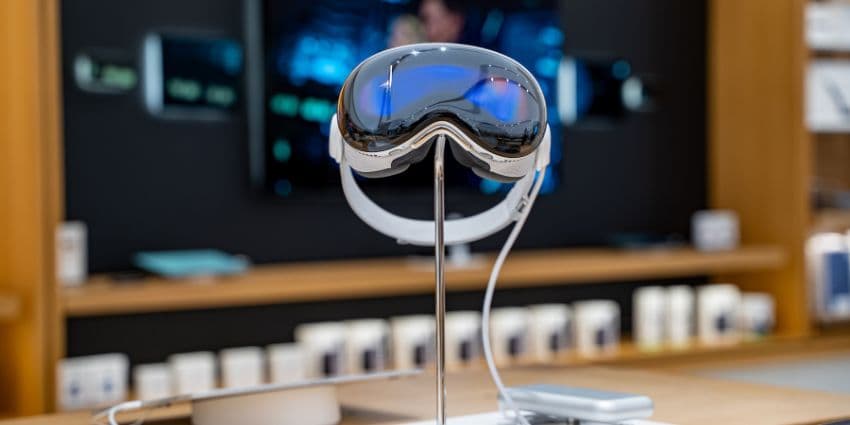
Just over a year after launching what it called the beginning of the “spatial computing era,” there are growing questions about whether Apple's Vision Pro has already lost momentum.
According to MacRumors, Apple may be scaling back work on future Vision Pro hardware following the muted reception of the M5 refresh released in late 2025.
While the report has not been confirmed by Apple, it has again renewed questions about whether the company's most ambitious new product in years is already being quietly deprioritised.
A Product That Launched With Enormous Expectations
When Vision Pro debuted, Apple framed the device as a new computing platform – a product meant to sit alongside the iPhone, iPad and Mac.
The company invested years of research and billions of dollars into the headset, positioning it as a gateway to immersive apps, spatial productivity and next-generation entertainment.
But from day one, Vision Pro faced two persistent criticisms: price and practicality.
At $3,499, the headset sits far outside mainstream consumer budgets.
Its weight and external battery pack also raised concerns about comfort and long-term usability. Early reviewers praised the technology but questioned how often people would realistically use it.
The M5 refresh was expected to address at least some of those concerns – with the update bringing a faster chip, a 120Hz refresh rate, modest battery improvements and a redesigned band to better distribute weight.
Yet the refresh failed to reignite consumer interest.
Sales And Returns Raise Questions
One of the most eye-catching elements of the MacRumors report is that Apple has sold roughly 600,000 Vision Pro units since launch and experienced unusually high return rates compared with other modern Apple products.
Those figures have not been independently verified, and Apple does not disclose sales numbers for individual product categories.
Still, if accurate, they would suggest Vision Pro has struggled to transition from a showcase product into a mainstream hit – a key milestone for any new Apple platform.
Historically, Apple’s biggest successes have rapidly scaled beyond early adopters. The iPhone, iPad and Apple Watch all faced skepticism early on but quickly gained traction with wider audiences.
Vision Pro appears to be taking a slower, more uncertain path.
Team Reassignment Signals A Shift
The report also suggests that Apple has redistributed members of the Vision Pro team across other initiatives.