
With immersive technology continuing to evolve, the intersection of neuroscience, AI, and XR is creating new possibilities for human well-being. In a forward-looking collaboration, Lenovo and Reulay are combining their expertise to make virtual reality (VR)–based mental wellness more accessible, scalable, and effective.
One of the biggest challenges in implementing VR-based wellness programs is accessibility. Headsets can be expensive, setup can be complex, and IT teams often struggle to deploy immersive experiences at scale.
Reulay has tackled this head-on with what it calls “Reulay Rooms” – shared immersive spaces designed for offices, hospitals, and hospitality venues.
“Hardware can be expensive, so we’ve created shared spaces where people can access immersive experiences without needing their own headset,” explained Dr Srini Pillay, CEO and founder of Reulay.
“With Lenovo’s technology and support, we can now deliver these environments globally while keeping costs manageable.”
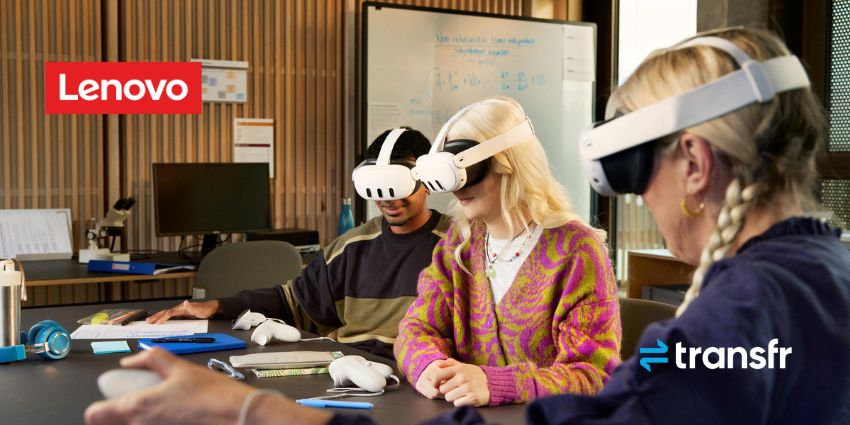
Each Reulay Room acts as a turnkey wellness hub, featuring VR-ready devices supplied by Lenovo and preloaded software experiences that guide users through calming, focus-enhancing, or mindset-shifting scenarios.
Mattney Beck, Lenovo’s Global XR Marketing Manager, emphasized that Lenovo’s solutions are designed for exactly this type of deployment. “Our XR solutions are built for scale,” he said. “Whether it’s one location or a thousand, Lenovo can provide the hardware, management tools, and support ecosystem needed to roll out experiences like Reulay’s efficiently.”
The Science of Immersion
Unlike many wellness apps that rely on guided audio or mindfulness scripts, Reulay’s approach is grounded in neuroscience and clinical evidence. The company has partnered with institutions such as the Mayo Clinic to measure how immersive experiences affect anxiety, focus, and emotional resilience.
“VR engages the brain in a way that’s fundamentally different from traditional 2D digital experiences,” Dr Pillay noted. “It’s a multi-sensory environment that can recalibrate your attention and emotional state much faster. In our studies, participants showed measurable reductions in anxiety and emotional distress after just one session.”
This difference is more than just psychological – it’s physiological. Immersive environments stimulate areas of the brain related to memory, emotion, and sensory integration, creating a stronger and longer-lasting impact compared to non-immersive interventions.
For Lenovo, providing the right hardware to support these outcomes is critical.
“In wellness and healthcare, comfort and hygiene are essential,” Beck said. “VR headsets are now designed for longer wear using lightweight builds. They can be customized for easy cleaning using silicone face pads, and adjustable straps that help to make the hardware less noticeable to the user so the immersive experience can take center stage.”
From Calm to Longevity
Reulay’s vision extends well beyond stress reduction. The company’s research explores how mindset can influence physical health outcomes – an idea Dr Pillay describes as psychogenic longevity.
“There’s mounting scientific evidence that positive mental states can influence immune response, inflammation, and even gene expression,” he explained. “If we can use VR and AI to guide people into states like optimism, purpose, and focus, we can help them build the biological foundation for a longer, healthier life.”
Reulay’s platform identifies nine scientifically validated “longevity mindsets,” which serve as training modules for users. Through immersive environments – ranging from tranquil natural landscapes to dynamic, cognitive exercises – users can practice emotional regulation and cognitive reframing, building resilience over time.
Lenovo’s cloud-based device management and performance infrastructure makes it possible to deliver these complex experiences securely across sectors – from corporate wellness programs to clinical therapy and hospitality wellness suites.
A Multi-Sensory Future
While visual and auditory immersion remains at the core of today’s VR experiences, both Lenovo and Reulay see the next frontier in multi-sensory or “4D” environments – experiences that engage touch, scent, and even biometric feedback.
“Adding sensory layers like haptics or scent can dramatically deepen emotional engagement,” said Dr Pillay. “We’re experimenting with how touch or temperature changes can reinforce certain psychological states – calm, alertness, or confidence. It’s a new way to shape mindset from the inside out.”
Beck echoed this vision, pointing to how XR hardware is evolving to support richer sensory integration. “We’re already seeing innovations in haptic gloves, motion tracking, and biofeedback sensors,” he said. “As those technologies mature, we’ll be able to build experiences that respond dynamically to the user’s physiology—slowing the environment when heart rate rises or adapting visuals to promote focus.”
This convergence of AI, XR, and biosensing could transform immersive wellness into a new class of digital therapeutic – one that reacts in real time to emotional and physical cues.
The Road Ahead
With global awareness of mental health at an all-time high, the demand for scalable, evidence-based wellness solutions continues to grow. Lenovo and Reulay’s partnership represents a shift from viewing XR as a tool for escapism to seeing it as a tool for empowerment – an evolution that could redefine both enterprise well-being and personal health.
“VR isn’t about escaping reality anymore,” Dr Pillay said in closing. “It’s about transforming it. With Lenovo’s XR solutions powering our experiences, we can make that transformation available to anyone, anywhere.”
Beck agreed, framing the collaboration as part of a broader industry movement: “Technology should enhance human potential. By combining scientific insight with powerful XR platforms, we’re showing how digital wellness can be both measurable and meaningful.”
As immersive ecosystems grow more intelligent and interconnected, Lenovo and Reulay’s shared vision hints at a future where VR doesn’t just change how we work – it changes how we live, think, and heal.