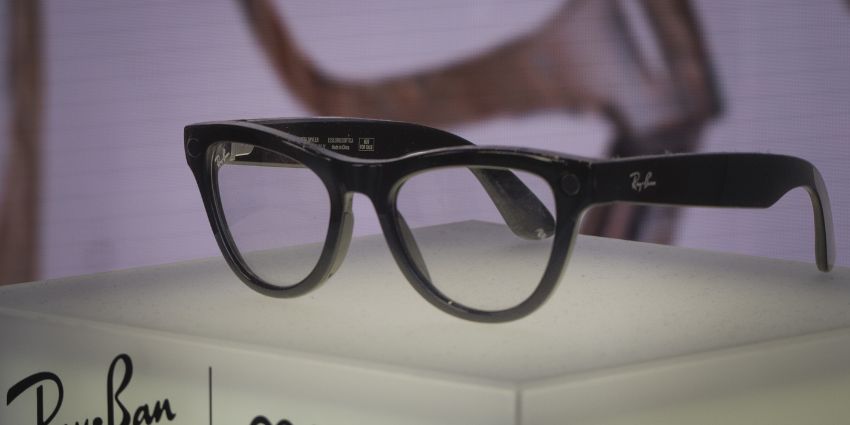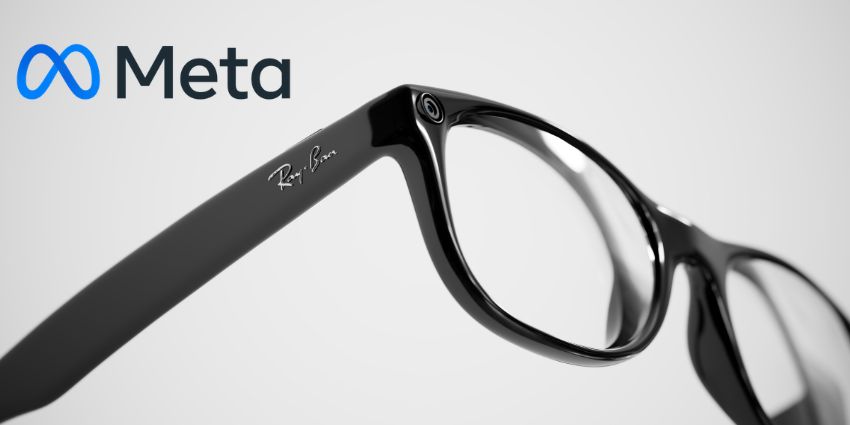

Meta is expanding its push into AI-powered wearables with new prescription-focused smart glasses and fresh software features that push its Ray-Ban partnership further into everyday health and productivity.
The company unveiled two new “prescription-optimized” models alongside upcoming AI capabilities, including automated nutrition logging and hands-free messaging summaries.
The new frames – dubbed Blayzer and Scriber – are designed specifically for people who rely on prescription lenses.
Until now, Meta’s smart glasses supported prescriptions up to ±6 diopters (and less for the display-equipped models).
The new Optics Styles are described as supporting “nearly all prescriptions,” although customers ordering directly from Meta may still face some limits and might need to work with opticians for more complex prescriptions.
The new frames include overextension hinges, adjustable temple tips, and interchangeable nose pads – features aimed at improving comfort and fit for a wide range of face shapes.
Priced at $499, the new models are positioned between earlier camera-focused Ray-Ban Meta glasses and the more advanced Display version.
Why Prescriptions Matter For Smart Glasses
Smart glasses have long promised hands-free computing, but they face a unique challenge compared with smartphones or smartwatches: for most people, glasses aren’t optional – they’re medical devices.
If a wearable can’t replace a user’s everyday prescription glasses, adoption becomes far less likely.
Meta appears to recognise that solving vision correction is key to turning smart glasses into a mainstream product rather than a niche gadget.
This shift also highlights how Meta increasingly views its glasses not as a novelty, but as a long-term computing platform.
CEO Mark Zuckerberg has repeatedly emphasised the massive global market of people who wear glasses or contacts, framing AI eyewear as a potential gateway to everyday AI assistance.
Messaging Summaries And Hands-Free Productivity
Meta is also rolling out new messaging capabilities.
Hands-free WhatsApp summaries are entering the company’s Early Access program, with processing performed on-device and protected by end-to-end encryption.
The move aims to address privacy concerns while showcasing how Meta sees smart glasses functioning as a voice-first productivity tool.
Rather than pulling out a phone to read long message threads, users could get concise summaries delivered through the glasses.
Meanwhile, users of the Display version of the glasses will receive additional features, including new games, expanded handwriting support, and broader navigation coverage across US cities.
AI Food Logging Arrives Later This Year
Alongside the hardware announcement, Meta revealed new software features aimed at turning the glasses into a personal health companion.
The most notable addition is AI-powered nutrition logging.
Later this summer, users will be able to take a photo of their meal and use a voice prompt to automatically add the food to a log within the Meta AI app.
The company says the feature could eventually work automatically, logging meals without needing explicit commands.
If executed well, this could reduce the friction that has historically limited food-tracking apps.
The feature also reflects a broader trend toward passive health tracking – collecting data in the background with minimal user effort.
A Growing Race In AI Eyewear
Meta’s announcement comes as competition in AI wearables heats up.
The company already dominates the smart-glasses market, accounting for more than three-quarters of global shipments last year.
Rivals are taking notice. Snap is preparing consumer-focused augmented-reality glasses, while Google is partnering with Warby Parker on AI eyewear.
The growing competition suggests that major tech players increasingly see smart glasses as a potential successor – or at least a companion – to smartphones.
Privacy And Perception Remain Challenges
Despite the momentum, privacy concerns remain one of the single biggest barriers to mainstream smart-glasses adoption.
Wearable cameras have always raised social and ethical questions, but AI dramatically raises the stakes.
Unlike early smart glasses, today’s devices are positioned as always-available assistants capable of understanding what users see, hear, and do in real time.
That shift transforms the privacy conversation from simple recording concerns to broader questions about data collection, consent, and surveillance.
Meta has already faced criticism over how smart glasses could be used in public spaces, particularly in relation to discreet photography and potential facial recognition capabilities.
Even the perception of these possibilities has shaped public reaction.
The addition of AI-powered messaging summaries and always-on voice capabilities further complicates the narrative.
While these features promise convenience and productivity, they also highlight the growing amount of personal and workplace data being captured and processed by wearable devices.
A Step Toward Everyday AI
The new prescription-focused glasses and health-tracking features represent a strategic shift toward practicality.
Rather than emphasising futuristic displays or experimental capabilities, Meta is focusing on everyday usefulness – vision correction, communication, navigation, and health.
If smart glasses are to become a mainstream computing platform, they must blend seamlessly into daily routines.
With prescription support and AI-driven features aimed at real-world tasks, Meta is betting that the path to mass adoption lies in solving everyday problems first.