
Enterprise interest in XR isn’t creeping up. It’s accelerating. Headsets don’t cost what they used to, pilots are easier to run, and real use cases keep stacking up. Training teams are using immersive simulations instead of classrooms. Product teams are reviewing designs in 3D instead of arguing over flat screens. Industry reports keep pointing to measurable gains almost everywhere.
The only problem? Companies still don’t have a clear idea of how they should be measuring XR ROI. Leaders (obviously) want to see proof that headsets and immersive experiences are really paying off, but XR doesn’t really produce one clean ROI story. The outcomes are different depending on who owns the initiative.
Operations wants fewer revisits and faster repair cycles. L&D wants shorter time-to-competency. Safety wants fewer incidents. Collaboration teams want decisions made without three extra meetings. If you force those into one blended “value narrative,” the numbers blur, and the confidence goes with them. That’s why XR ROI by function matters. It keeps accountability sharp.
Further Reading:
- How Does XR Work? The Benefits Breakdown
- Enterprise XR Trends 2026
- What Will the XR Market Deliver by 2030?
Defining XR ROI by Function Across the Enterprise
Here’s where most XR strategies wobble. Leadership approves a pilot. A few headsets go out. People like it. Engagement scores tick up. Then someone asks the only question that matters: “What really moved?” If you can’t answer that in operational terms, the program fizzles out.
Defining XR ROI by function means tying outcomes to the system that already governs performance. In operations, that’s first-time-fix-rate, MTTR, and downtime minutes. In learning and development, it’s time to competency and production output.
There’s no single set of metrics to track, which also means there’s no one-size-fits-all collection of questions to answer when companies start comparing vendors.
Realizing that changes the whole planning process for teams investing in immersive tech.
What is XR ROI for Field Teams and Frontline Ops?
Let’s start with XR ROI for operations teams, because that’s where numbers often dominate conversations first. Ops teams care about whether XR can cut costs, and reduce risks.
Downtime is painfully expensive. Gartner has cited roughly $5,600 per minute in some IT environments. In manufacturing plants or energy facilities, the exposure escalates quickly. A stalled line. A delayed fix. A technician has to come back tomorrow because the first visit didn’t solve it. That’s real money evaporating.
This is what people mean when they talk about operational XR value. AR guidance reduces missed steps. Remote experts cut escalation lag. Live visual overlays eliminate guesswork in complex procedures. Small frictions disappear. Over time, those minutes compound.
BMW saw 70–75% faster repair times after introducing smart glasses in service environments. Samsung SDS reported up to 30% faster picking speeds in logistics operations. Clorox slashed audit time to one-tenth of the old workflow, saving nearly $1,000 per person. Those are all execution wins.
That’s XR ROI by function in plain terms for Ops teams: first-time-fix improves, MTTR drops, and revisits shrink.
The Vendor Questions That Protect Operational XR ROI
- What measurable MTTR or first-time-fix gains have you delivered in comparable environments?
- What happens when connectivity fails mid-task?
- How does this tie into our CMMS or asset systems?
- Who manages devices across shifts, updates, and resets?
XR ROI by Function: What’s XR’s Value in Production and Manufacturing?
Production teams don’t have patience for abstract value. They care about yield, scrap, and how many units make it out the door without coming back for rework. Here, XR ROI shows up in margins.
Recent manufacturing surveys show 49% reductions in material waste, 48% faster production cycle times, and 45% lower operating expenses among XR adopters.
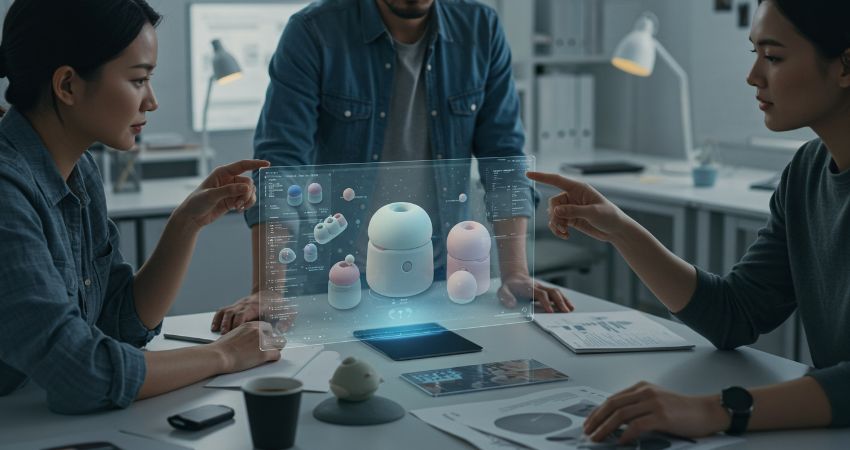
What’s happening underneath those numbers is straightforward. Design reviews move into 3D instead of flat screens. Assembly instructions appear in the line of sight instead of on paper. Simulation catches mistakes before physical prototypes are built. Errors get caught earlier, when they’re cheap.
This is XR ROI by function in manufacturing terms: scrap rate declines. First-time quality improves. Cycle time compresses.
The Vendor Questions That Protect Production ROI
- Where in our process does this reduce scrap or rework? Show the actual delta.
- When an SOP changes, how do you prevent outdated versions from staying in circulation?
- Does this connect directly to our CAD, PLM, or MES systems?
- How long does it take to push updates across every site?
How Do You Measure XR ROI in Training?
Learning and development is where XR is getting the most attention at the moment. It’s also where XR ROI by function is easiest to mis-measure.
We’ve all seen plenty of exciting case studies that prove one thing; completion rates don’t pay salaries. Competence does.
PwC research has shown VR learners complete training up to four times faster than classroom formats. Industrial deployments report 52% faster speed to competence and in some cases retention rates climbing as high as 80% after a year, compared to steep drop-offs in traditional formats. ROI over time matters too, studies have shown costs for VR training dropping from roughly $327 per learner to $115 over three years once content is reused at scale.
But speed alone isn’t enough. The real test is whether performance shifts on the job. Does error frequency decline? Do new hires operate independently sooner? Does supervisor oversight time shrink? That’s what companies need to know.
The Vendor Questions That Protect L&D ROI
- How do you measure time-to-competency in live work, not just in-module scores?
- What job performance metrics moved after deployment?
- What is the three-year cost-per-learner once content is reused?
- How quickly can training scenarios be updated when procedures change?
Ready to learn more about XR for employee development? Start with our guide to immersive learning design.
XR ROI by Function: What’s the Value of XR in Safety and Compliance?
Safety leaders think in worst-case scenarios. One serious incident can wipe out years of incremental savings. That’s why XR ROI in safety isn’t about “better training.” It’s about exposure reduction.
U.S. employers absorbed roughly $176.5 billion in workplace injury costs in 2023. XR allows crews to step into risky situations without real exposure and run them multiple times. The repetition sticks. When something goes wrong, trained reactions kick in.
Manufacturing surveys report 95% of XR users say simulation training improved workforce safety. Food production companies have reported double-digit reductions in injury rates after immersive safety rollouts.
The financial logic is easy to understand. Fewer incidents mean fewer claims, fewer investigations, fewer shutdowns. That’s all measurable.
The Vendor Questions That Protect Safety ROI
- Can you simulate our top three real incident types, not generic scenarios?
- Do you provide audit trails and assessment records for compliance reporting?
- How do you validate that simulation performance translates to field behavior?
- What safeguards exist for captured spatial or biometric data?
What Is XR ROI for Collaboration and Decision-Making?
Collaboration ROI sounds like a harder thing to measure, until you calculate how much rework costs.
Engineering reviews that stretch for weeks. Design decisions reversed three meetings later. Travel budgets stacked with in-person validation sessions. That friction adds up, even if it doesn’t show up as a line item called “delay.”
This is where Immersive workplace ROI takes a different shape.
Spatial collaboration reduces ambiguity. Teams looking at the same 3D model in context make faster calls. In manufacturing and automotive use cases, immersive design reviews have shortened validation cycles and reduced revision loops. The impact isn’t measured in headset usage. It’s measured in how many times a decision has to be revisited.
Collaboration teams looking at XR ROI by function, and the future of immersive tech focus on simple things: decision velocity, fewer rework cycles, and shorter approval timelines.
The Vendor Questions That Protect Collaboration ROI
- Which workflow improves with XR: design review, planning, incident response?
- What evidence shows reduction in revision loops or approval time?
- How does the platform integrate with existing collaboration and content tools?
- How do you prevent session fatigue in longer immersive meetings?
XR ROI by Function: What’s the Value of XR HR and Workforce Stability?
HR doesn’t usually get pulled into XR conversations early, which is surprising.
If you care about XR ROI, you have to care about ramp time and retention. Because replacing people is expensive.
Gallup data cited across workforce research shows global employee engagement hovering around 21%, with manager engagement only slightly higher. That’s a thin margin for error in high-turnover roles. Meanwhile, large-scale workforce studies covering tens of thousands of employees show that two-thirds of workers report increasing levels of change year over year. Change fatigue is real.
XR earns a seat in HR discussions when it’s tied to real employee experience outcomes.
Let candidates experience a job before they accept it, and you filter out poor fits early. Early exits drop. Hiring costs drop with them. Put new hires through immersive onboarding, and they reach independent performance faster. Run managers through realistic coaching simulations, and they build judgment under pressure instead of memorizing policy slides. That’s XR ROI by function expressed in shorter ramp time, stronger 90-day retention, and fewer escalations to supervisors.
The Vendor Questions That Protect HR ROI
- Can immersive onboarding measurably reduce early turnover?
- How do you track time-to-productivity after training?
- What accessibility features are built in to widen adoption?
- How do managers reinforce learning once the headset comes off?
What Is XR ROI for Customer Experience and Revenue?
Customer experience is where XR ROI moves from a focus on internal efficiency to external growth.
In financial services, a survey of 400 professionals recently found 92% reported positive ROI within two years, and 77% said XR improved customer experience.
The mechanism is simple. When customers understand complex products more clearly, confidence rises, and confidence converts.
When customers can step inside a product experience, uncertainty shrinks. Seeing something in context beats staring at specs. In complex or high-cost purchases, that clarity moves deals forward and lowers the odds of regret afterward. Returns dip. Support tickets fall. Renewal rates edge up. That’s where immersive experiences start influencing revenue in measurable ways.
The numbers to watch here are pretty straightforward. You track conversion rates, sales cycle length, return rates, and retention.
The Vendor Questions That Protect CX ROI
- Which funnel stage does XR improve: discovery, evaluation, or onboarding?
- What documented conversion or retention lift have you delivered?
- How is customer data secured within immersive environments?
- How do you measure reduction in product returns or support calls?
Measuring XR ROI by Function: What ROI Metrics Differ by Use Case?
Blended metrics sound efficient. One dashboard. One narrative. One big “XR impact” number. It feels organized. It also hides accountability.
If training reports faster completion rates but operations don’t see MTTR drop, who owns the outcome? If safety shows strong simulation scores but incident frequency stays flat, was it effective? When collaboration sessions are well attended, but revision loops haven’t shortened, how do you know what exactly improved?
That’s why measuring XR ROI by function helps companies overcome the hurdles that cause most immersive projects to stall.
There are still questions that should apply whenever you’re assessing comparable vendors. The important thing is making sure you adapt them based on what you’re actually trying to do with XR.
Start with this: “What metric moved in comparable environments, and by how much?”
After that, ask:
- How is the baseline established? If there’s no clear before-and-after comparison, XR ROI by function can’t be defended.
- How will this fit with our current tech stack? Does the system connect to your LMS, CMMS, EHS, CRM? If it sits outside the systems that track performance, measurement becomes guesswork.
- How will the system be managed over time? Ask about content updates. Production environments change. SOPs evolve. If updating immersive content takes months, ROI decays.
The strongest vendors answer in metrics and constraints. The weaker ones answer in adjectives.
Calculating the True ROI of XR: Stop Looking for One Number
Like it or not, there’s no single XR ROI story, and really, there shouldn’t be. Every department has different goals and different metrics that matter.
The companies that scale XR successfully don’t argue about whether the technology is impressive. They don’t chase blended dashboards or celebrate headset deployment numbers.
They define one primary metric per function, establish a baseline, and track movement relentlessly. That’s what XR ROI by function really means. It’s discipline.
If you can’t state the one metric you’re prepared to defend in front of your CFO, you don’t have a strategy. You have an experiment.
If you’re ready to move beyond that stage, start by reading our ultimate guide to XR in the enterprise, and ask yourself, what does ROI really mean for your project?
FAQs
How do companies actually measure XR ROI?
By watching what changes in the work itself. A repair that used to take two hours now takes ninety minutes. A new technician works independently after two weeks instead of four. XR becomes easier to justify when those kinds of operational shifts show up in real systems, not just training reports.
What metrics show whether XR is working?
Look at the numbers the business already tracks. Field teams might watch repair time or revisit rates. Manufacturing teams care about scrap or rework. Training groups track how quickly someone can perform a task without supervision. If XR is useful, one of those numbers usually moves.
Why is XR ROI hard to explain?
Because different teams expect different outcomes. Safety leaders think about incident risk. Operations leaders think about downtime. HR looks at ramp time and retention. When companies try to roll all of that into one “XR value score,” the signal gets muddy.
Which teams usually see XR benefits first?
Frontline operations tend to notice quickly. When someone can get remote help instantly, or see the next step in their field of view, delays disappear. Those small time savings add up fast, which is why field service and maintenance teams often report the earliest wins.
What’s the easiest way to show XR value to leadership?
Pick one number that matters and track it carefully. For example, how long a repair takes today versus after XR is introduced. When the improvement is clear and repeatable, the technology stops looking experimental.