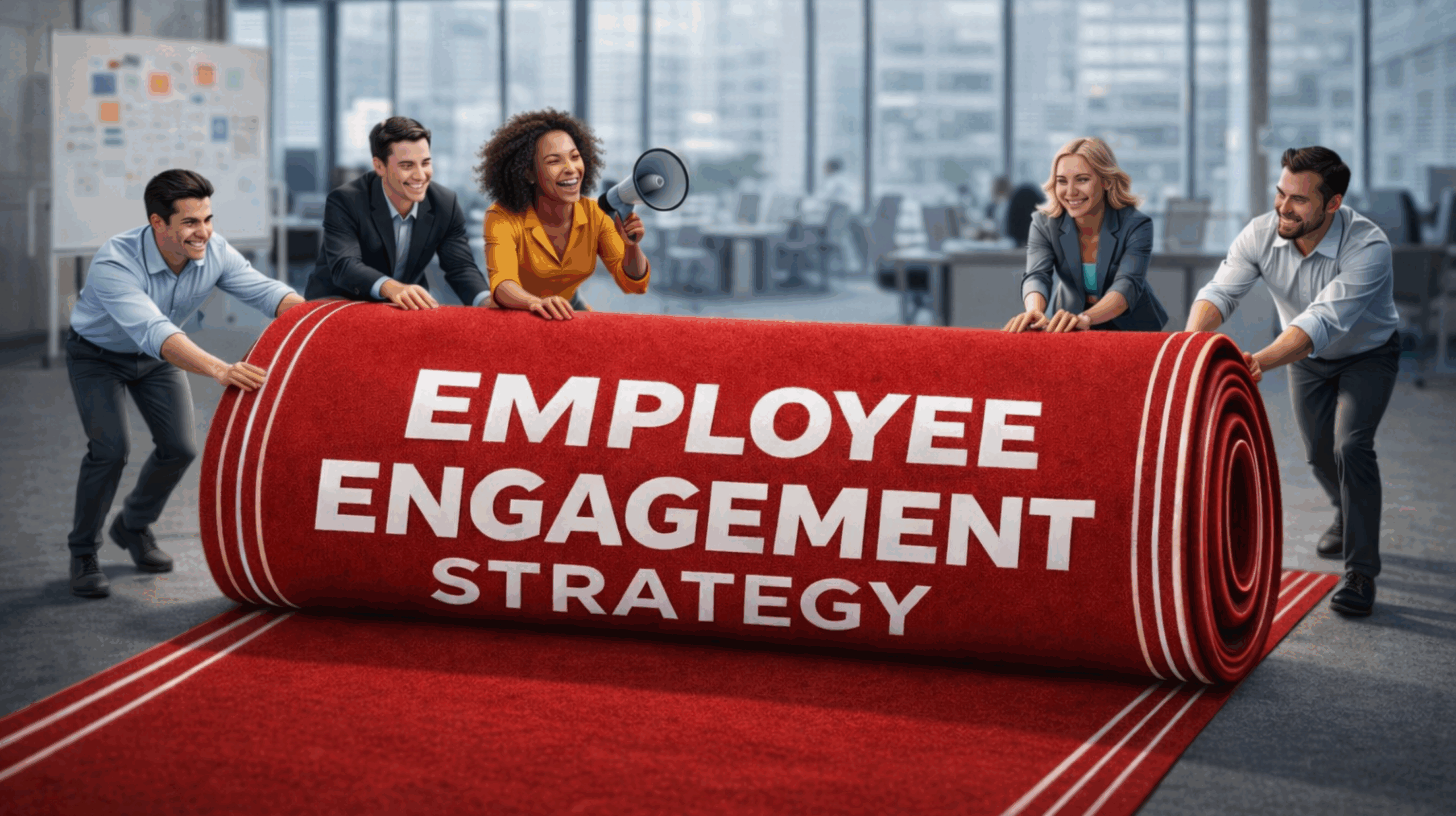

Employee engagement is no longer a soft metric – it’s a business multiplier. As enterprises move deeper into AI Collaboration tools and globally distributed models of work, the organizations that thrive will be those that understand engagement as both a data-driven science and a cultural strategy.
What Is Employee Engagement in 2026?
Employee engagement in 2026 refers to the level of emotional commitment, motivation, and connection employees feel toward their work and organisation — combined with the practical conditions that enable high performance.
In modern organisations, engagement is shaped by three major forces:
- Culture and trust, including leadership credibility and psychological safety
- Digital employee experience, including the ease of collaboration and access to information
- Growth and purpose, including career development and meaningful contribution
In 2026, engagement has become the foundation for enterprise performance. It fuels innovation, strengthens retention, and directly impacts customer experience. Yet the modern workforce expects more than pay and perks – they’re looking for meaning, connection, and flexibility in how they work and communicate.
The good news? Technology is finally catching up to these expectations. The convergence of collaboration tools, AI-powered analytics, agentic AI and intelligent EX platforms is enabling a new era of connected, human-centric engagement.
Key Sections
How Fragmented Collaboration Tools Are Quietly Draining Productivity
Beyond the App Chaos: Building a Connected Employee Experience with AI
Data, Decisions, and ROI: The Science Behind What Really Drives Engagement
Trust, Tech, and Transformation: Bringing Humanity Back to the Age of Agentic AI
Why Does Employee Engagement Matter More Than Ever?
The last five years have disrupted the world of work at every level. Companies globally have experienced a double wave of disengagement – first in 2020, driven by isolation and uncertainty which came with the pandemic, and again in 2024, as constant restructuring, digital fatigue and relentless change took their toll (Read more on how to transform fatigue to flow here). Meanwhile, employee expectations have evolved – flexibility, autonomy, and purpose now sit at the heart of what people want from work.
Against this backdrop, a sobering insight: the world’s workplace today is not heading in the right direction. Just over one in five employees globally are fully engaged, highlighting a vast reservoir of untapped potential.
Culture Amp’s recent research highlighted that employees who are proud to work for their company have fallen from 87 percent in 2021 to 83 percent in 2025; those who would recommend their employer have dropped from 84 to 80 percent. Retention intent is also trending downward, with only 55 percent of employees now saying they “rarely think about leaving.”
Regional nuances further shape the picture:
- In Europe and the UK, engagement hinges on confidence in leaders and a motivating vision.
- In APAC and North America, it’s the sense that people genuinely matter and that development is prioritised.
- In the DACH region, employees focus on career growth and clear alignment between expectations and reality.
For today’s leaders, engagement is about trust, communication, and connection. Modern UC platforms bridge that gap, giving employees a shared space to collaborate, be recognised, and stay connected to a common mission.
Employee Engagement Is Now a Boardroom Metric
Disengaged teams cost companies more than missed deadlines; they cost opportunity. Gallup estimates that globally, poor engagement represents up to 9% of lost GDP potential, and that if every organisation could close this engagement gap, the global economy could gain as much as US $9.6 trillion in productivity. A fully engaged workforce could add trillions to the global economy through productivity gains alone. (Read more on cracking the ROI of Employee Engagement here).
Engagement is the multiplier for every other metric that matters. Research shows that engaged employees are more innovative, deliver better customer experiences, and are far less likely to leave.
According to Gallup’s research – covering 339 studies across 230 organisations in 73 countries and 49 industries – there was a clear, consistent link between employee engagement and business performance. Organisations ranking in the top quartile for engagement didn’t just have happier teams; they had stronger bottom lines.
Highly engaged workforces are typically associated with outcomes such as:
- Higher profitability
- Stronger productivity
- Reduced absenteeism
- Lower turnover (often significantly lower depending on industry)
- Higher sales performance
- Improved customer satisfaction
The takeaway is clear: engagement impacts every commercial outcome from sales to retention.
As The Employee Experience Advantage author Jacob Morgan notes:
“In a world where money is no longer the primary motivator, employee experience is the strongest competitive advantage organizations can create.”
The engagement imperative going into 2026 is about building the digital and cultural infrastructure that keeps people performing at their best. In return, your business will see measurable gains in retention and revenue.
How Fragmented Collaboration Tools Quietly Drain Engagement
While businesses have invested heavily in tools to enable hybrid work, few have addressed the growing cost of digital friction – the invisible drag created when technology slows rather than supports employees.
On average, this costs organisations 5.5 hours of lost productivity per employee, every week. In a company of 10,000 people, that’s the equivalent of more than 250,000 hours of wasted effort annually – a staggering hit to both morale and the bottom line.
Our coverage in January 2024 highlighted how the hybrid workplace was being undermined by poor technology integration and rising digital friction – a combination that led to significant productivity losses. Many employees felt they were fighting against, rather than working with, their digital environments.
Eighteen months on, the problem hasn’t gone away. As hybrid work and distributed teams have become the norm, organizations have continued adding tools in the name of efficiency. Yet each addition has often compounded complexity, creating overlapping workflows, constant notifications, and siloed data. Gartner even has a name for it: YATTC – “Yet Another Thing To Check”.
Digital Employee Experience (DEX) Is a Core Engagement Driver
Digital employee experience (DEX) refers to how effectively workplace technology supports employees in doing their work. In 2026, DEX is increasingly treated as a core pillar of engagement because it influences the everyday reality of work.
When DEX is poor, employees face:
- Delayed decision-making
- Slower collaboration
- Higher cognitive load
- Reduced focus time
- Increased burnout risk
Digital friction also affects retention. A meaningful portion of employees cite poor workplace technology as a reason they have considered leaving.
The organisations leading in engagement are not necessarily those adopting the most tools. They are the ones building the most connected ecosystems.
From Friction to Flow – Optimising Unified Collaboration Tools
The antidote to digital friction is not more technology. It is better-integrated technology.
Tool interoperability, the ability for applications to exchange data and function cohesively, has become the new frontier of productivity. The focus is shifting from adding capabilities to simplifying how people access them.
Forward-looking enterprises are leading with user-centric design and digital workplace architecture that prioritises flow:
- Centralised communication hubs that serve as a single source of truth, ensuring consistent, timely, and accurate updates.
- Integrated EX platforms like Microsoft Viva with SharePoint and Workvivo (by Zoom) which unify collaboration, recognition, and analytics under one digital roof.
- Modern systems that replicate the connection and culture of the office in a virtual environment, enabling development, reducing isolation, and improving access to shared knowledge.
These ecosystems don’t just streamline workflows, they humanise them.
Ultimately, reducing friction is about more than convenience; it’s about giving people mental clarity and operational flow, the conditions that make engagement possible.
How Does Platform Integration Translate Into ROI?
Investing in integration pays measurable dividends. According to A study of Microsoft Azure Integration Services, an enterprise with roughly 10,000 employees, achieved a 295% return on investment, an $8.57 million net present value, and a payback period of less than six months – simply by streamlining systems, automating workflows, and consolidating legacy platforms.
The business case is clear:
- Reduced redundancy: Fewer apps mean fewer licenses, support costs, and security risks.
- Higher engagement: Employees experience smoother, more intuitive workflows, leading to greater satisfaction and retention.
- Operational resilience: Interconnected systems make it easier to scale, adapt, and innovate across regions and departments.
How Is AI Changing Employee Engagement in 2026?
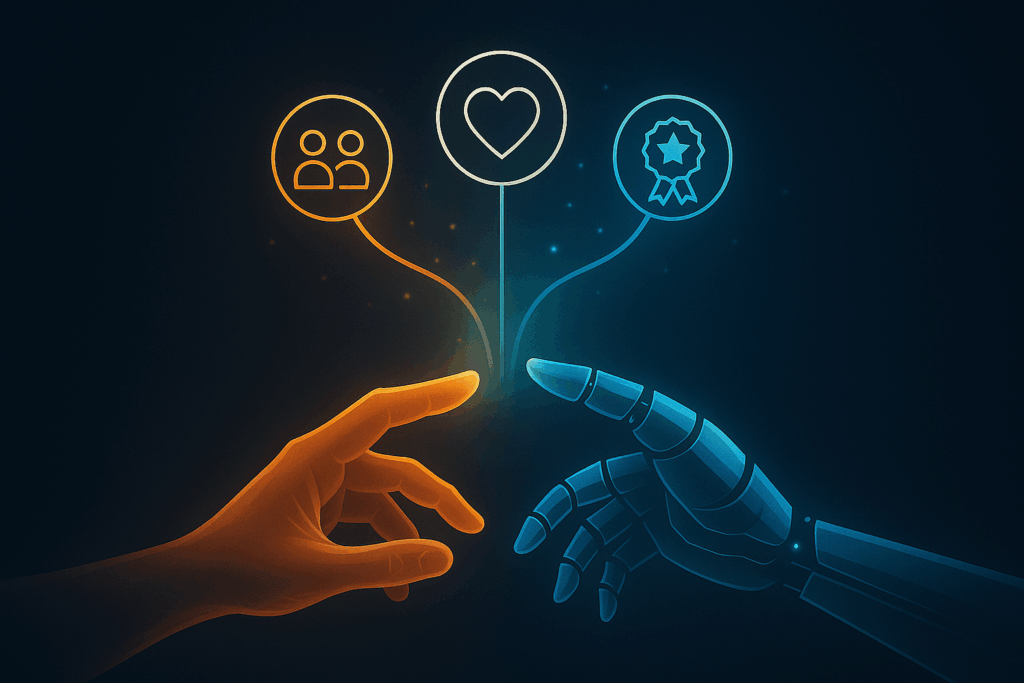
For enterprise buyers and vendors today, the question is not “Which app?” but “How do we build an ecosystem that helps our people do their best work?” AI, collaboration and unified communications now form the backbone of this shift – and they’re powering a transformation in how organisations engage, reward and uplift employees.
AI has gone mainstream – 75% of knowledge workers already use it daily, according to Microsoft. But 68% still say they can’t find enough focus time. The core truth? Technology isn’t the obstacle – it’s the operating system for modern work. When collaboration and AI tools are seamlessly integrated, employee experience thrives.
These tools are fast becoming the invisible engine behind modern collaboration:
- Webex Note Taker: Captures meetings automatically with AI-powered transcription and summarisation, ensuring no insight is lost.
- Microsoft 365 Copilot: Drafts reports, summarises threads, and surfaces key actions directly inside Teams, Outlook, and Viva – keeping everyone aligned in the flow of work.
- Zoom AI Companion: Automatically generates meeting recaps, action lists, and suggested follow-ups, cutting post-meeting admin time dramatically.
When alignment is built into the communication ecosystem rather than bolted on, technology stops fragmenting work.
“The best workplace tech stacks turn “just-another-app” into integrated value systems.”
How Can You Scale Recognition Through EX Platforms?
In 2025, leading enterprises are using AI to scale culture with precision, turning moments of appreciation into measurable performance gains.
Why it matters:
- 70% of employees say their work defines their sense of purpose (McKinsey & Company).
- Companies using AI-driven HR solutions see 64% higher talent outcomes (Deloitte).
- Recognition directly influences retention, morale, and innovation – especially in hybrid, distributed teams.
In 2026, many organisations are using employee experience platforms to scale recognition and strengthen belonging. The key shift is that recognition is becoming more embedded into everyday collaboration rather than treated as a separate HR program.
AI is also beginning to play a role here – not by automating appreciation, but by prompting it. Intelligent systems can identify patterns of contribution, suggest recognition moments, and highlight cultural blind spots.
When done well, this creates a compounding effect: recognition becomes contagious. Peer-to-peer appreciation increases, cross-team collaboration improves, and leaders gain clearer insight into cultural health.
The goal is not to mechanise culture. It is to make positive culture easier to sustain at scale.
The Data Behind What Really Drives Employee Engagement
Modern employee experience (EX) strategies are powered by insight, not instinct. Organisations today sit on mountains of data – from engagement surveys and collaboration metrics to HR systems and performance dashboards – but few turn it into meaningful decisions.
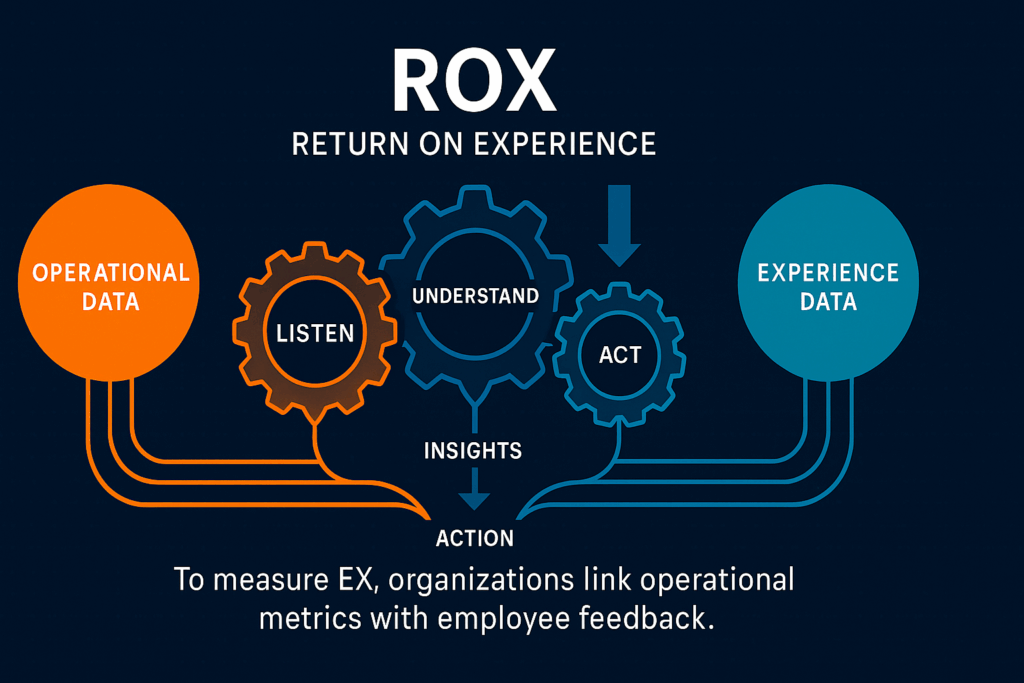
The challenge isn’t collecting information. It’s knowing which signals matter and how to translate them into action. That’s where EX analytics come in. By merging experience data (X-data) with operational data (O-data), leaders can see how engagement truly impacts retention, productivity, and innovation.
People analytics now answers business-critical questions, such as:
- What are the main factors driving retention in our workforce?
- How can onboarding or development programs be improved to reduce early attrition?
- How do engagement and well-being directly influence business outcomes?
The enterprises getting this right treat analytics as a living feedback loop – one that listens continuously, learns from behaviour patterns, and acts with agility.
The Most Important Employee Engagement Metrics in 2026
While every organisation measures engagement differently, the most common engagement indicators in 2026 include:
- Employee Net Promoter Score (eNPS)
- Retention and turnover rate
- Absenteeism trends
- Burnout risk signals
- Recognition frequency
- Internal mobility and development progression
- Collaboration and connection patterns across teams
The most effective organisations do not obsess over one metric. They build dashboards that reveal patterns and enable fast action.
Engagement becomes powerful when it is measurable, continuous, and connected to business reality.
Trust, Tech, and Transformation in the Age of Agentic AI
The next wave of AI adoption is not simply generative. It is agentic — systems capable of planning, coordinating, and executing tasks with increasing autonomy.
This shift will redefine productivity, but it also introduces new engagement risks. If employees feel AI is being deployed without transparency, without training, or without clear benefit, engagement will decline. Fear and uncertainty are corrosive to trust.
In many organisations today, trust in leadership’s ability to manage AI responsibly remains fragile. Employees want to know what automation means for their careers, how decisions will be made, and how ethical risks will be addressed.
Trust is now a prerequisite for adoption.
How to Build an Employee Engagement Strategy for 2026
In practice, engagement strategies that work in 2026 share several common traits.
They reduce friction instead of adding complexit, embed culture into workflow rather than launching standalone initiatives AND use analytics to drive action, not just measurement.
A useful way to think about engagement in 2026 is through five pillars:
1. Digital flow: reduce tool overload and friction
2. Recognition: build belonging through scalable appreciation
3. AI productivity: remove low-value work and restore focus time
4. Continuous listening: measure sentiment and behaviour in real time
5. Trust and governance: ensure AI adoption strengthens confidence rather than fear
These pillars are not independent. They reinforce each other. When organisations integrate them into a single system, engagement becomes scalable.
A Practical 90-Day Employee Engagement Plan
For leaders looking to move from strategy to execution, a 90-day plan can provide momentum without overwhelming the organisation.
In the first month, focus on diagnosis: identify where digital friction exists, measure engagement baselines, and understand what is driving burnout and turnover risk.
Then in the second month, focus on optimisation: consolidate redundant tools, pilot AI productivity features, and embed recognition into existing collaboration flows.
Finally, in the third month, focus on scale: connect experience data with operational metrics, establish ROX-style dashboards, and build a governance model that supports ethical AI adoption.
Engagement programs fail when they remain abstract. They succeed when they are operationalised into everyday work.
FAQ: Employee Engagement in 2026
What is Employee Engagement in 2026?
Employee engagement in 2026 is the combination of employee motivation, trust, and digital work experience that drives performance outcomes such as productivity, retention, and customer satisfaction.
How Does AI Improve Employee Engagement?
AI improves engagement by reducing administrative workload, improving focus time, supporting collaboration, and enabling real-time insight into employee experience trends. It works best when embedded into daily workflows.
What Is the ROI of Employee Engagement?
Engagement is strongly linked to higher profitability, stronger productivity, lower turnover, and improved customer satisfaction. Organisations with high engagement consistently outperform peers financially.
What Are the Most Important Employee Engagement Metrics?
Key metrics include eNPS, retention and turnover rates, burnout indicators, recognition frequency, collaboration patterns, absenteeism trends, and internal mobility rates.
What is Digital Employee Experience (DEX)?
Digital employee experience (DEX) refers to how effectively workplace technology enables employees to communicate, collaborate, and stay productive without unnecessary friction.