
Understanding the difference between project and task management tools is critical for improving team productivity and execution.
While both are often grouped together, they serve very different purposes – one focuses on tracking individual tasks, the other on delivering complex outcomes.
Many organizations choose the wrong type, leading to missed deadlines, poor visibility, and misaligned teams. This guide breaks down how each works, when to use them, and what most teams get wrong.
What Is the Difference Between Task Management and Project Management Tools?
The simplest way to understand the difference is this:
Task management tools help teams track individual tasks, whilst project management tools help teams deliver an entire outcome.
A task is a single action. For example, “Design the landing page” or “Review the contract.” Task management software makes it easy to assign that action, set a deadline, and mark it complete.
A project is a coordinated effort made up of many related tasks. It has a defined goal, timeline, budget, stakeholders, and dependencies. For example, “Launch a new product” or “Migrate to a new CRM system.” Project management software ensures all those moving parts stay aligned from start to finish.
In practical terms:
Task management focuses on visibility into daily work. Project management focuses on planning, coordination, and successful delivery.
That strategic layer is what separates simple productivity management tools from true enterprise project management platforms.
Why Do So Many Teams Confuse the Two?
The lines have blurred in recent years. Most team collaboration tools now include task boards. Many productivity management tools offer light project views. Vendors frequently market them using similar language.
This overlap leads to a costly assumption. Teams adopt lightweight workflow management software for complex cross-functional initiatives.
It works in the early stages. Then scale exposes the gaps.
As projects grow, organizations need visibility across departments. They need structured dependency tracking. Executives require reporting that connects execution to strategy.
IDC research consistently shows that organizations investing in formal project and portfolio management outperform peers in execution and cost control. That structure rarely exists in basic task-tracking tools.
How Project Management Software Works in Modern Enterprises
Modern project management software acts as a coordination layer across the business. It connects strategy to execution.
At a high level, enterprise project management platforms translate strategic goals into structured programs and projects. They break those projects into interdependent tasks. They assign resources based on availability and skill sets. They track progress in real time and generate dashboards for leadership.
AI project management is now reshaping this model. Platforms such as Asana and Monday.com use AI to identify at-risk deadlines, recommend workload balancing, and automate repetitive workflow management processes.
Forrester research highlights that AI-driven automation reduces manual coordination work and improves on-time delivery. That moves project management far beyond static task tracking.
When Should I Buy Task Management Tools?
Task management tools still play an important role in modern workplaces.
They are often the right fit for the following scenarios:
- Small teams managing short-term initiatives
- Operational task tracking without complex dependencies
- Personal productivity and lightweight team collaboration
If your primary goal is visibility into daily work, task tools can be sufficient.
However, if you are coordinating transformation programs, product launches, or enterprise-wide initiatives, you will likely outgrow them.
What Features Define Modern Project and Task Management Tools?
Understanding the features of modern project and task management tools helps buyers make smarter decisions. Task management platforms focus on assignment, deadlines, and collaboration threads. They prioritize simplicity and usability.
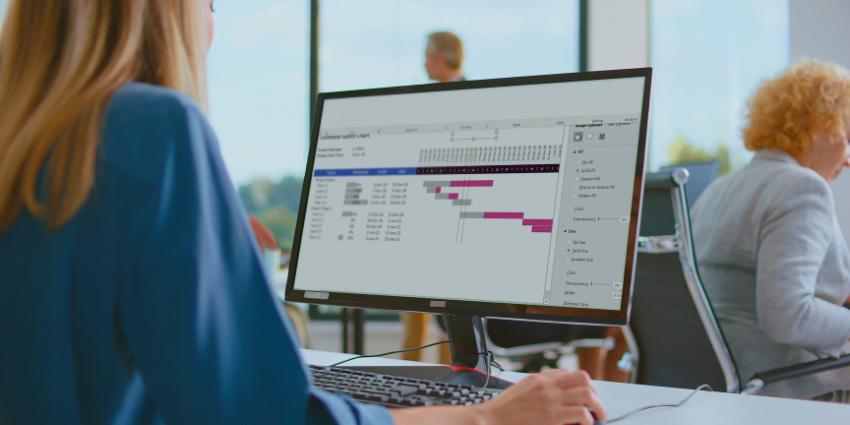
Enterprise project management platforms expand into structured planning. They include Gantt charts, advanced reporting, resource forecasting, and workflow automation project management tools that support cross-functional execution.
AI features in project management tools are becoming a major differentiator. Intelligent scheduling, automated approvals, and predictive risk alerts are quickly becoming standard expectations rather than premium add-ons.
What Do Team Collaboration Tools Offer?
Team collaboration tools often serve as the communication backbone of an organization. Platforms such as Microsoft Teams, Slack, and Google Workspace enable messaging and document sharing. Many now include embedded task features. However, collaboration does not equal structured project governance.
Strong execution typically requires integration between team collaboration tools, workflow management software, and enterprise project management platforms.
When these systems align, organizations gain transparency, accountability, and measurable productivity improvements.
The Task vs Project Management Model
Layer |
Task Management |
Project Management |
|---|---|---|
| Focus | Individual work | End-to-end delivery |
| Scope | Short-term actions | Multi-stage initiatives |
| Complexity | Low | High |
| Users | Individuals / small teams | Cross-functional orgs |
| Output | Completed tasks | Delivered outcomes |
How Should Buyers Choose Between the Two?
If you are early in your journey, resist the urge to jump straight into vendor comparisons.
Instead, focus on clarity. Are you organizing tasks, or orchestrating projects? Do you need executive-level reporting? How complex are your cross-functional dependencies? Would AI project management meaningfully improve workflow automation?
The biggest mistake teams make is assuming all productivity management tools deliver the same value. Some simply organize work. Others orchestrate it at scale. Understanding that difference is the first step toward smarter technology investment.
FAQs
What Are Team Collaboration Tools?
Team collaboration tools are platforms that support communication, file sharing, and task coordination among team members.
What Is the Difference Between Task Management and Project Management?
Task management tracks individual pieces of work. Project management coordinates multiple tasks, resources, budgets, and timelines to deliver a defined outcome.
How Does Project Management Software Work?
Project management software connects strategic objectives to structured plans. It tracks timelines, resources, dependencies, and progress while generating reports and forecasts.
What Are AI Features in Project Management Tools?
AI features include predictive deadline alerts, workload balancing recommendations, automated workflows, and risk forecasting based on historical data.
When Should a Business Upgrade to Enterprise Project Management?
A business should upgrade when projects involve multiple teams, complex dependencies, budget oversight, or the need for strategic reporting.